Answer:
After colorectal cancer surgery, even if no metastasis is detected and the tumor has been removed, patients still require periodic monitoring because cancer can recur locally or in other organs.
The carcinoembryonic antigen (CEA) test is one method used to support disease monitoring during the post-surgery phase.
CEA is a type of protein that cancer cells, including those in colorectal cancer, can produce. However, not all patients experience elevated CEA levels. Before treatment, doctors typically test CEA to establish a baseline level. If this level is elevated before surgery and decreases after the tumor is removed, CEA can become a useful marker for monitoring during subsequent follow-up appointments.
 |
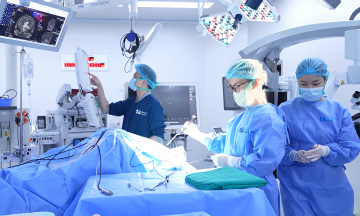
Doctor Tran Ngoc Hai advises cancer patients on their post-surgery care pathway. *Illustrative photo: Tam Anh General Hospital*.
CEA is typically checked every 3-6 months during the first two years, then once every 6 months in subsequent years. The specific monitoring schedule may vary based on the disease stage, recurrence risk, and individual patient condition.
The purpose of CEA testing is to monitor the trend of changes in the level over time. If the level increases and continues to rise across multiple tests, especially in patients who had elevated CEA before treatment and a decrease after surgery, doctors may suspect disease recurrence and order additional checks.
However, an elevated CEA level does not necessarily mean cancer has recurred. This level can also change due to other reasons, such as smoking or certain medical conditions. Therefore, doctors do not rely on a single CEA result to conclude disease recurrence. When CEA shows an abnormal increase, patients may be prescribed additional methods such as CT scans, MRI, colonoscopy, or other appropriate tests before a conclusion is made.
Conversely, a stable CEA level cannot guarantee that cancer will not recur. Some colorectal cancer patients have normal CEA levels even at the time of diagnosis. Therefore, this level may not accurately reflect disease progression in all cases.
CEA testing is not used alone for colorectal cancer screening in healthy individuals. Its value primarily lies in helping monitor a patient who has been diagnosed with cancer and is post-treatment, allowing for the comparison of changes over time.
You should adhere to your follow-up schedule and undergo tests as prescribed so that doctors can detect any abnormalities early, assess them, and provide appropriate management.
Master, Doctor Tran Ngoc Hai
Oncology Department
Tam Anh General Hospital Hanoi
| Readers can ask questions about cancer here for doctors to answer. |