Radiotherapy uses radiation beams targeting tumors to destroy cancer cells by damaging their DNA, causing them to stop dividing and die, after which they are naturally eliminated from the body.
Radiotherapy is often prescribed as part of multimodal cancer treatment, combined with other methods to shrink tumors before surgery. It can also be combined with chemotherapy, targeted therapy, or immunotherapy to enhance treatment effectiveness, prevent recurrence and metastasis, or provide palliative symptom relief.
For some early-stage cancers with small, localized tumors that have not metastasized to lymph nodes, doctors often prescribe radiotherapy with curative intent, aiming to completely eliminate the tumor.
Nasopharyngeal cancer originates in the nasopharynx, located deep behind the nasal cavity, above the oral pharynx, and close to the skull base. This anatomical area is complex, adjacent to vital organs and structures such as the brainstem and optic nerves. Surgical access is difficult, and its curative effectiveness is not high, making radiotherapy the preferred treatment.
Currently, advanced techniques such as intensity-modulated radiation therapy (IMRT) and volumetric modulated arc therapy (VMAT) ensure radiation beams precisely target the lesion, concentrating radiation from various angles to destroy nasopharyngeal tumors while minimizing impact on surrounding healthy organs and tissues. Patients with nasopharyngeal cancer experience fewer post-radiation side effects, such as dry mouth, difficulty swallowing, and better preservation of nerve, visual, and auditory functions.
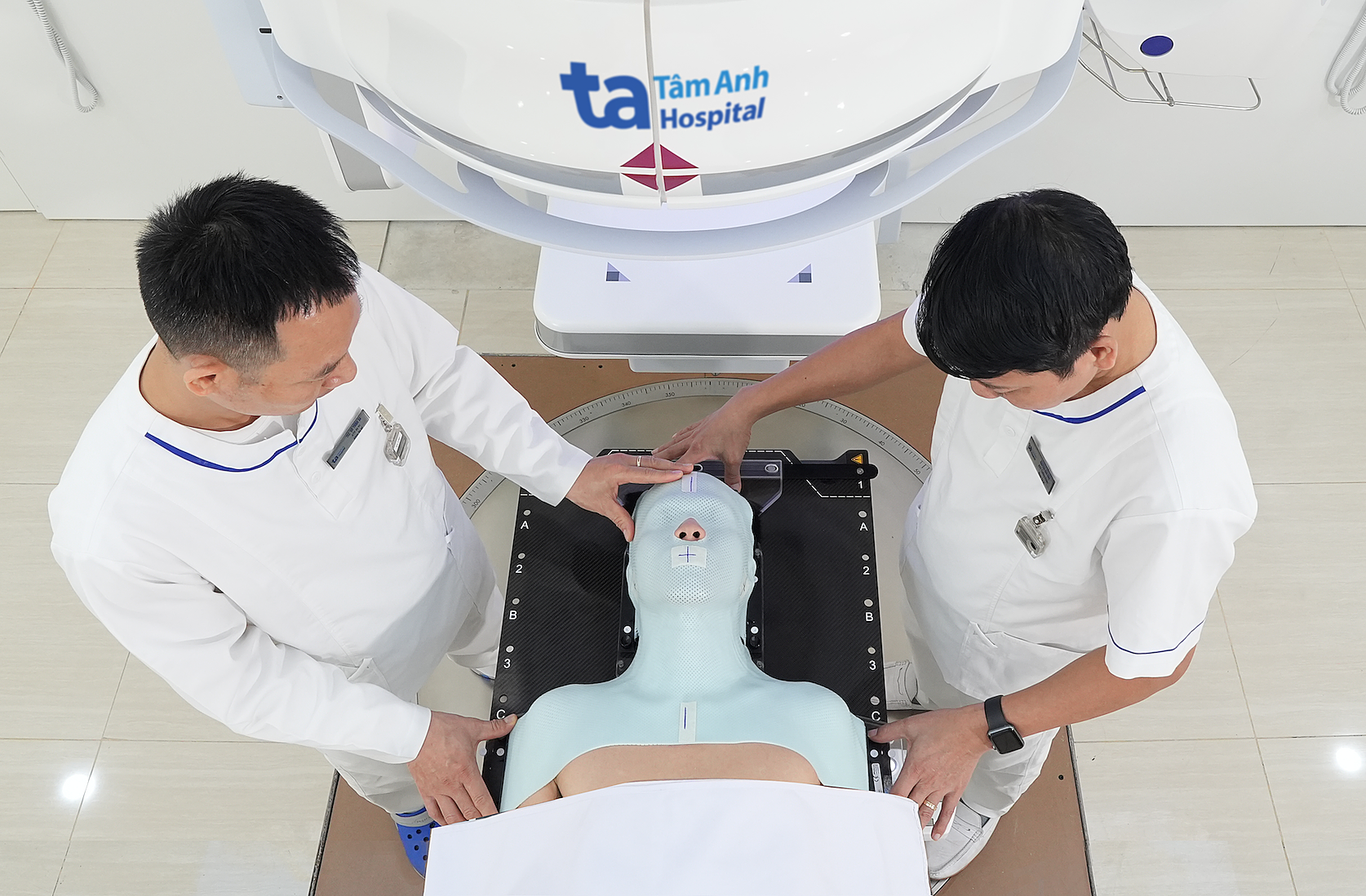 |
A technician adjusts a patient's position for nasopharyngeal cancer radiotherapy. Illustration: Tam Anh General Hospital |
A technician adjusts a patient's position for nasopharyngeal cancer radiotherapy. Illustration: Tam Anh General Hospital
Since you have been diagnosed with nasopharyngeal cancer, you should visit a multispecialty hospital for a doctor to examine you and develop an effective treatment plan. If the tumor is in an early, localized stage, the doctor may prescribe radiotherapy, potentially including prophylactic neck radiation, depending on your condition, to achieve a complete cure.
For advanced stages with neck lymph node metastasis, concurrent chemoradiotherapy can help control the disease better and prevent early recurrence. For some large tumors with neck lymph node metastasis, doctors might recommend neoadjuvant chemotherapy before radiotherapy to shrink the tumor, followed by definitive chemoradiotherapy for the nasopharynx and at-risk lymph node groups.
In late-stage nasopharyngeal cancer, while radiotherapy cannot achieve a complete cure, it can still shrink tumors and alleviate symptoms such as pain, bleeding, and difficulty swallowing, thereby improving the patient's quality of life.
MSc. Doctor Vuong Ngoc Duong
Deputy Head of Radiotherapy Department
Tam Anh General Hospital Hanoi
| Readers can submit questions about cancer here for doctors to answer. |