A CT scan of Mr. Thanh revealed a tumor in the lower lobe of his right lung, measuring 11x17 mm, showing signs of pulmonary parenchyma retraction. He presented no unusual respiratory symptoms during the examination.
Associate Professor Vu Huu Vinh, Doctor and Director of the Center for Thoracic and Vascular Surgery at Tam Anh General Hospital, TP HCM, emphasized the need to accurately determine the nature of the new lung tumor due to the patient's history of colon cancer. If the tumor proved malignant or metastatic, doctors planned to perform a lobectomy, lymph node dissection, or tumor ablation to eradicate the cancer.
Mr. Thanh had a 10-year history of chronic obstructive pulmonary disease (COPD), where air cysts rendered his lung tissue fragile and lacking natural elasticity. Associate Professor Vinh noted that a traditional needle biopsy risked pneumothorax or uncontrolled bleeding in the patient's already compromised lung. Additionally, for patients with a cancer history, needle biopsies often yield insufficient samples, increasing the chance of misdiagnosis and delaying crucial early treatment. The tumor's small size and location in the lower lobe, which moves considerably with breathing, further complicated a needle biopsy.
Following a consultation, the medical team opted for robotic-assisted laparoscopic surgery with the Da Vinci Xi robot. This approach aimed to obtain biopsy samples minimally invasively, reducing blood loss and limiting post-operative infection risk.
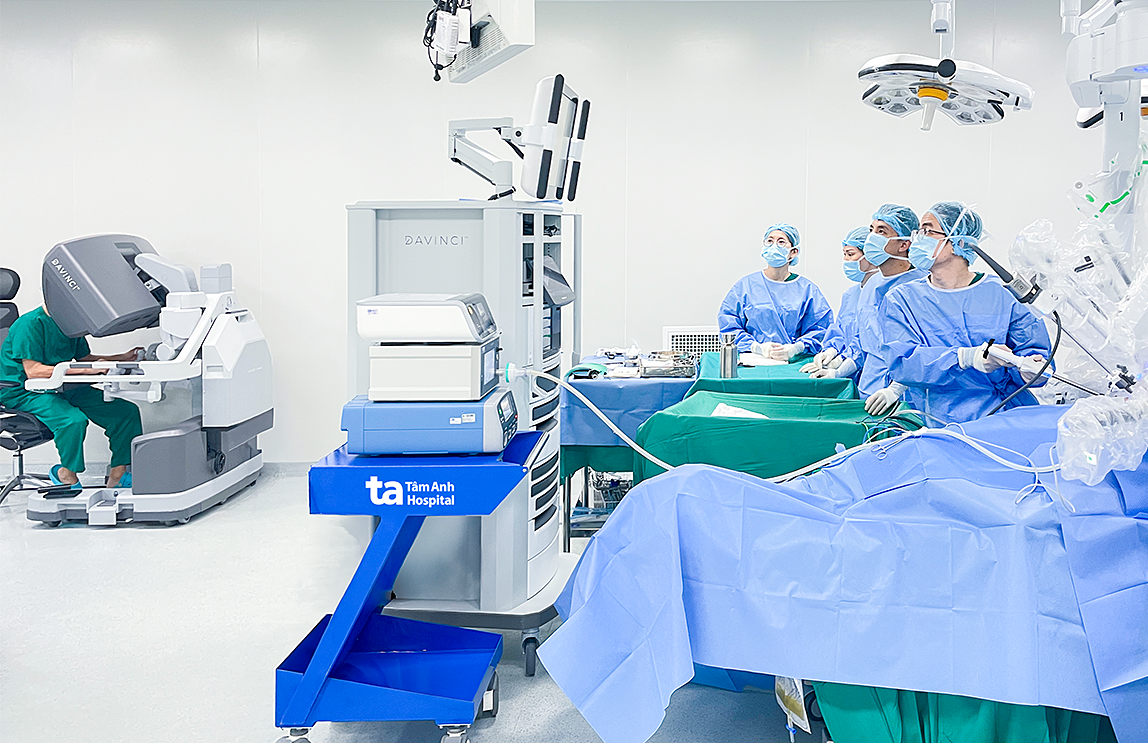 |
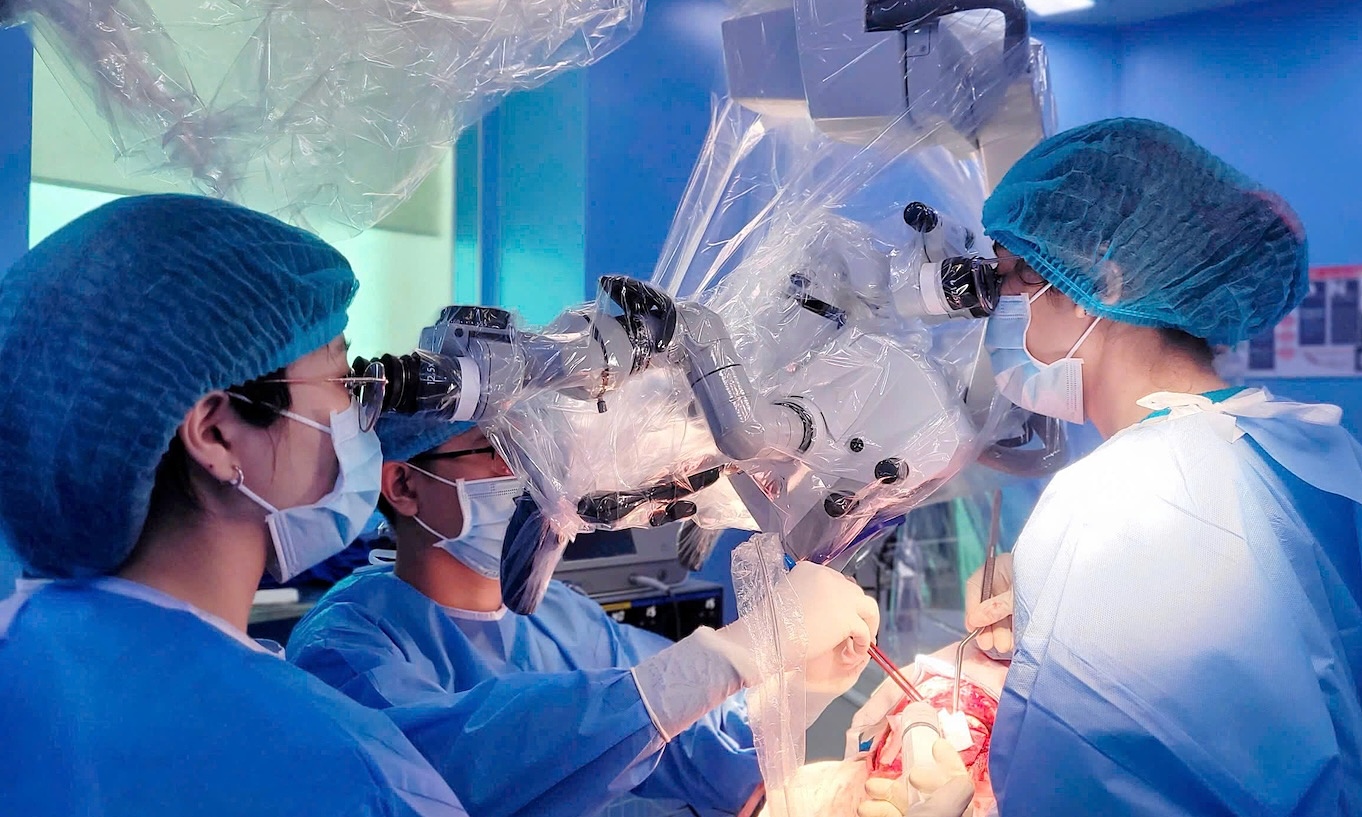
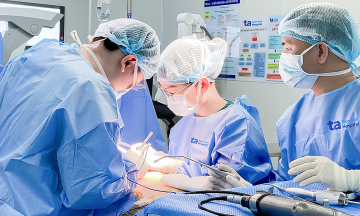
Associate Professor Vinh (left) operates the Da Vinci Xi robot during the patient's surgery. *Photo: Tam Anh General Hospital* |
Guided by a 3D camera system, Associate Professor Vinh used the robot's arms to dissect the tumor from blood vessels and lung parenchyma, obtaining a frozen section biopsy. This rapid freezing and examination confirmed the mass was a benign inflammation, not cancer. Consequently, the team changed their strategy to prioritize maximum lung tissue preservation through medical treatment, avoiding additional invasive surgery.
Associate Professor Vinh noted that frozen section biopsy delivers results within 30-40 minutes during surgery, sparing patients from multiple operations. This method also enables the team to determine the best intervention strategy mid-surgery, speeding up recovery.
Post-surgery, Mr. Thanh recovered quickly, experiencing minimal pain from the small incision, and was discharged after two days. Despite the benign nature of the tumor, he must maintain a balanced diet and attend regular follow-up appointments to monitor for any recurrence or abnormalities.
Associate Professor Vinh advises individuals with a history of cancer to adhere to follow-up examinations. Early detection of new lesions offers patients a chance for radical treatment or effective disease control, preventing distant metastasis.
Bao Anh
*Patient's name has been changed
| Readers can submit questions about cancer here for doctors to answer. |