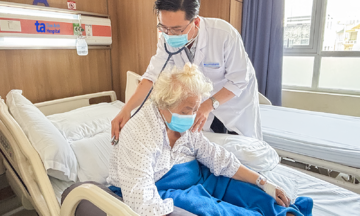
On the afternoon of the 25th day of the twelfth lunar month, Ward 5 at K Hospital Tan Trieu was still packed with patients. In room two, Mrs. Tran Thi Mui, 58, from Ha Nam, leaned against her bed frame, her hands caressing medical records, dog-eared from repeated review.
When the doctor made rounds, Mrs. Mui eagerly asked, "Doctor, can I get a signature for my situation?" The doctor smiled and asked back, "What signature, madam?" Mrs. Mui replied, her voice full of longing, "The discharge signature – so I can make it home to celebrate Tet with my family."
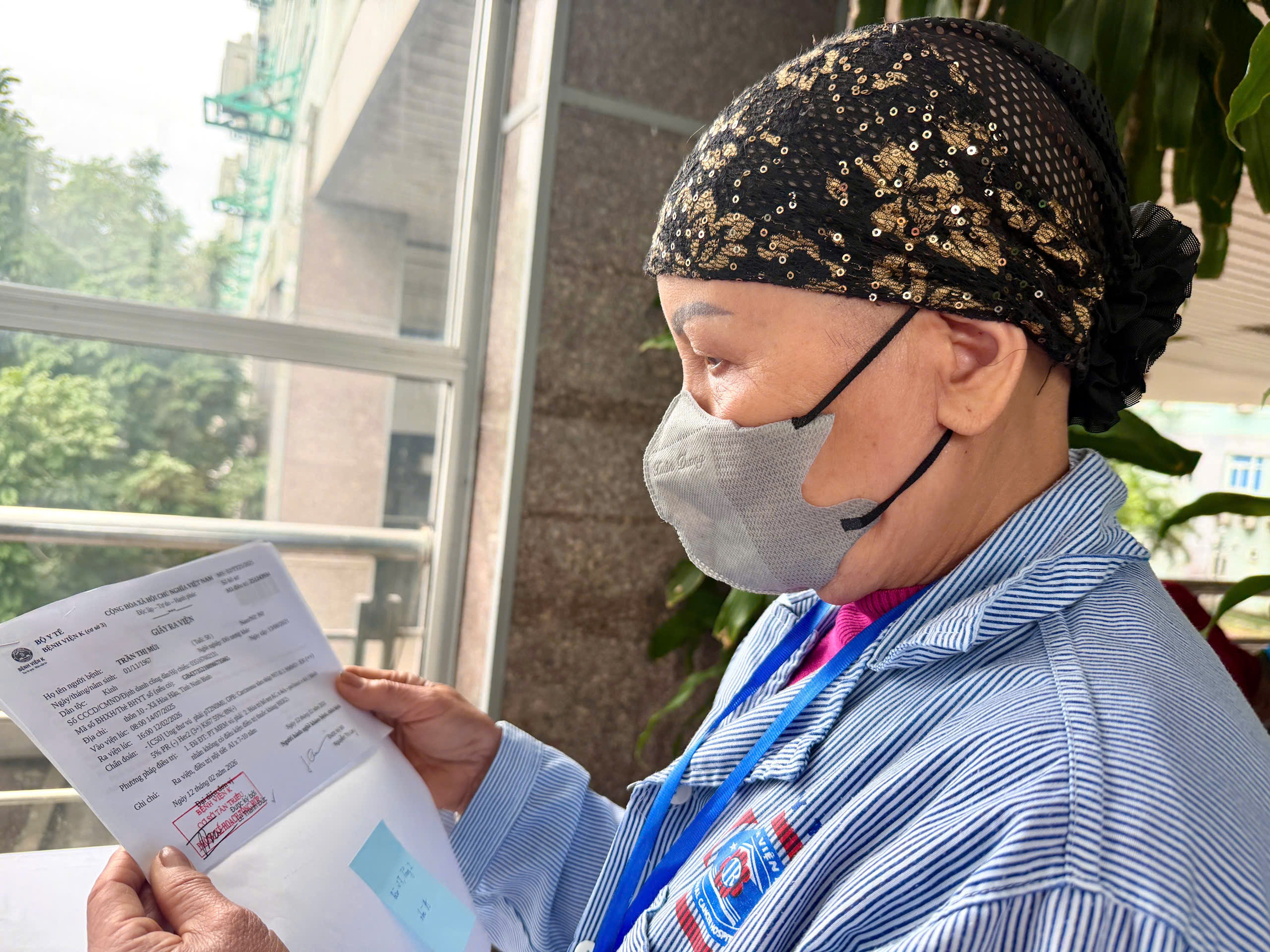 |
Mrs. Mai holds her discharge papers, officially ending treatment and heading home for Tet. Photo: Le Nga |
Mrs. Mai holds her discharge papers, officially ending treatment and heading home for Tet. Photo: Le Nga
Mrs. Mui discovered her illness seven months ago when she felt a hard lump in her chest. After a consultation, she was diagnosed with stage 3 breast cancer, requiring a mastectomy and lymph node dissection. After eight rounds of chemotherapy post-surgery, her time in the hospital made her Tet feel "on hold." Relatives frequently called, only asking about her health and avoiding any mention of Tet preparations. They understood that at this time, her peace and health were paramount.
After reviewing her medical records, the doctor announced, "You can go home now." Concluding eight rounds of chemotherapy, her ultrasound and X-ray results were favorable. Mrs. Mui officially received her discharge papers and only needed regular follow-up appointments.
"For me, this is a reunion signature," Mrs. Mui said emotionally, carefully holding the paper with the doctor's signature.
Sharing this hope was Mr. Tuan, from Quang Ninh, who had recently undergone surgery for advanced stomach cancer. His surgical wound had stabilized in recent days, and he only wished for discharge. "I'm not greedy for Tet," Mr. Tuan whispered, "I just want to be home, to sit at the family meal for one last time this year."
Despite being discharged, his condition was not entirely stable. He would have to observe a "controlled Tet," strictly adhering to his medication regimen and more extensive instructions than usual, especially his follow-up appointment right after Tet.
Mrs. Mui, Mr. Tuan, and around 500 other patients undergoing treatment at K Hospital will receive support to return home for Tet via "buses of love." After a warm year-end meal at the hospital, they will gather their belongings and assemble in the main lobby. 30 buses will depart from Hanoi, taking patients and their families back to Phu Tho, Tuyen Quang, Thanh Hoa, Nghe An, Ha Tinh, and other provinces.
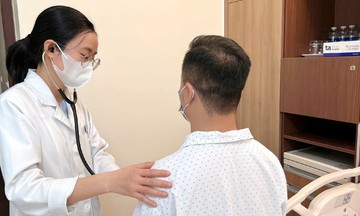
According to Associate Professor Dr. Pham Van Binh, Deputy Director of K Hospital, in the days leading up to Tet, the common patient desire is early discharge to reunite with family. Patients in stable health will be considered for discharge. However, not every case is approved. For cancer patients, even a few days of delayed medication, an uncontrolled diet, or a late follow-up appointment could seriously affect the treatment regimen.
"We understand patients' desire to go home. But a discharge signature is only meaningful when the patient meets medical criteria and understands the risks of non-compliance with treatment," Associate Professor Binh emphasized.
For doctors, signing a patient's early discharge is not simply "permission" but a decision involving two-way responsibility. Doctors are responsible for accurately assessing the patient's condition, while patients must commit to following treatment guidelines, not becoming complacent due to the Tet atmosphere. "Going home is to gain more motivation to fight the disease, not to temporarily forget about it," Mr. Binh stated.
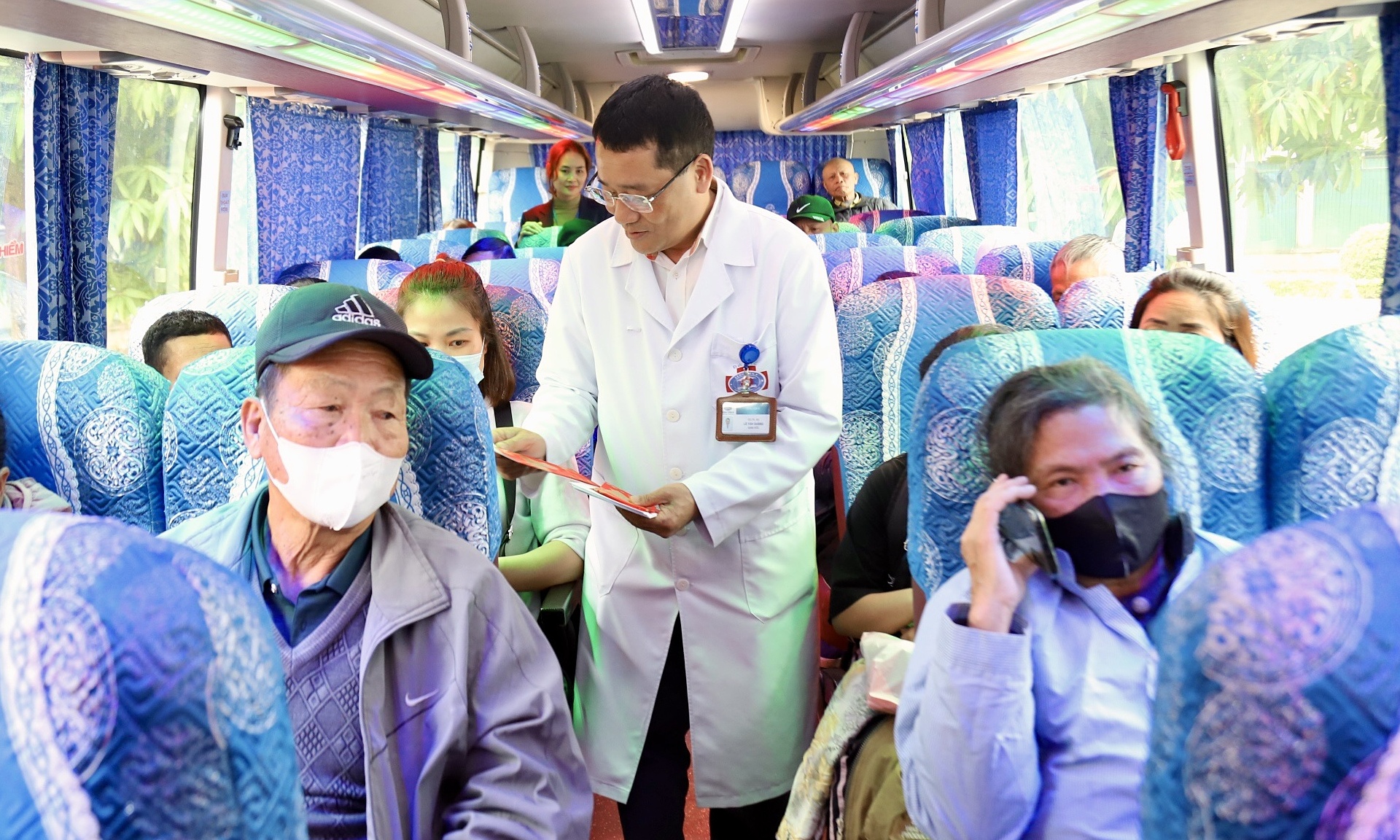 |
Doctors give lucky money to patients before the buses depart for their hometowns for Tet. Photo: Manh Tran |
Doctors give lucky money to patients before the buses depart for their hometowns for Tet. Photo: Manh Tran
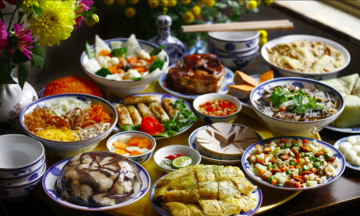
Severe cases, those undergoing unfinished radiation or chemotherapy, or patients with a high risk of complications still need to remain in the hospital. During Tet, the hospital typically has 300 to 500 inpatients, mainly severe, emergency, and post-operative cases. Even if they cannot go home, they are provided with a year-end meal, receive lucky money, and maintain full meals to experience the spring atmosphere right within the hospital.
For those discharged, the instructions before leaving include: take medication as prescribed, without skipping doses due to festive meals; follow recommended dietary restrictions; limit alcohol; closely monitor for unusual symptoms; and return to the hospital immediately if needed. Crucially, attend post-Tet follow-up appointments on time, without delay due to complacency.
Late in the afternoon, the hospital lobby was busier than usual. Small bags, quick hugs, and discharge papers were carefully tucked into pockets. There were no flowery wishes, but for Mrs. Mui, Mr. Tuan, and hundreds of other patients, the discharge signature on the last days of the year was the "most beautiful signature."
Le Nga