Dr. Ho Duc Loc, from the Center for Orthopedic Trauma at Tam Anh General Hospital Ho Chi Minh City, explains that the knee bears substantial force when climbing stairs. Knee pain during this activity is common and stems from various causes. Patients should seek medical attention if knee pain persists, accompanied by symptoms such as joint swelling, stiffness, or restricted movement.
Knee osteoarthritis is the most common cause, frequently affecting middle-aged and elderly individuals. Pain typically arises when patients frequently bend their knees, such as when climbing stairs, squatting, or standing up after prolonged sitting.
Knee arthritis, particularly rheumatoid arthritis, can cause knee pain when climbing stairs. The pain is often symmetrical and persistent, limiting a patient's mobility and daily activities.
Patellofemoral pain syndrome is common among young individuals, including athletes or those who frequently bend their knees. Pain primarily affects the front of the knee, intensifying with stair climbing or prolonged sitting in a bent-knee position.
Muscle strain around the knee joint, resulting from overuse or improper posture, can also cause pain. This pain is typically acute, accompanied by fatigue and muscle tension.
Knee ligament injuries can result from falls, impacts, or strenuous activity. Pain becomes more pronounced when patients perform knee-bending movements, such as climbing stairs or standing up and sitting down.
A meniscus injury causes the knee to lose its shock absorption and joint stability. Patients experience pain, swelling, and difficulty climbing stairs or performing deep knee bends.
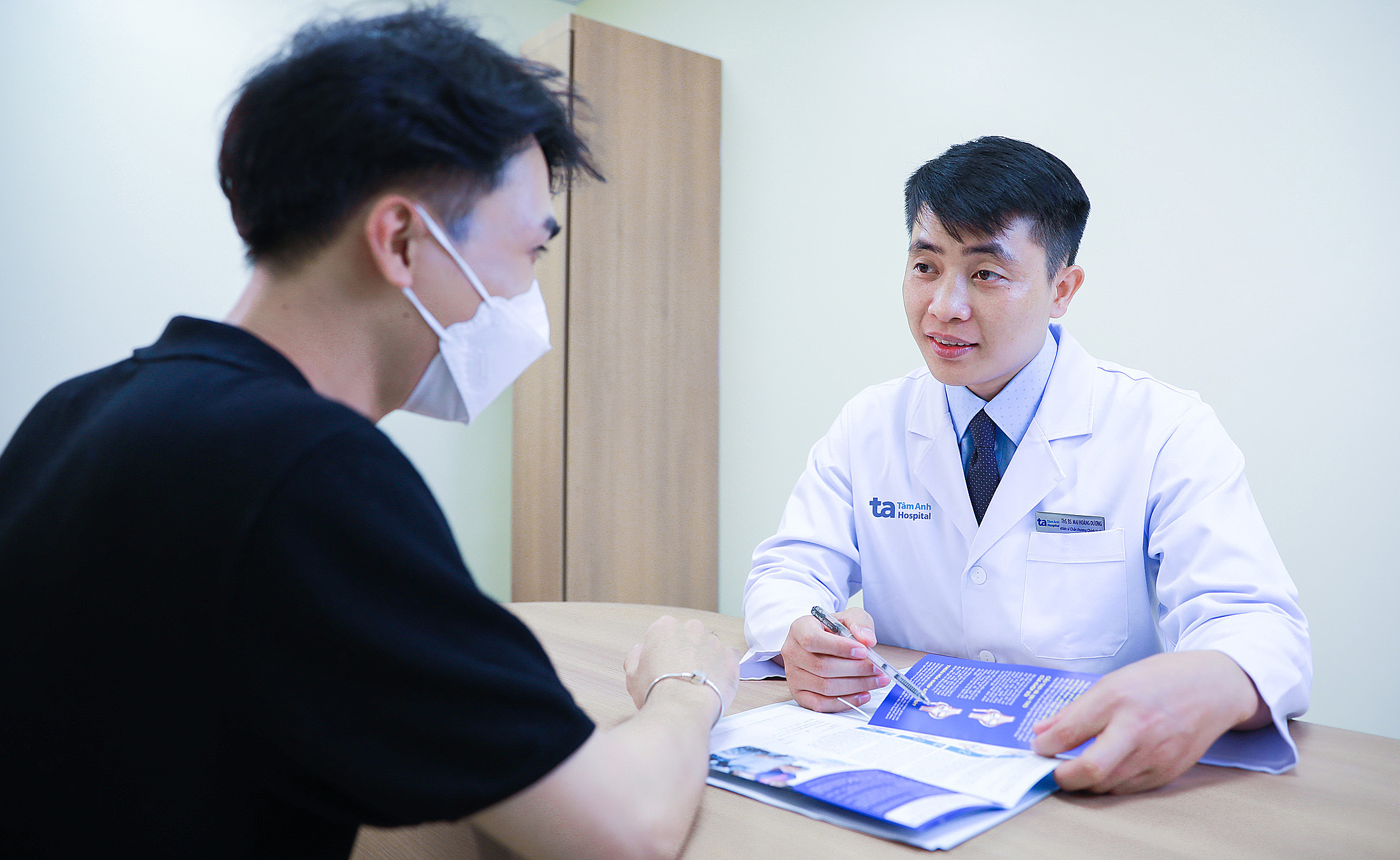 |
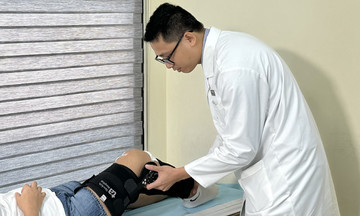
Dr. Loc explains knee joint health to a patient. Photo: Tam Anh General Hospital
Dr. Loc advises that knee pain when climbing stairs not only impacts daily life but can also signal underlying conditions requiring prompt diagnosis and treatment. Patients should seek medical consultation for timely intervention and to prevent complications, especially if pain persists for more than two to three weeks without improvement, intensifies, or occurs even at rest. Pain after an injury or fall also warrants attention. Other red flags include difficulty moving the joint, limited knee flexion or extension, morning stiffness lasting over 30 minutes, a crunching sensation or joint locking during movement, and a swollen, hot, or red joint.
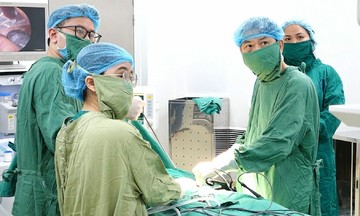
Conservative treatments, such as oral or injected medications and physical therapy, are often the first line of approach. However, if severe knee joint damage is the underlying cause, surgery may be necessary.
Modern surgical techniques, including kinematic alignment knee replacement and hinged knee replacement, utilize artificial joints designed to mimic natural knee components, offering an increased range of motion, ease of rotation, and high longevity. This allows patients to recover quickly, often walking within one to two days and achieving natural-like flexion and extension.
Phi Hong
| Readers can submit questions about musculoskeletal conditions here for expert responses. |