Sciatica is characterized by pain that radiates along the sciatic nerve, the longest and thickest nerve in the body. The pain originates in the lower back and extends down the leg. The condition can also lead to weakness in the leg and foot, causing numbness, tingling, or a pins-and-needles sensation.
Dr. Vu Ngoc Bao Quynh, a First Degree Specialist from the Spine Surgery Department at Tam Anh General Hospital, TP HCM, states that sciatica can stem from numerous causes.
A herniated disc is the most common cause of sciatica. This occurs when one or more discs located between the vertebrae are damaged and slip out of their original position, compressing the spinal cord and nerves, which results in pain and localized sensory disturbances.
Degenerative disc disease involves the natural wear and tear of the discs between the vertebrae. As these discs wear down, they gradually shorten in height, narrowing the neural pathways (spinal stenosis) and often compressing the sciatic nerve root, leading to pain.
Spondylolisthesis happens when a vertebra slips out of its original alignment, no longer lining up with the structure above it. This narrows the neural foramen where the nerve exits, thereby compressing the sciatic nerve.
Osteoarthritis. When joint cartilage is damaged due to degeneration, the body attempts to heal itself by promoting the formation of new bone segments. These bone spurs in the spine can compress nerves in the lower back, causing sciatica.
Piriformis syndrome is a condition where the piriformis muscle, a small muscle deep in the buttock, becomes tight or spasms. This places pressure on and irritates the sciatic nerve, leading to sciatic pain.
Cauda equina syndrome is rare but serious, directly affecting the bundle of nerves at the end of the spinal cord. This syndrome causes pain that radiates down the legs and can lead to numbness around the anus, potentially resulting in loss of bowel and bladder control.
Beyond these specific medical conditions, sciatica can also affect older adults, individuals with a history of lower back or spine injuries, those who are overweight, or people with sedentary lifestyles or who engage in excessive physical activity.
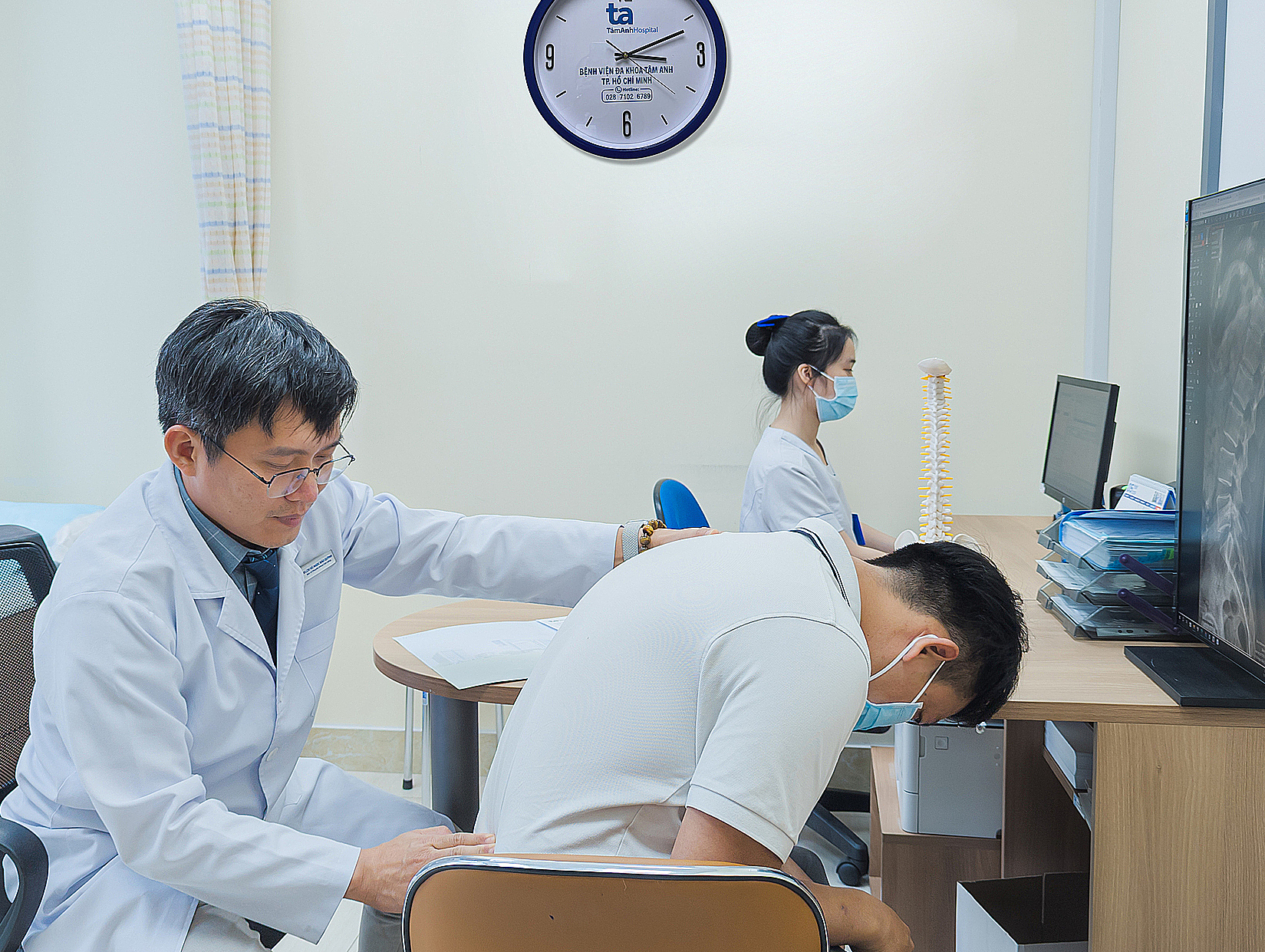 |
Dr. Quynh examining a patient's spinal function. Illustrative photo: Tam Anh General Hospital |
Dr. Quynh notes that most cases of sciatica can resolve with proper care or conservative treatment, often without the need for surgery. Patients may be prescribed one or a combination of methods, such as oral medication or spinal injections to alleviate pain and discomfort caused by sciatica, or physical therapy to strengthen lower back, hip, and hamstring muscles, reduce nerve compression, and improve mobility.
If these methods are ineffective and the condition worsens, surgery may be necessary to manage the disease and prevent dangerous complications. Surgical procedures for sciatica are typically minimally invasive, aiming to relieve pressure on the nerve. Patients experience less pain, minimal blood loss, can walk on the first day after surgery, and are discharged quickly.
Phi Hong
| Readers can submit questions about musculoskeletal conditions here for a doctor's response. |