The vitreous humor is a transparent, gel-like substance located behind the lens. Its role is to maintain the shape of the eyeball and transmit light to the retina. Over time, the vitreous structure degenerates. Collagen fibers within it contract and clump together into small masses, creating the sensation of black spots or floating objects in one's vision. This condition was previously observed primarily in people over 40 due to natural eye aging.
According to Doctor Bui Viet Hung, Head of the Vitreoretinal Department at the High-Tech Eye Center, Tam Anh General Hospital Hanoi, besides age, this condition in young people can stem from various underlying medical causes.
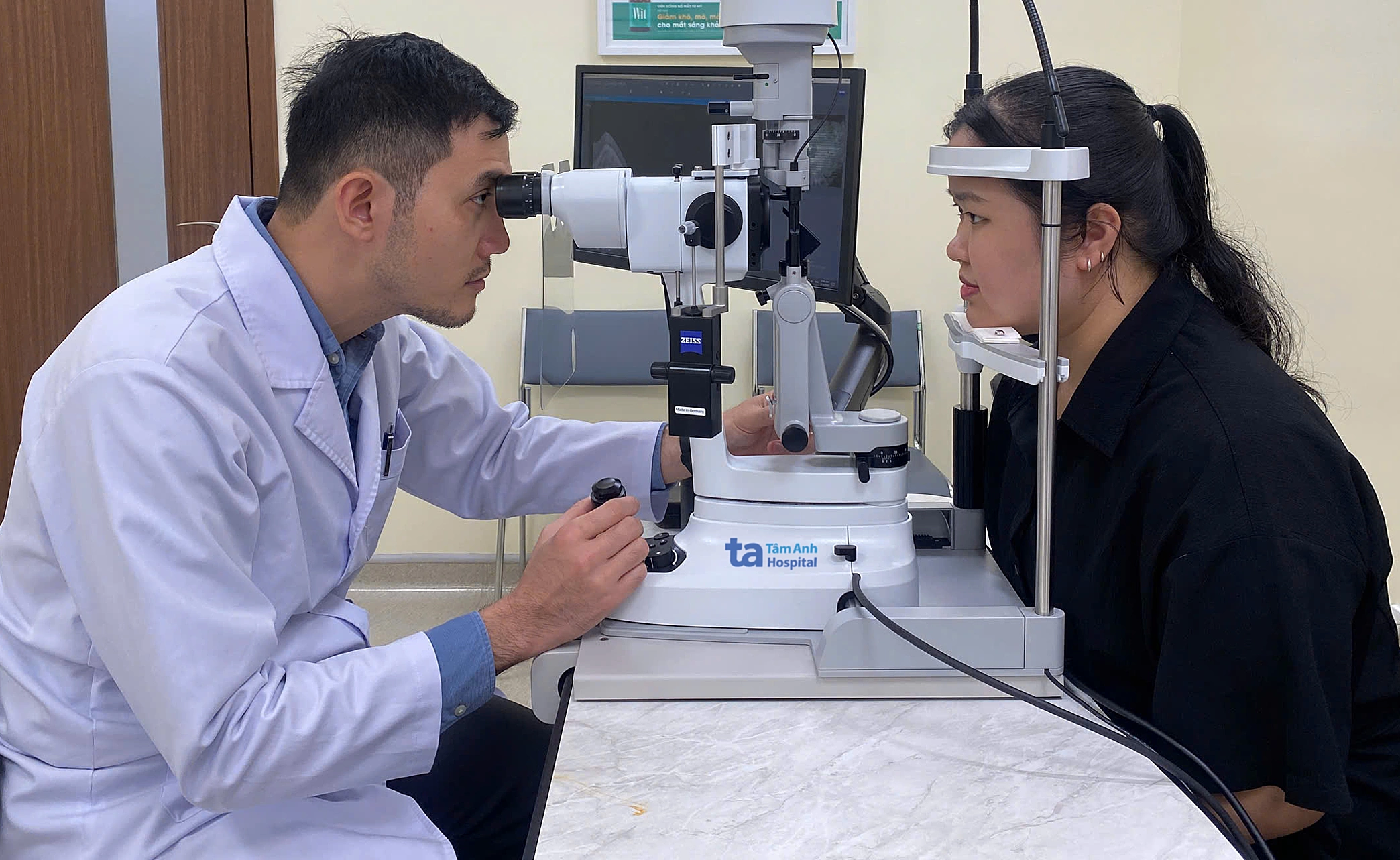 |
Doctor Hung examines a woman's eyes. Photo: Tam Anh General Hospital. |
Severe myopia is a common cause of vitreous opacities in young individuals. When the eyeball elongates excessively, the vitreous and retina are constantly stretched, accelerating collagen degeneration earlier than usual. Patients often experience black spots, thin strands, or floating objects in their vision.
Intensive use of electronic devices also contributes to this condition. Prolonged exposure to computer and phone screens forces the eyes to constantly adjust, leading to eye strain and accelerating premature vitreous aging. Extended late nights, high-pressure work, and unscientific lifestyle habits are additional factors that increase the risk of vitreous opacities in young people.
Eye trauma from sports, accidents, or severe impacts can damage collagen fibers in the vitreous and blood vessels within the eyeball. This is a common cause of vitreous opacities in young people. In such cases, patients may perceive "floaters," black spots, or cloudy masses in front of their eyes.
Vitreous hemorrhage occurs when blood leaks into the vitreous cavity due to retinal tears, trauma, or complications from severe myopia. Blood in the vitreous causes patients to see numerous black spots, cobwebs, or dark patches moving across their field of vision. Young individuals with retinal diseases or high-grade myopia face a higher risk.
Infection inside the eyeball caused by bacteria, fungi, or other pathogens can lead to endophthalmitis. The inflammatory response introduces inflammatory cells and exudates into the vitreous environment, worsening vitreous opacities. This condition can occur in young people following eye trauma, improper contact lens use, or after ocular procedures.
In some cases, young people who have undergone eye surgery or retinal interventions may develop vitreous opacities due to inflammatory reactions or structural changes within the eyeball.
Doctor Hung advises that if black spots, "floaters," or persistent floating objects appear in one's vision, an early specialist eye examination is crucial to identify the cause. Timely detection and treatment help limit the risk of retinal damage and preserve long-term vision.
Thu Giang
| Readers can submit ophthalmology questions here for doctors to answer. |