Over three weeks after the accident, the burn on Ms. Thuy's leg remained red, oozing fluid, peeling, and painful when she walked. The injured skin gradually formed scars with superficial ulcers. Doctor Nguyen Ngoc Tran, a specialist in Dermatology and Aesthetic Dermatology at Tam Anh General Hospital Ho Chi Minh City, stated that Ms. Thuy's burned area showed signs of prolonged inflammation and a compromised skin barrier, leading to slow healing and a high likelihood of unsightly scars.
Cooking oil burns are common household accidents. Compared to boiling water, cooking oil has a higher temperature and adheres longer to the skin, potentially causing deep damage to the dermis, even reaching the basal membrane. Therefore, even if the burned area is small, patients risk smoldering burns, hyperpigmented scars, contracture scars, or poor skin recovery if not treated properly, according to Doctor Tran.
Thermal damage to the patient's subcutaneous tissue can persist even after initial first aid. When the skin's protective barrier is compromised, the burned area is prone to prolonged inflammation, oozing fluid, and slow healing, especially in areas with frequent movement or friction. This explains why many people develop superficial ulcers and persistent unsightly scars after cooking oil burns.
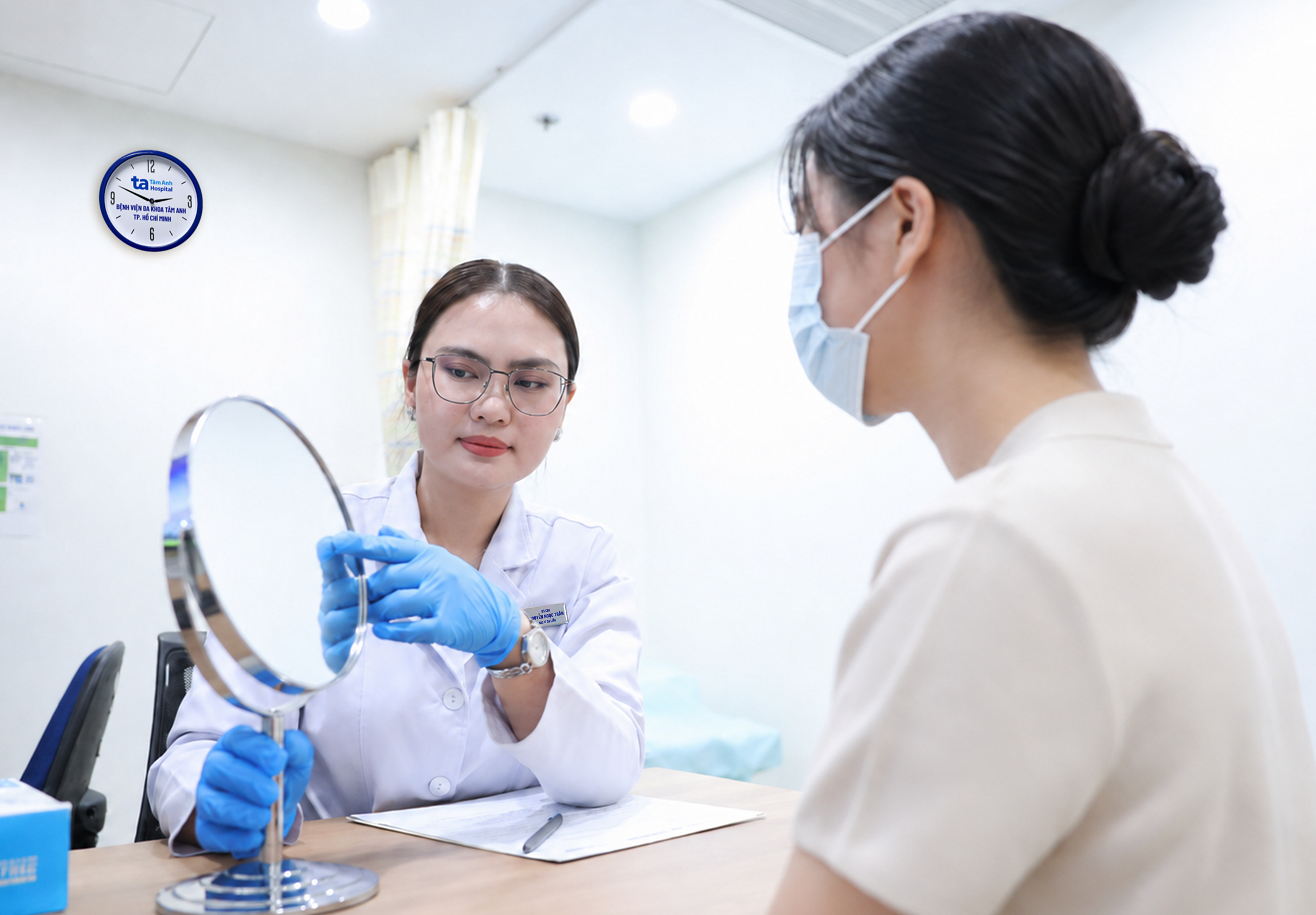 |
A doctor examines oil splatters on Ms. Thuy's forehead and advises on her treatment plan. *Photo: Tam Anh General Hospital* |
Ms. Thuy was prescribed oral anti-inflammatory medication combined with topical creams to soothe and regenerate her skin. This aims to control the red ulcers, reduce pain and burning, and limit infection risk. Concurrently, she received instructions on wound care to keep the area clean and minimize friction during movement.
Once the injured skin stabilizes, doctors may consider combining technologies such as laser, IPL, or Plasma Gold to improve scar surface, reduce hyperpigmentation, and stimulate collagen regeneration.
According to Doctor Tran, early intervention for burn scars leads to a higher chance of improvement. Treatment effectiveness depends on the extent and depth of the burn, as well as individual patient factors. Patients must follow skin care instructions, use sun protection, and attend follow-up appointments to limit complications like hyperpigmentation or persistent scarring.
Doctors also advise against underestimating cooking oil burns, especially if the affected skin experiences prolonged pain and burning, swelling, oozing fluid, or slow healing. When burned, cool the area under clean running water for about 15-20 minutes and cover it with a clean gauze. Do not apply toothpaste, turmeric, fish sauce, or leaves to the burn; do not apply ice directly or rupture blisters yourself, as this can deepen the injury, increasing infection risk and leading to unsightly scars. If the burn blisters extensively, is painful, or oozes fluid, patients should seek medical attention promptly.
Minh Huong
*Character's name has been changed*