Hoan My Saigon Hospital recently performed transcatheter aortic valve implantation (TAVI) on a 73-year-old male patient. The patient suffered from severe aortic valve stenosis along with several complex underlying conditions, including chronic obstructive pulmonary disease and diabetes. Previously, open-chest surgeries were not effective and posed challenges for his care.
After diagnostic tests such as vascular computed tomography scans and specialized echocardiography, doctors in the Cardiology Department prescribed TAVI for the patient. He received local anesthesia. Doctors inserted a biological heart valve into his body via a catheter from the femoral artery, guided by an angiography system and echocardiography. The procedure was completed in about three hours, significantly improving the patient's symptoms. After a short monitoring period at the hospital, the patient was discharged.
Doctor Tran Nguyen An Huy, Head of the Internal Cardiology Department, stated that TAVI offers many advantages over traditional methods. This minimally invasive technique avoids large incisions, reduces blood loss and pain, and limits complications. The average recovery time is only three to five days.
The hospital currently uses the latest generation biological valve, which reduces paravalvular leakage and increases durability. "With multi-specialty coordination and modern equipment, Hoan My Saigon Hospital can successfully perform three TAVI cases in one day," Doctor Huy added.
According to Master, Doctor Nguyen Ngoc Thao, Medical Director, the implementation of TAVI reflects Hoan My Saigon Hospital's strategic focus on specialized development in interventional cardiology. This method provides more effective treatment options for cardiovascular patients, especially the elderly with multiple underlying conditions who are not suitable for traditional open surgery.
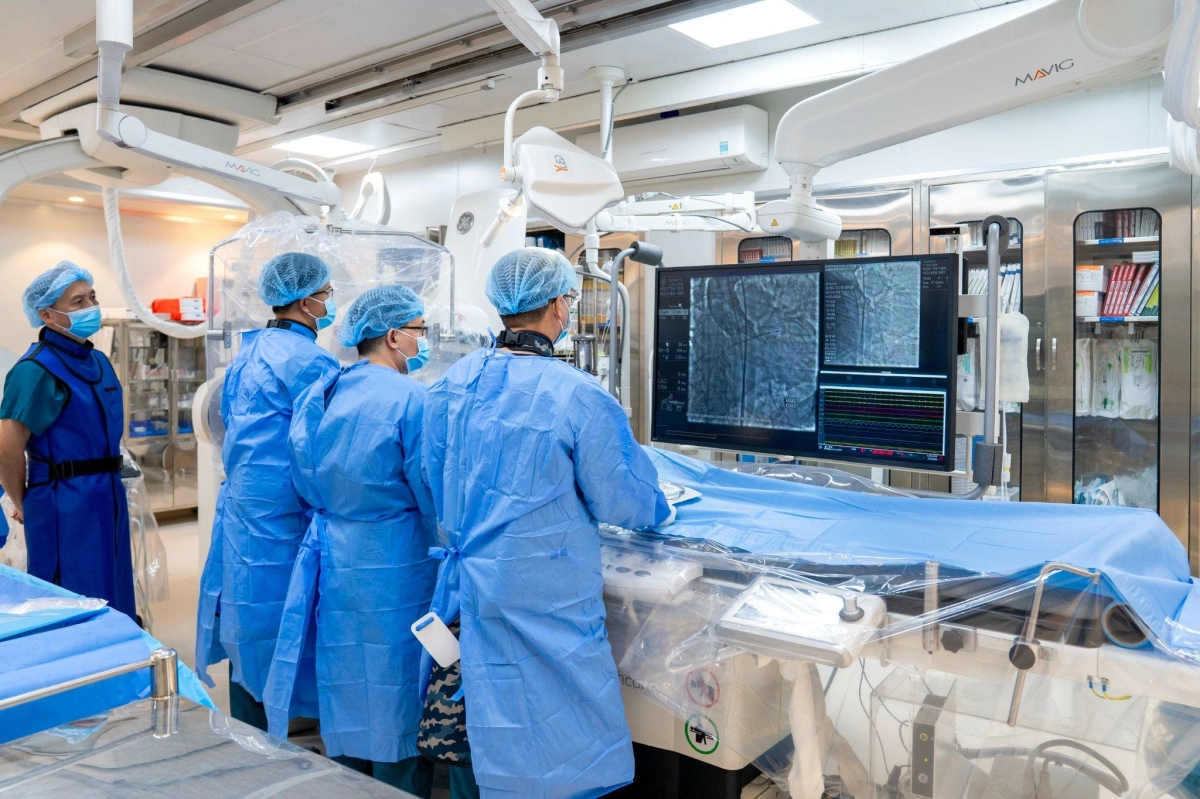 |
Doctors at Hoan My Saigon Hospital perform a transcatheter aortic valve implantation. *Photo: Hoan My Saigon Hospital* |
Aortic valve stenosis is a dangerous cardiovascular condition if not treated promptly and properly. Previously, open-chest surgery was almost the only option, but it carried many risks and required extended recovery. With advances in modern medicine, the TAVI technique stands out due to its minimally invasive nature, reduced risk of complications, and shortened recovery time.
With a commitment to continuously updating and applying advanced treatment techniques, Hoan My Saigon Hospital implements TAVI to offer more high-quality treatment options for cardiovascular patients, optimizing treatment effectiveness and enhancing safety.
Yen Chi