Tophi, a hallmark of chronic gout, develop when urate crystals accumulate in soft tissues, around joints, tendons, and under the skin. They typically emerge after about 5 years of gout, or earlier in individuals with elevated blood uric acid, chronic kidney disease, or irregular treatment.
Initially, patients observe small, firm lumps under the skin, commonly on toe and finger joints. These can then spread to other areas, including wrists, ankles, elbows, and notably, the knee. As urate crystals continue to deposit, tophi enlarge, causing pain, swelling, and restricting joint mechanics. Patients may experience joint stiffness, difficulty bending or extending the knee, impaired walking, or a feeling of the joint catching or locking.
Surgery for tophi is generally recommended when growths are large, causing persistent pain, limited movement, joint deformity, nerve or blood vessel compression, skin ulceration, infection, risk of tendon rupture, or when medical management fails. For your tophi in the knee joint, surgery is an option if walking becomes difficult or joint function is notably impaired.
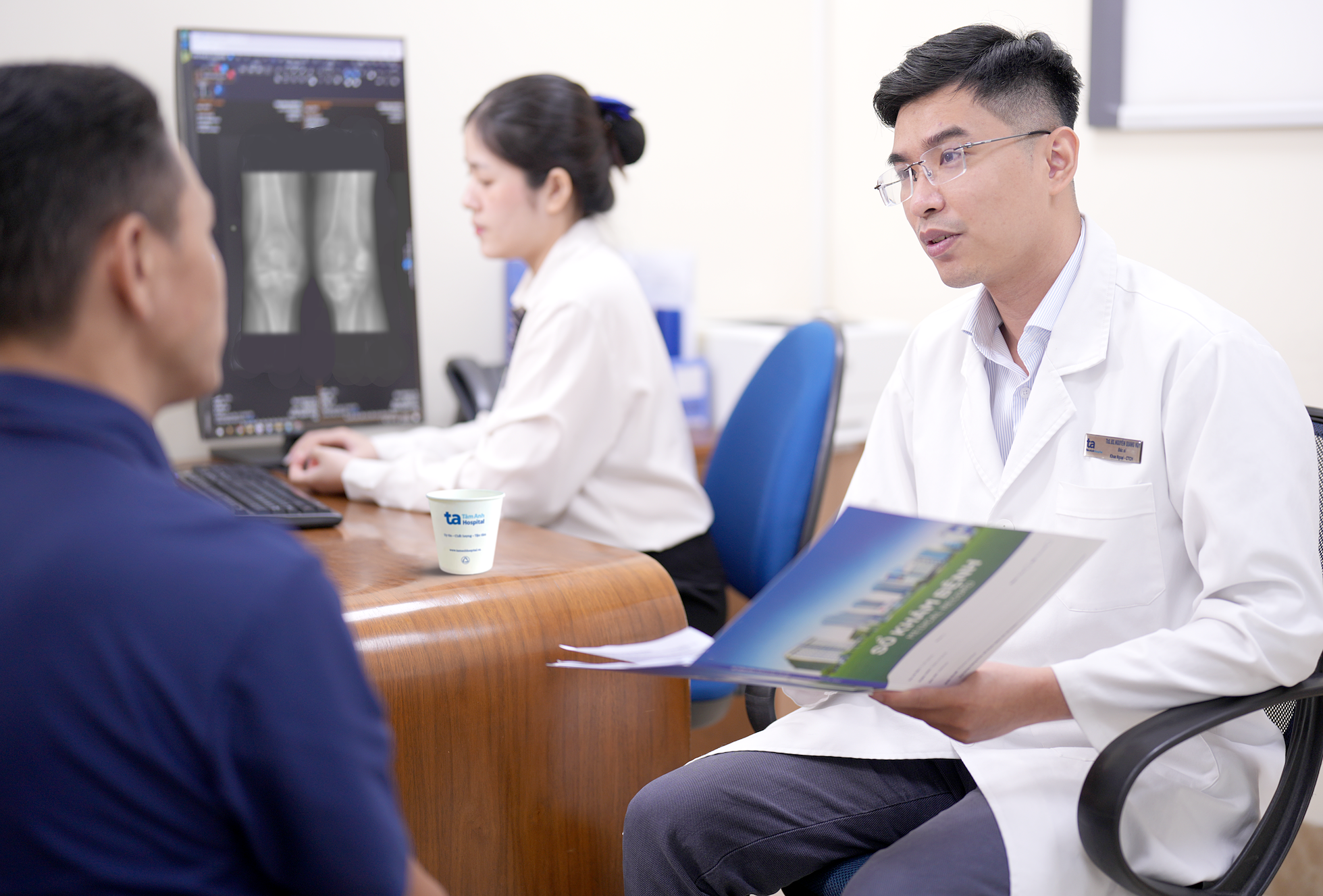 |
Doctor Huy advises a patient on tophi surgery. Illustration: Tam Anh General Hospital
Pre-operative assessment includes blood tests for uric acid levels, X-rays, CT scans, or MRI to define the tophus's size, location, and invasiveness. Surgeons then choose between arthroscopy or open surgery, depending on the case.
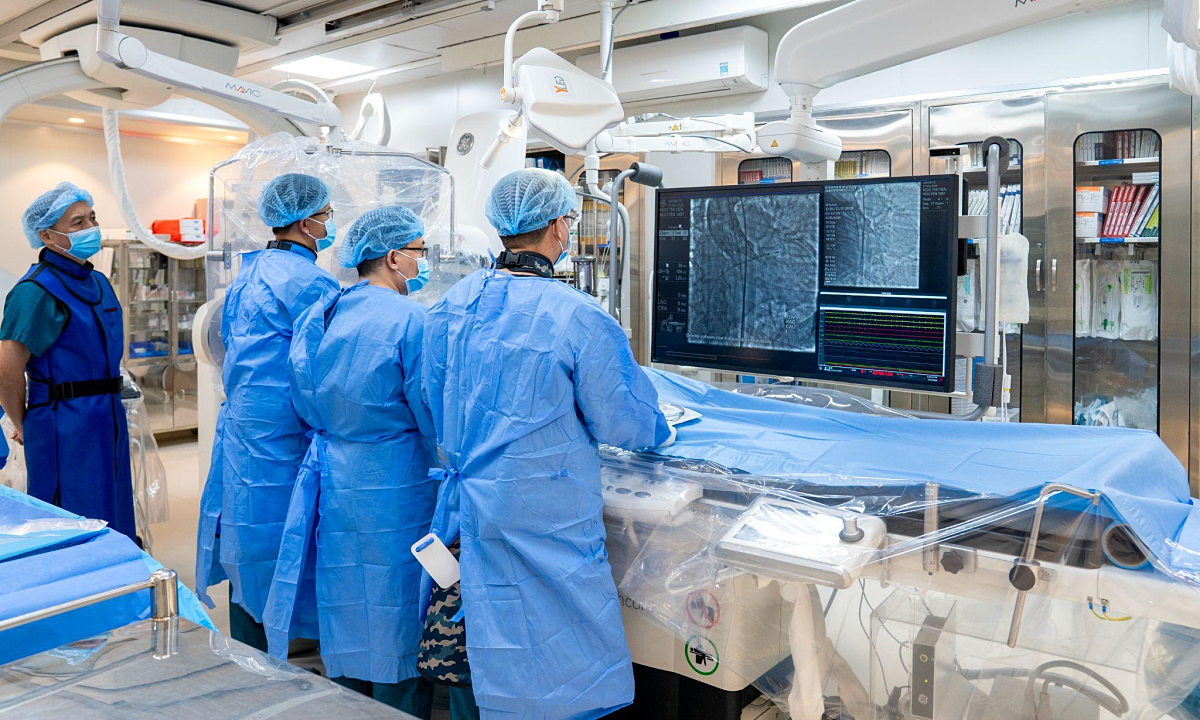
For tophi located within or confined to the joint, arthroscopy uses a high-resolution camera and specialized instruments to remove urate crystals through small incisions. This method reduces pain and shortens recovery. Larger, widespread, or deeply invasive tophi often necessitate open surgery for complete removal and maximum preservation of vital joint structures.
Giant tophi, existing for many years and invading tendons, ligaments, encasing neurovascular bundles, or causing bone and joint surface destruction, present more complex surgical challenges. Surgeons might need to reconstruct tendons, manage bone damage, or restore joint structures to ensure long-term motor function.
Post-surgery, pain management and early mobilization under a rehabilitation specialist's guidance are crucial. Gout medication will continue. Recovery time varies based on damage, but most patients see significant improvements in mobility, pain reduction, and quality of life.
Tophi removal surgery addresses gout's consequences, but not its underlying cause. Long-term uric acid-lowering treatment is essential, alongside limiting alcohol, reducing high-purine foods, maintaining hydration, managing weight, and regular follow-ups. Effective blood uric acid control prevents acute gout attacks, recurrent tophi, and new formations.
Master, Doctor Nguyen Quang Huy
Orthopedic Trauma Department
Tam Anh General Hospital Hanoi