Three days after hot cooking oil splashed on his right arm, Mr. Tan developed blisters and burning pain, with lesions spreading to his right chest and back. Initially believing it was just a burn, he self-medicated. However, when he developed a mild fever and painkillers offered no relief, he sought examination at Tam Anh General Hospital, TP HCM.
Dr. Nguyen Thanh Tin, Specialist Level II, Department of General Internal Medicine, observed multiple clusters of blisters along Mr. Tan's right arm, chest, and back. Some areas were abraded, ulcerated, oozing, very painful, and showed signs of secondary infection. Mr. Tan's medical history included hypertension, diabetes, dyslipidemia, and chronic kidney disease stage 3A, all factors necessitating close monitoring during his treatment.
Mr. Tan had chickenpox about 50 years prior. Dr. Tin diagnosed him with shingles, caused by the Varicella-zoster virus—the agent responsible for chickenpox—which reactivated after years of dormancy in his nerve ganglia. Dr. Tin explained that after a chickenpox infection, the Varicella-zoster virus doesn't disappear but silently persists in nerve ganglia. When the immune system weakens due to advanced age, chronic illness, stress, or immunosuppressant medications, the virus can reactivate, causing shingles and potentially recurring multiple times. External skin injuries like bumps or burns do not cause shingles. In Mr. Tan's case, the cooking oil splash on his arm coincided with the viral reactivation, leading to the mistaken belief of a severe burn.
Mr. Tan received intravenous antiviral medication, antibiotics, neuropathic pain medication, skin lesion care, and concurrent management of his underlying conditions. After 6 days, he developed no new blisters, his skin lesions gradually dried, did not spread, and the burning pain significantly reduced. With inflammation controlled, he ate and slept better, and was discharged for outpatient follow-up.
 |
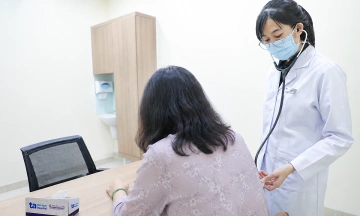
Mr. Tan for a follow-up appointment with the doctor one week after discharge. *Photo: Tam Anh General Hospital*
Shingles is characterized by clusters of blisters, typically appearing on one side of the body along a nerve pathway, accompanied by burning, stinging, or tingling pain. Delayed treatment, particularly in older adults, can lead to secondary infections, scarring, or post-herpetic neuralgia that may persist for months or even years, significantly impacting quality of life.
Doctors recommend that individuals over 50, especially those with diabetes, hypertension, chronic kidney disease, or other immunocompromising conditions, seek early medical attention for unusual skin pain accompanied by blisters, rather than self-medicating. Antiviral treatment within the first 72 hours of rash onset helps shorten illness duration, reduce skin lesion severity, and limit the risk of prolonged neuropathic pain. Additionally, shingles vaccination is an effective measure to reduce the risk of illness and recurrence in older adults.
Nhat Thanh
*Patient's name has been changed*