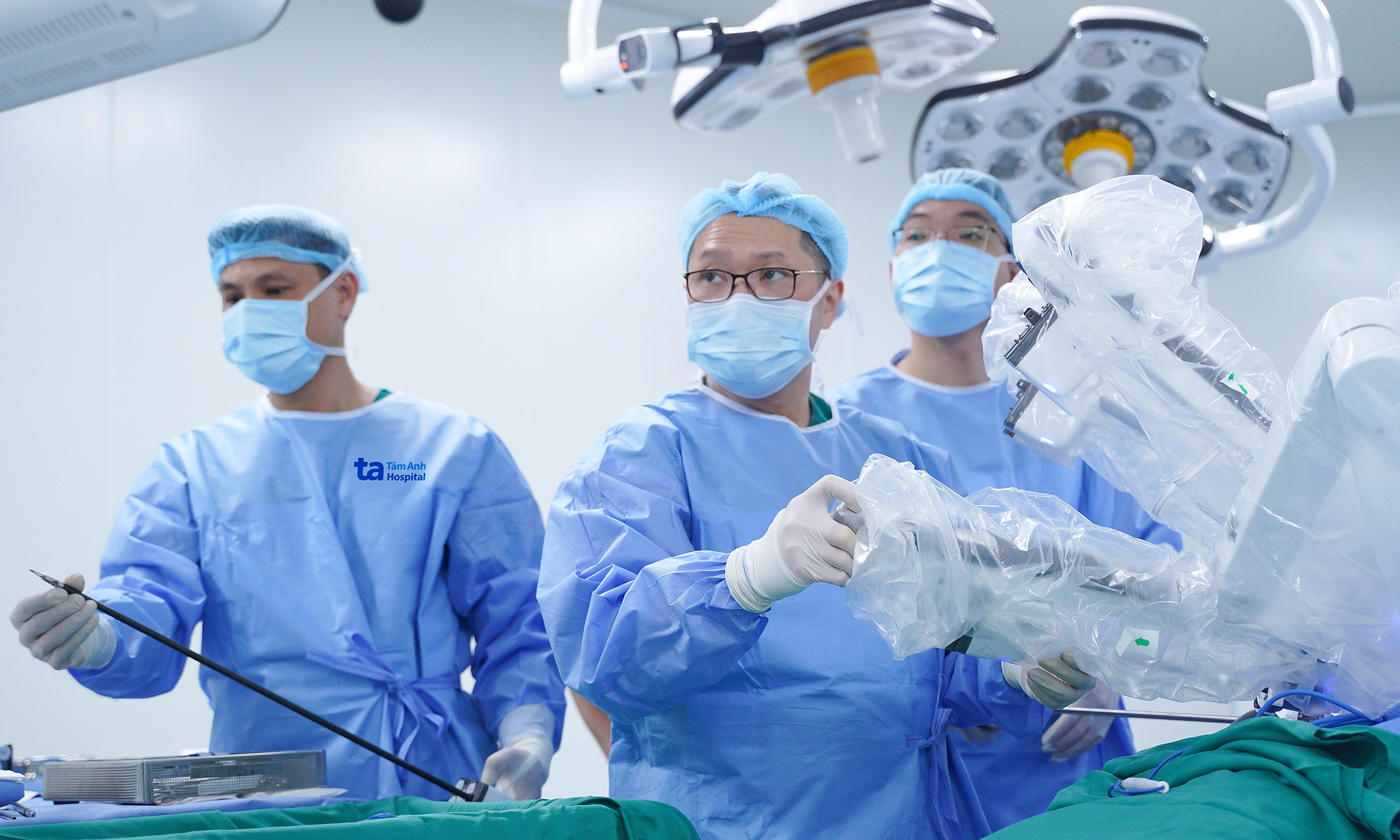
An esophago-gastro-duodenoscopy performed on Mr. Quang at Tam Anh Polyclinic District 7 revealed an esophageal lesion approximately 15 mm in size with indistinct borders, raising suspicion of malignancy. A biopsy confirmed high-grade squamous intraepithelial neoplasia of the esophagus, which is an early stage of squamous cell carcinoma. At this stage, the abnormal cells were localized to the superficial mucosal layer of the esophageal wall and had not yet invaded deeper tissues.
Mr. Quang was transferred to Tam Anh General Hospital, Ho Chi Minh City, for treatment. Doctor Do Minh Hung, Director of the Center for Endoscopy and Digestive Endoscopic Surgery, stated that the disease's very early detection allowed for a minimally invasive treatment approach with a high cure rate and preservation of the esophagus.
Mr. Quang was scheduled for the U-ESTD technique, or endoscopic submucosal tunnel dissection. This technique allows for complete removal of the lesion through the mouth, eliminating the need for open surgery or external incisions.
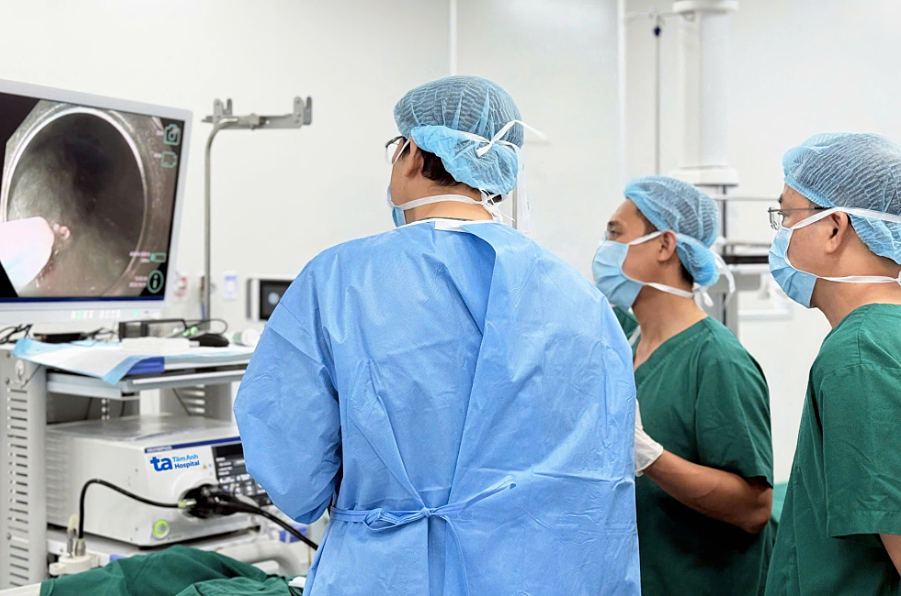 |
Doctor Hung (left) performing endoscopic submucosal dissection of esophageal cancer cells for Mr. Quang. Photo: Tam Anh General Hospital |
After identifying the lesion's boundaries, the doctor marked the intervention area and injected a submucosal lifting solution to separate the lesion from the muscle layer, reducing the risk of esophageal perforation. The team then opened the mucosa, created a tunnel beneath the lesion, resected five-sixths of the esophageal circumference, and completely removed the lesion.
Following the procedure, the patient recovered well, experienced no pain, and was discharged after one day. The histopathology results confirmed high-grade squamous dysplasia (early cancer) with clear margins. Based on these results, Mr. Quang does not require additional treatment; he maintains medication and undergoes regular follow-up examinations.
According to Doctor Hung, esophageal cancer is one of the digestive tract cancers with a high mortality rate, often due to late detection. As the disease progresses, cancer cells have an increased risk of spreading via the lymphatic system or bloodstream to lymph nodes, the liver, lungs, and bones. Patients in advanced stages often require esophagectomy, digestive tract reconstruction using the stomach or colon, combined with chemotherapy and radiation therapy.
However, when detected in an early stage, patients can be treated with minimally invasive endoscopic techniques such as ESD (endoscopic submucosal dissection) or U-ESTD, which help preserve anatomical structures.
Early-stage esophageal cancer often presents with few or no symptoms. Doctor Hung recommends annual health check-ups for everyone. High-risk individuals, such as those who smoke, consume heavy alcohol, or have existing esophageal conditions, should undergo screening as indicated. When experiencing symptoms like swallowing difficulties, painful swallowing, a burning sensation behind the breastbone, or unexplained weight loss, individuals should seek medical attention promptly.
Quyen Phan
*Patient's name has been changed
| Readers can submit questions about digestive diseases here for doctors to answer |