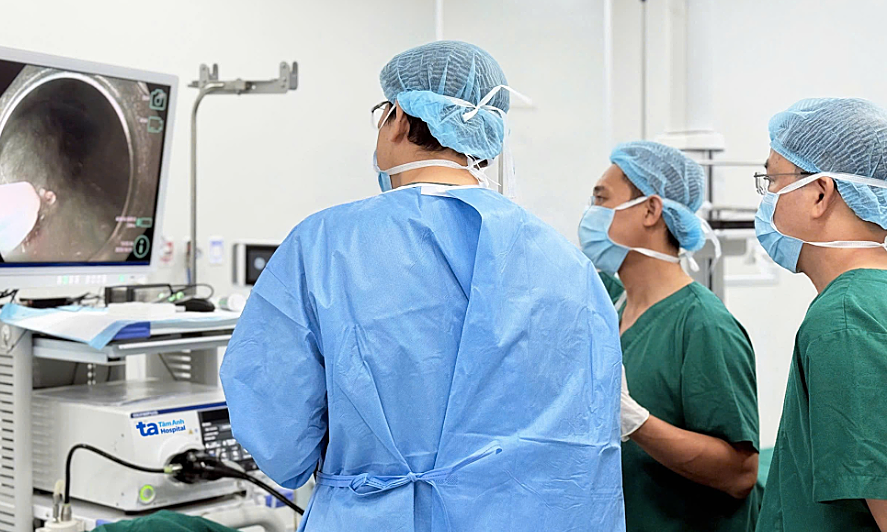
At the Binh Chanh General Hospital's scientific and technical conference on 17/7, Doctor Nguyen Duy Long, Director of Ho Chi Minh City's 115 Emergency Center, stated that after mergers, Ho Chi Minh City has become a megacity with approximately 14 million residents and an area nearly three times larger than before. While the healthcare network has expanded, its distribution remains uneven between central and suburban areas, creating gaps in access to pre-hospital emergency care.
Currently, 115 ambulances reach patients within approximately 15 minutes in the inner city. However, in many suburban areas such as Can Gio, Dau Tieng, or Ho Tram, this time can extend to 15-30 minutes or more due to long distances and sparse medical facilities. The 115 Emergency Center aims to expand its network to achieve a 15-minute response time across the entire city. The current network includes 72 satellite stations in Ho Chi Minh City, Binh Duong, and Ba Ria - Vung Tau, comprising public, private hospitals, and some ministerial hospitals.
According to Doctor Long, Ho Chi Minh City records over 1.2 million hospital emergency visits annually. The 115 hotline currently receives an average of approximately 1,500 calls daily, but only about 10%, or 150 cases, are actual emergencies. The remaining calls are for consultations, mistaken calls, or do not require an ambulance dispatch.
In emergency care, leveraging the "golden hour" is a critical factor. Patients experiencing cardiac arrest require chest compressions within 4 minutes, myocardial infarction patients need coronary intervention within approximately 90 minutes, and those with ischemic stroke require thrombolytic treatment within the first 4.5 hours.
"Shortening the time to reach the scene is decisive for saving lives and reducing long-term complications," Doctor Long said.
To achieve this goal, the 115 Emergency Center continues to expand its satellite station network, prioritizing areas lacking emergency points. Some health stations, such as Binh Khanh and Dau Tieng, are expected to be upgraded to participate in pre-hospital emergency care, with additional personnel, vehicles, and a completed legal framework. This expansion will involve all qualified medical facilities, regardless of whether they are public or private, not just hospitals.
Concurrently, Ho Chi Minh City is accelerating the application of technology in emergency coordination. The 115 Emergency Center plans to develop an application that allows residents to track ambulance locations, know their estimated arrival time, and connect with the hotline or doctors for first aid instructions while awaiting emergency services.
"Many people currently call 115 but do not know when the ambulance will arrive, becoming anxious and taking patients to the hospital themselves. If they can track the ambulance's journey and receive remote first aid guidance, emergency outcomes will improve," Doctor Long said.
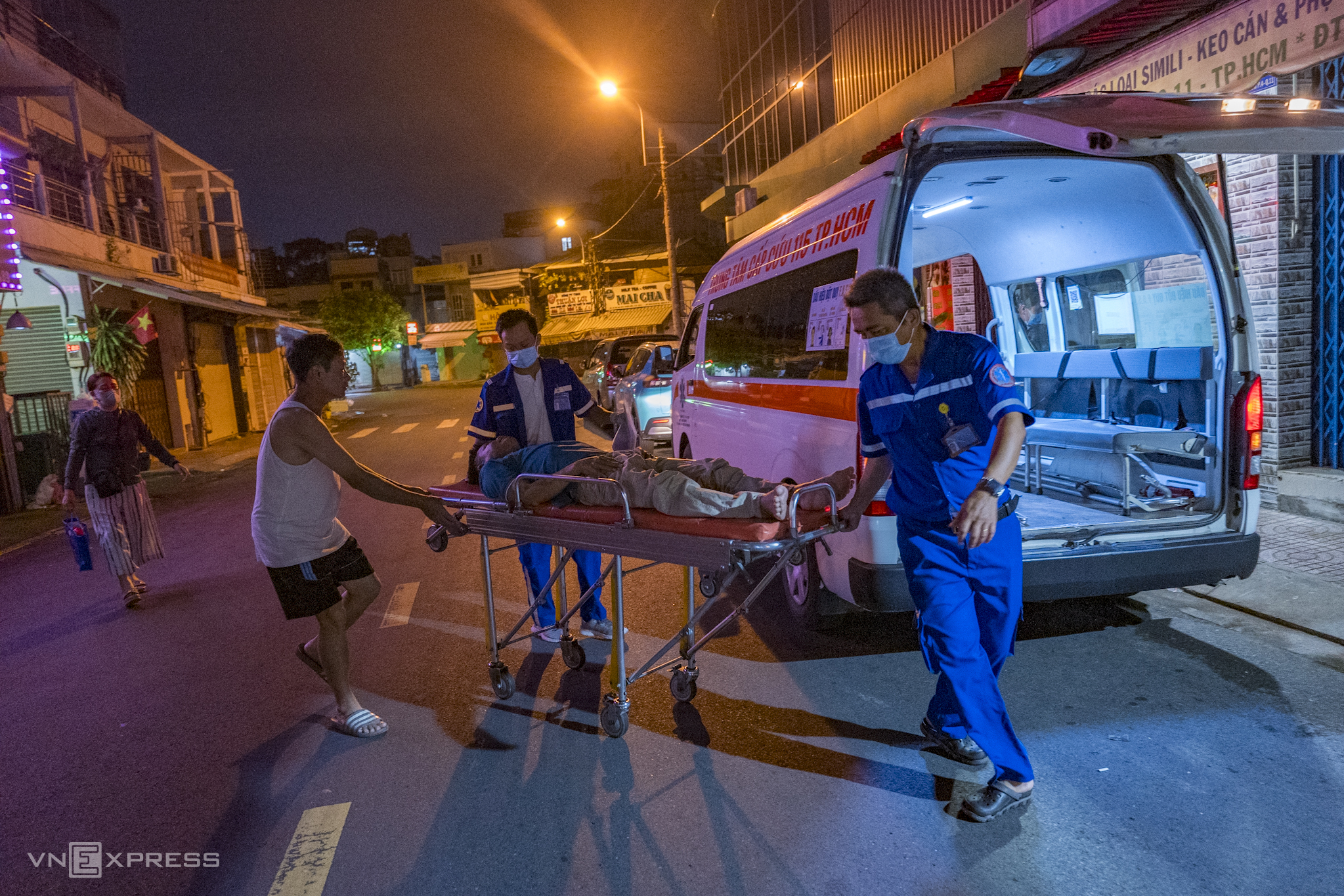 |
Ho Chi Minh City 115 Emergency Center staff provide first aid and transport patients to the hospital. Photo: Hoang Viet |
According to him, integrating the three emergency hotlines—113, 114, and 115—will establish a unified reception and coordination center in localities. This will enhance collaboration among police, fire services, and medical teams during incidents such as fires, structural collapses, or major accidents.
The healthcare sector is also exploring new vehicles, including small rapid response vehicles operated directly by medical staff. These vehicles can carry basic emergency equipment and quickly access narrow alleys or crowded areas. Some specialized vehicles in the future may be equipped with on-site ultrasound machines, automated chest compressors, and modern resuscitation devices to enhance pre-hospital emergency capabilities.
Doctor Nguyen Van Vinh Chau, Deputy Director of the Ho Chi Minh City Department of Health, stated that developing the pre-hospital emergency network and strengthening connections between hospitals and grassroots healthcare are key priorities for the health sector. According to him, hospitals need to coordinate closely with health stations, regional medical centers, and the 115 emergency network to form a continuous healthcare system, encompassing emergency care, treatment, and long-term patient management.
Le Phuong