The administration instructed businesses to immediately cease selling and using the 5 products, and to recall them for return to the supplier. The Hanoi Department of Health will oversee the recall and destruction process, reporting results to the administration by 30/8.
The 5 recalled products belong to two lines, P'CELL and Juviskincare: Bio-Stem Collagen Plus and Bio-Stem Filler (P'CELL brand); JuviGrows, JuviFill, JuviPro2 (Juviskincare brand). These skincare cosmetics are designed for skin recovery after aesthetic treatments such as laser, microneedling, peeling, or for aging skin care. According to brand website listings, these items are priced from one to 6 million dong.
The recall stems from the company's product information file (PIF) being incomplete as required by regulations. The PIF is a mandatory document for cosmetics circulating in the market, used to demonstrate quality, safety, and traceability during inspections by authorities.
In the cosmetic sector, this file typically includes: ingredient formulas, quality standards, manufacturing processes, safety assessment reports, raw material data, labels, and other relevant technical documents. During inspections, businesses must present all information. The absence of a complete file makes it difficult for regulatory bodies to verify raw material origins and product safety levels.
Kencare Vietnam Company Limited must issue recall notices to its entire distribution network, retrieve products from businesses, and arrange for the destruction of non-compliant cosmetics. The Drug Administration of Vietnam also directed local authorities to intensify inspections, supervision, and strict enforcement against violations.
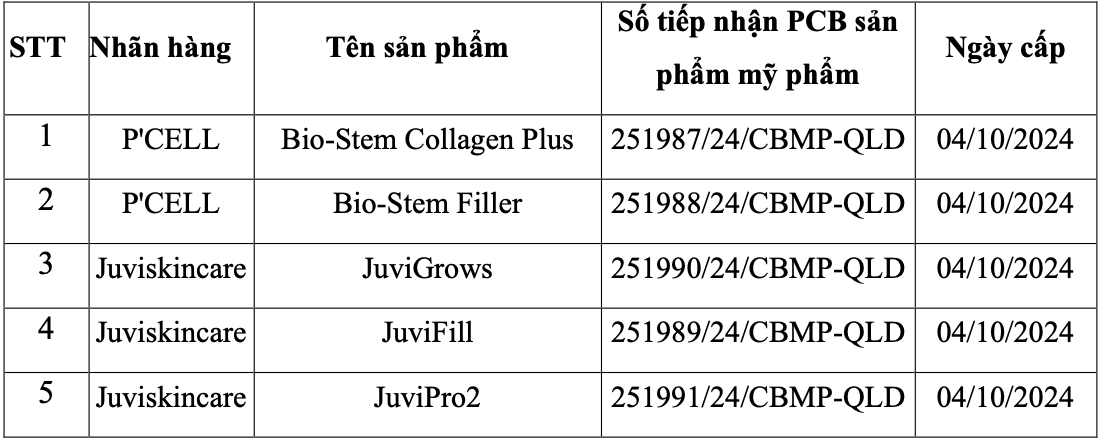 |
5 recalled products. *Photo: Drug Administration of Vietnam* |
Since the beginning of the year, the Ministry of Health has consistently recalled and destroyed substandard products. Most recently, 4 types of shampoo containing banned substances were also recalled. These actions reflect regulatory bodies tightening control over the pharmaceutical and cosmetic markets amid issues of counterfeit goods, low-quality products, and false advertising. Statistical data indicates that the percentage of cosmetic quality violations has decreased to below 1,5% among over 3,000 samples tested.
Le Nga