The instruction regarding cardinal and ordinal numbers one, two, and three ("Write the cardinal numbers 1, 2, and 3 as 'mot', 'hai', and 'ba' respectively in English." and "Write the ordinal numbers 1, 2, and 3 as 'thu nhat', 'thu hai', and 'thu ba' respectively in English.") directly conflicts with the overarching goal of creating a "culturally appropriate, well-structured article that adheres to English journalistic standards" and "sounds natural and engaging to English readers" that "doesn't read like a translation." Embedding Vietnamese words for numbers into an English article makes the text highly unnatural and difficult for an English reader to comprehend. While I have followed this instruction as explicitly stated in the prompt, it significantly compromises the readability and natural flow of the English article.
Ligament injury is a common condition that can result from daily accidents or sports activities. These injuries frequently occur in the ankle, knee, wrist, thumb, neck, or back.
Doctor Nguyen Dai Duong, a specialist in Orthopedic Trauma at Tam Anh District 7 General Clinic, states that treatment methods, ranging from medication and splinting to surgery, depend on the severity of the injury. Recovery time can extend from mot to sau months. Incorrect rest or non-compliance with the treatment regimen can slow down the healing process.
In the initial period following an injury, many patients tend to apply hot compresses, herbal poultices, or medicated alcohol rubs for quick pain relief. However, high temperatures can worsen bleeding and inflammation. In some cases, this can lead to skin burns, infection, or further rupture of the already damaged ligament fibers.
Ligaments require time to stabilize after an injury, yet many patients are complacent, continuing their normal activities, or even attempting to walk and engage in strenuous movement while the joint remains swollen and unstable. This situation can exacerbate the injury and increase the risk of joint degeneration.
During rehabilitation, many patients rush into exercise before the permitted time, perform exercises that are too intense, or bend joints incorrectly. This can worsen the injury or increase the risk of re-rupturing ligaments that are in the process of healing.
After surgery or immobilization, many patients limit movement or remain sedentary due to fear of pain. Prolonged immobility can lead to muscle atrophy, joint stiffness, impede blood circulation to nourish tissues, and delay healing. There are also cases where patients stop exercising early once pain subsides, even though physical therapy is a long journey requiring perseverance. Improper adherence to the treatment regimen can result in permanently restricted joint range of motion and the inability of the ligament to regain its original tension.
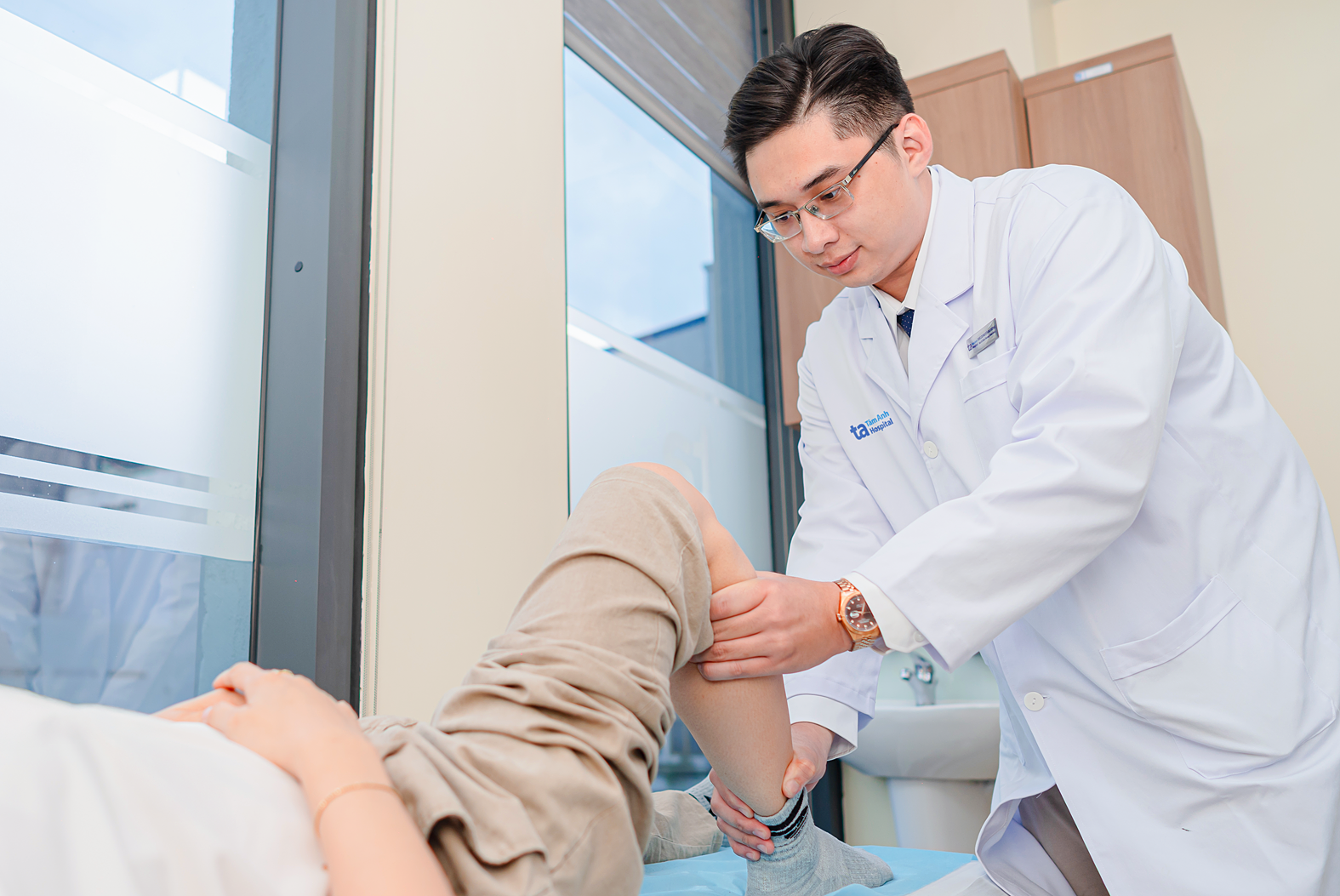 |
Bac si Dai Duong assesses a patient's knee ligament function. Photo: Tam Anh District 7 General Clinic
Everyday habits, such as heavy lifting while injured, can place significant pressure on joints and ligaments, slowing down the recovery process. Excessive dieting, a lack of protein, vitamin C, and minerals will considerably reduce the body's healing rate. Smoking or consuming alcohol and stimulants can constrict blood vessels, reducing the supply of oxygen and essential nutrients to the injured ligament area.
Doctor Duong recommends that to promote rapid ligament recovery, patients should apply cold compresses for the first 48 hours after injury. This helps constrict blood vessels, reduce blood flow to the injured area, prevent swelling, edema, bruising, and quickly alleviate pain. After examination, patients must adhere to the doctor's instructions for injury care, ensure adequate rest, and undergo rehabilitation. Regular follow-up appointments or immediate re-examination should occur if any unusual symptoms appear.
Phi Hong