At the Oncology Department, Hanoi Medical University Hospital, Doctor Ngo Van Ty discovered Hoa had an ovarian tumor with a diameter of 20 cm. A biopsy confirmed stage two ovarian cancer.
Hoa was devastated, unable to believe she had cancer at 19. Doctor Ty explained the surgical scenarios. If malignant cells had extensively invaded, the surgical team would be forced to remove all reproductive organs to eliminate the disease, meaning she would lose the ability to bear children. If the disease was still localized, doctors could perform fertility-preserving surgery, retaining the uterus and a healthy portion of the ovary.
"Should I keep my uterus or save my life?" Hoa's question haunted Doctor Ty. Her mother, sitting beside her, held her hand and said, "If you can't have children, we can adopt. The important thing is that you live." Ultimately, the young woman chose to undergo surgery.
The surgery successfully removed the entire tumor without complications. Seeing the patient lying peacefully with an IV drip in her arm, Doctor Ty remained concerned, knowing the long treatment journey ahead.
Hoa is among a growing number of young Vietnamese women diagnosed with gynecological cancers. According to GLOBOCAN 2022, Vietnam records approximately 4,600 new cervical cancer cases and over 2,500 deaths annually. Ovarian cancer adds about 1,800 new cases and nearly 1,100 deaths each year. Most patients arrive at the hospital in late stages when tumors no longer show clear signals, causing the 5-year survival rate to drop below 30%.
Doctor Ty expressed his concern about the decreasing age of patients. For older women, treatment protocols focus directly on prolonging life. However, for a young woman in her twenties who is not yet married, removing the uterus and ovaries is more than just losing the ability to have children. It delivers a dual blow to both her physical and psychological well-being.
Young people tend to receive grim news more intensely. "They don't expect cancer to knock on their door at this age, especially when no one in their family has the disease," said Doctor Ha Hai Nam, Deputy Head of Surgical Department 1, K Hospital.
The feeling of a closed future pushes many into depression, anger, and exhaustion. A 2022 study by the National University of Singapore, which tracked over 20,000 young-onset cancer patients, found that this group carries a higher risk of depression and anxiety disorders for the rest of their lives, even after cancer remission.
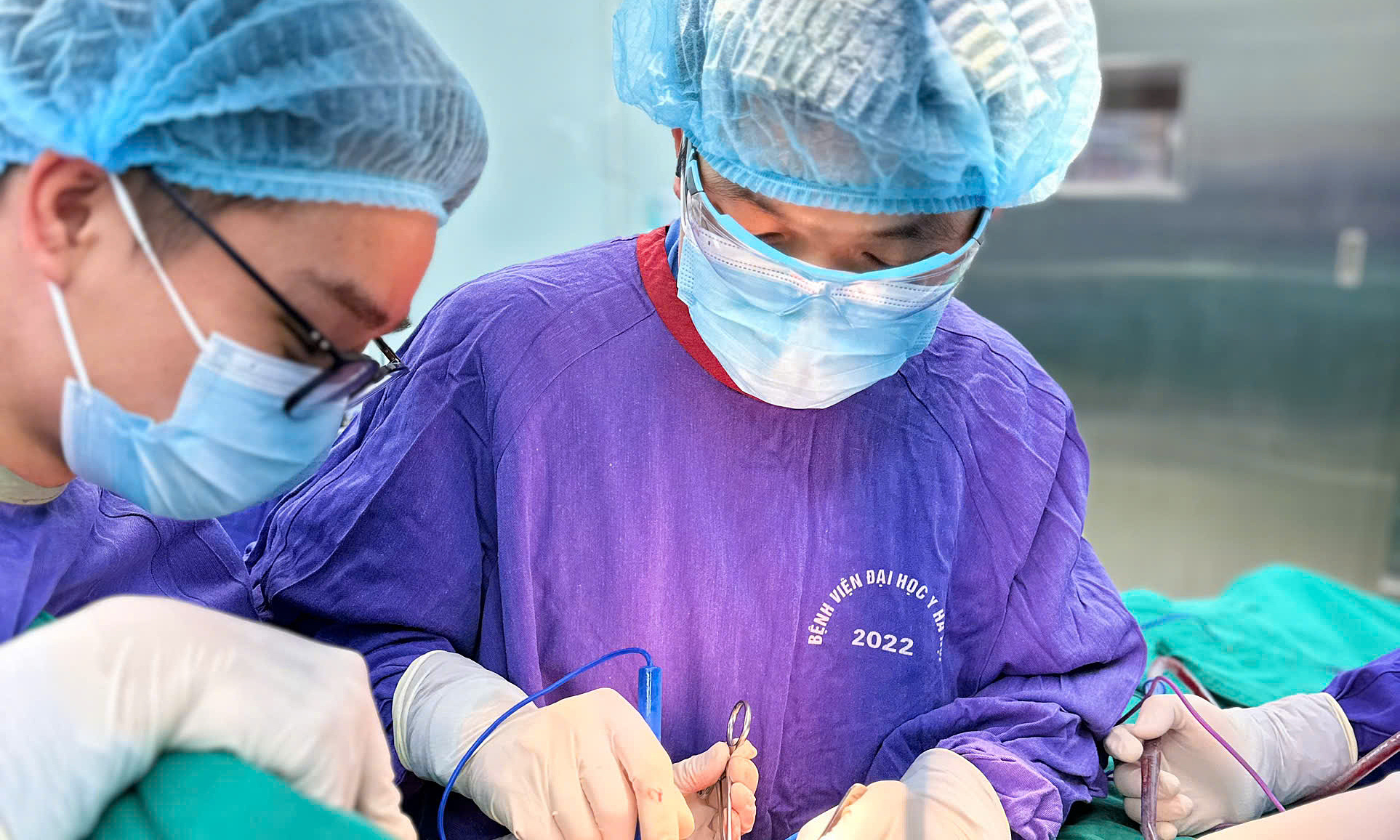 |
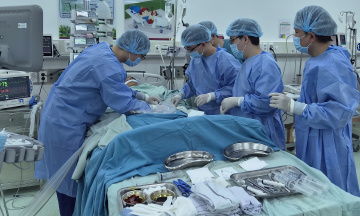
Doctor Ty and the surgical team operating on a patient. Photo: Provided by doctor
In Vietnam, additional pressure comes from societal prejudice. Many still define a woman's worth by her ability to bear children, forcing girls who lose this ability to prepare for gossip and the risk of marital breakdown. Doctor Nam believes this mindset needs to change, as a person's value is not determined by their ovaries.
Faced with such shocks, Doctor Nam adjusts his communication style. He avoids words like "malignant", "metastasis", or "poor prognosis", instead sharing information in layers and observing the patient's reactions. The only principle he maintains is not to hide the truth. "The more you hide, the more suspicious the patient becomes. When they find out the truth, they no longer trust the doctor," he stated.
The challenge is that there is almost no effective widespread screening method for ovarian cancer in healthy individuals, unlike cervical cancer, which has HPV and Pap smear tests. Therefore, doctors recommend women undergo regular gynecological check-ups every 6 to 12 months and visit the hospital immediately if they experience unusual abdominal swelling, persistent bloating, or pelvic pain—symptoms Hoa once mistook for weight gain. Early detection opens up significantly different opportunities. For early-stage cervical cancer, the 5-year survival rate exceeds 90%.
Hoa is now undergoing chemotherapy treatments. She traded the chance to become a mother to save her life, just as her mother encouraged her in the hospital room that day: "As long as you live."
Thuy An