Initially, the teenager experienced only a mild fever and dry cough. Two days later, he suddenly developed chest pain, shortness of breath, extreme fatigue, and vomiting. He was transferred from a local hospital to Children's Hospital 1, where his condition rapidly deteriorated into respiratory failure and cardiovascular collapse due to acute myocarditis.
Associate Professor Doctor Pham Van Quang, Head of the Intensive Care and Anti-Poisoning Department at Children's Hospital 1, stated that upon admission on the night of 4/6, the patient received respiratory support, cardiac medications, and blood pressure stabilization before being transferred to the intensive care unit. His condition continued to worsen, with his heart pumping weakly, severe respiratory failure, and a high risk of cardiac arrest. The resuscitation team then initiated extracorporeal membrane oxygenation (ECMO) to support his circulatory and respiratory functions.
Approximately 20 minutes later, the patient's cyanosis and cardiovascular collapse improved. However, a new challenge emerged. Over the next 24 hours, he developed severe coagulopathy, forming blood clots that caused pulmonary artery embolism, leading to further respiratory failure and severe circulatory collapse.
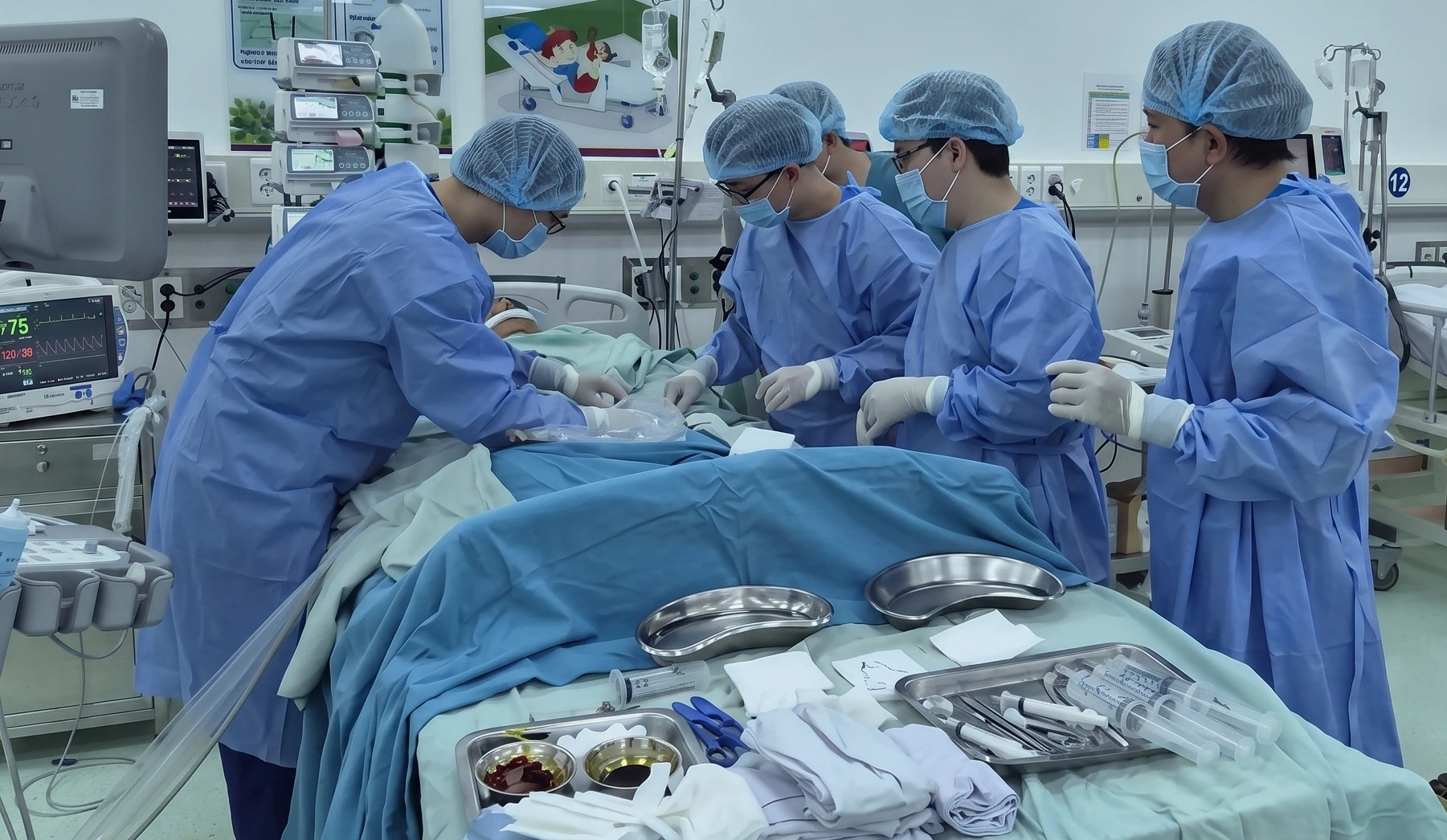 |
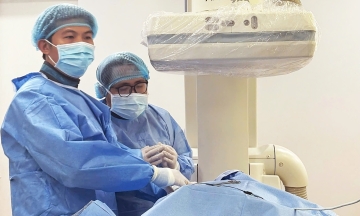
Doctors from the Intensive Care and Anti-Poisoning Department perform ECMO on the pediatric patient. Photo: Doctor provided |
To save the patient's life, doctors optimized the ECMO system, adjusted vasopressor medications, and administered high-dose anticoagulants. This was combined with plasma exchange and continuous hemodialysis to control the hypercoagulable state. Through the application of multiple advanced resuscitation measures, his heart, lung, and organ functions began to recover, and the patient was gradually weaned off supportive machinery.
On 10/7, after more than one month of treatment, the teenager was discharged, to the joy of his family and the medical team. Associate Professor Quang noted that this case was extremely rare, as fulminant myocarditis occurred simultaneously with pulmonary embolism due to hypercoagulability. The combination of these two conditions plunged the patient into a particularly severe state of respiratory failure and cardiovascular collapse, with an almost 100% mortality risk.
"The simultaneous application of multiple advanced resuscitation techniques, such as ECMO, plasma exchange, continuous hemodialysis, and mechanical ventilation, contributed to saving the patient's life in a seemingly insurmountable situation," the doctor said.
Le Phuong