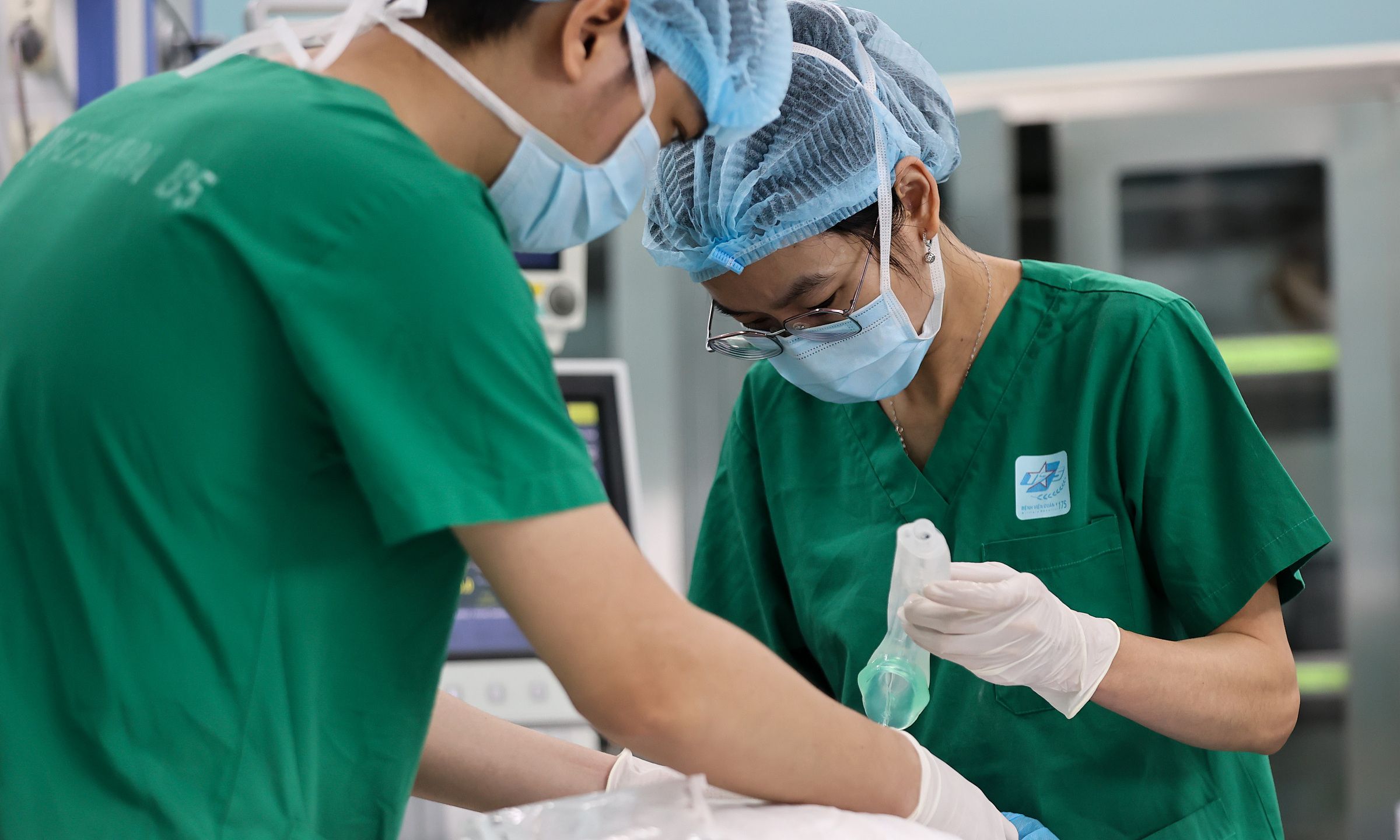
At Tam Anh General Hospital, Minh's colonoscopy revealed an obstructive, bleeding tumor about 35 cm from the anal verge, completely blocking the bowel and preventing endoscope passage. CT scans further showed a thickened left colon wall with surrounding fat infiltration. The presence of at least 7 regional lymph nodes raised doctors' suspicion of malignancy.
Pathological analysis confirmed the tumor as moderately differentiated adenocarcinoma. Its significant growth had completely obstructed the colon lumen, causing an accumulation of stool and gas upstream. This led to a distended colon, severe cramping, and abdominal bloating.
Following a medical consultation, doctors decided to perform robot-assisted surgery using the Da Vinci Xi system to remove Minh's cancerous tumor.
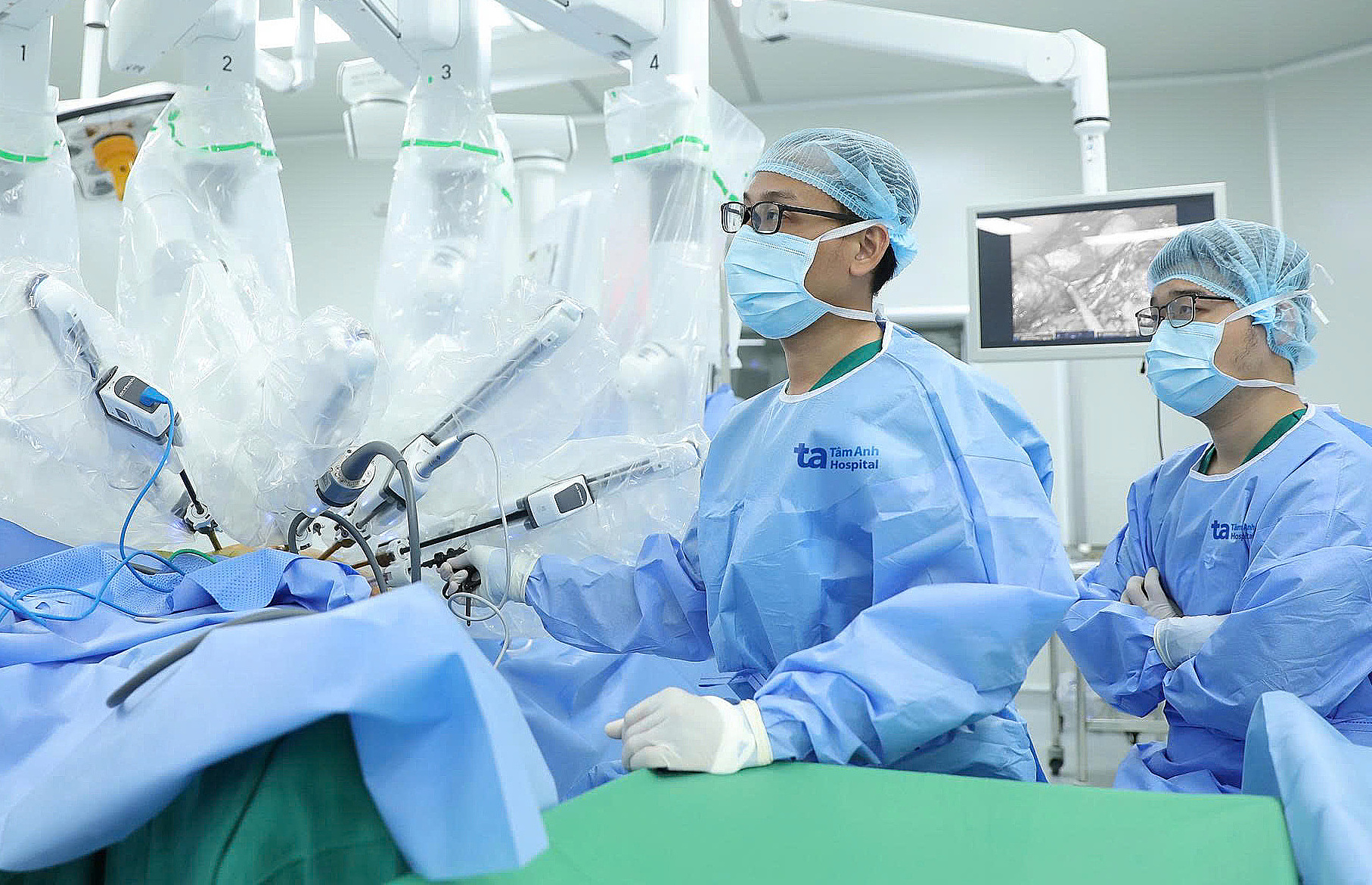 |
A doctor operates robotic arms to dissect and remove Minh's colon tumor. Photo: Tam Anh General Hospital |
Specialist Doctor Level II Nguyen Quoc Thai, Head of the Department of Gastrointestinal Surgery at Tam Anh General Hospital Ho Chi Minh City's Endoscopy and Laparoscopic Gastrointestinal Surgery Center, highlighted the challenges of this surgery. Minh's advanced age and long-term partial paralysis impaired her respiratory and circulatory functions, increasing the risk of deep vein thrombosis. Furthermore, pumping CO₂ during laparoscopic endoscopy could elevate intra-abdominal pressure, potentially affecting her cardiovascular and respiratory systems.
To prevent thrombosis, Minh received enhanced nutrition, breathing exercises, compression stockings, and intermittent pneumatic compression devices before surgery.
During the operation, the surgical team utilized the robot and 3D imaging to ligate the tumor's feeding vessels, dissect and free the affected bowel segment, assess blood supply with ICG, and re-anastomose the colon.
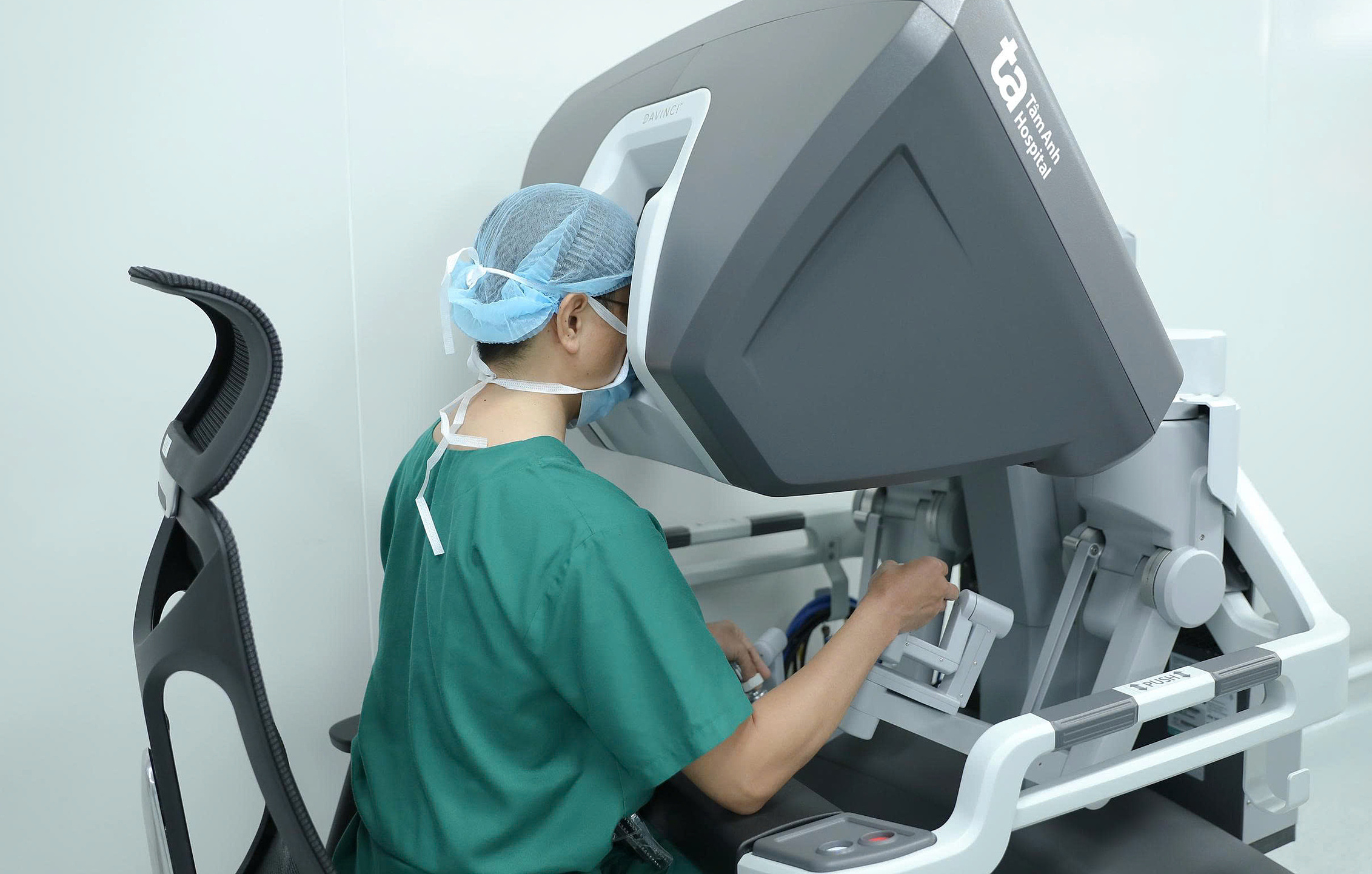 |
Doctor Quoc Thai operates the robot console to perform Minh's colon tumor removal surgery. Photo: Tam Anh General Hospital |
On the first post-operative day, Minh received assistance with joint movement on both her paralyzed and healthy sides, alongside specialized breathing exercises to minimize the risk of pneumonia and thrombosis. She was discharged in stable condition after one week of treatment.
Post-operative pathological results confirmed the tumor as moderately differentiated adenocarcinoma, invading the serosa but without lymph node metastasis (25 negative lymph nodes). The surgical margins were clear, and there was no evidence of vascular or neural invasion. Minh does not require adjuvant chemotherapy but will undergo regular follow-up.
According to Globocan 2022, colorectal cancer is prevalent in Vietnam, accounting for approximately 16,000-17,000 new cases and over 8,400 deaths annually. Most patients receive a late-stage diagnosis, which diminishes treatment effectiveness. Doctor Thai emphasized that early detection of colon cancer simplifies treatment, potentially leading to a five-year survival rate exceeding 90%.
Quyen Phan
*Patient's name has been changed
| Readers can ask questions about digestive diseases here for doctors to answer |