Walking offers numerous benefits, including improved cardiovascular health, weight management, muscle strengthening, and stress reduction. However, certain common mistakes can place undue stress on the knees, hips, and ankles, potentially leading to injuries.
Taking overly long strides
According to the Times of India, excessively long strides can disrupt balance and exert significant pressure on your legs. This causes the heel to strike the ground forcefully, sending shockwaves through your joints. Opting for shorter, quicker steps is generally more beneficial for the body.
Furthermore, arm movement is crucial for maintaining balance. If your arms are too stiff or swing excessively, your body may feel unstable. A good rule of thumb is to keep your elbows slightly bent, allowing your arms to swing gently with the rhythm of your steps.
Wearing unsuitable shoes
Tight shoes can compress toes, leading to pain, blisters, and an increased risk of foot deformities. Conversely, loose shoes offer inadequate foot stability, raising the likelihood of slips, falls, or injuries during movement. Footwear lacking proper support or cushioning can also heighten pressure on the heels, ankles, knees, and hips, resulting in persistent pain.
To safeguard joint health, individuals should select shoes that fit well, provide comfort, and are appropriate for their specific activity.
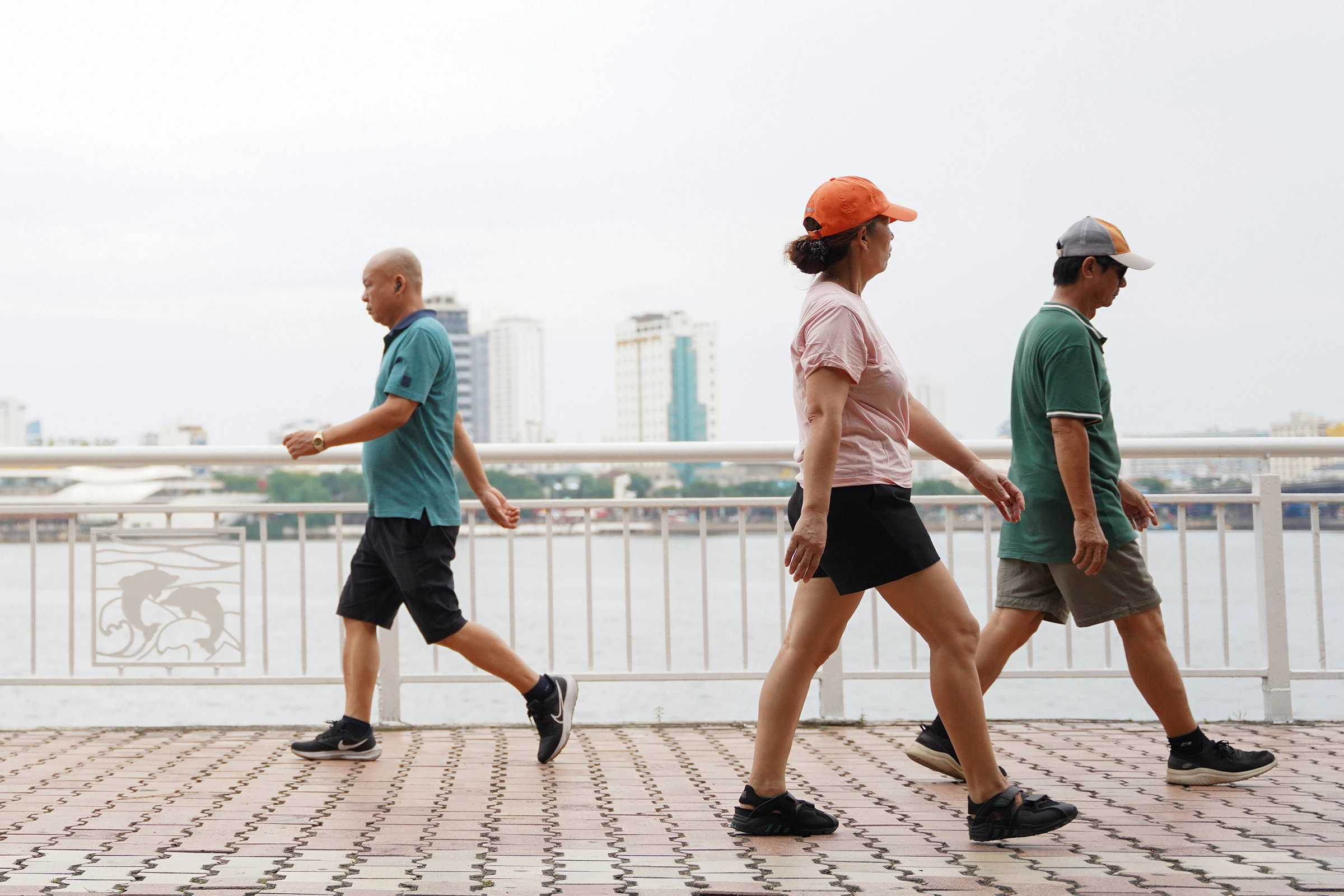 |
People walking along the Han River, Da Nang. Photo: Nguyen Dong |
Using a phone while walking
Texting or looking at a phone screen while walking often causes individuals to bow their heads, negatively impacting posture and increasing pressure on the neck, shoulders, and spine. It is advisable to limit phone use during walks. If you need to listen to music or check directions, glance quickly and then immediately raise your head.
According to WebMD, maintaining an upright posture with your head held high and shoulders slightly rolled back is crucial for protecting musculoskeletal health and preventing injuries.
Skipping warm-ups or stretches
Even though walking is not a high-intensity exercise, the body still requires time to warm up and cool down. Begin your walk slowly and gradually increase your pace. After your activity, dedicate 5-10 minutes to stretching your calves, thighs, and back muscles. This routine promotes comfort and reduces the risk of joint stiffness the following day.
When walking briskly, many individuals may neglect proper breathing. Shallow breaths can cause muscles to tense, impairing joint movement. Practice inhaling through your nose and exhaling steadily through your mouth.
Ignoring pain while walking
While mild pain is often not a significant concern, continuing to walk through discomfort can adversely affect musculoskeletal health. Pain frequently signals an incorrect gait, unsuitable footwear, or overworked joints. It is advisable to rest and consult a doctor if the pain persists for more than two weeks.
By Le Nguyen (Compiled)