Three years ago, Tuyet and her husband traveled from the US to Vietnam for in vitro fertilization (IVF) at another hospital, which was unsuccessful. This time, they sought treatment at the Reproductive Support Center, Tam Anh General Hospital - District 8. Dr. Chau Hoang Phuong Thao, Head of the Reproductive Support Unit and Head of the Department of Obstetrics and Gynecology, identified Tuyet's diminished ovarian reserve, low follicle count, multiple uterine polyps, and adenomyosis. Her 52-year-old husband had weak sperm.
Dr. Thao developed a protocol for egg retrieval and embryo creation for Tuyet, collecting 14 mature oocytes over two cycles. Her husband's sperm sample was collected, washed, and processed to remove DNA-fragmented sperm before cryopreservation. Embryologists performed intracytoplasmic sperm injection (ICSI) to create embryos, culturing 11 day-3 embryos and 4 day-5 embryos.
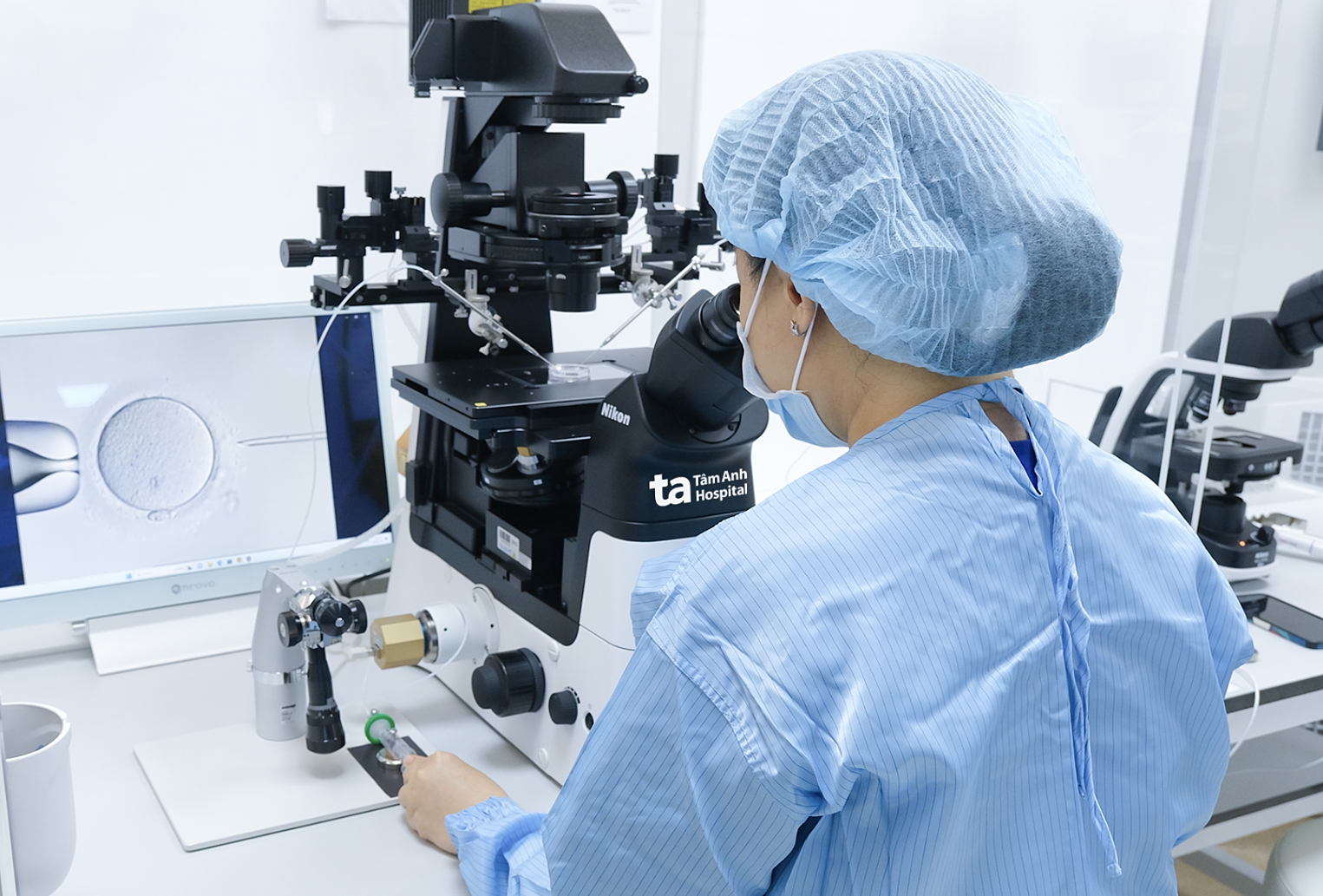 |
Embryologist performing intracytoplasmic sperm injection. *Photo: IVF Tam Anh*
Biopsy of two day-5 embryos revealed only one was normal; the other was aneuploid and consequently discarded. Before embryo transfer, Dr. Thao performed a diagnostic hysteroscopy and removed the multiple polyps. Biopsy results confirmed Tuyet had chronic endometritis. According to Dr. Thao, this condition was the cause of her repeated embryo transfer failures, leading to a prescription for two weeks of antibiotics.
Tuyet underwent embryo transfer once her uterus stabilized and reached an appropriate thickness, resulting in immediate pregnancy. At her follow-up appointment in late April, she was 7 weeks pregnant. Tuyet plans to return to the US for prenatal care and delivery once her pregnancy is stable at 11 weeks. The remaining embryos were cryopreserved for future family planning.
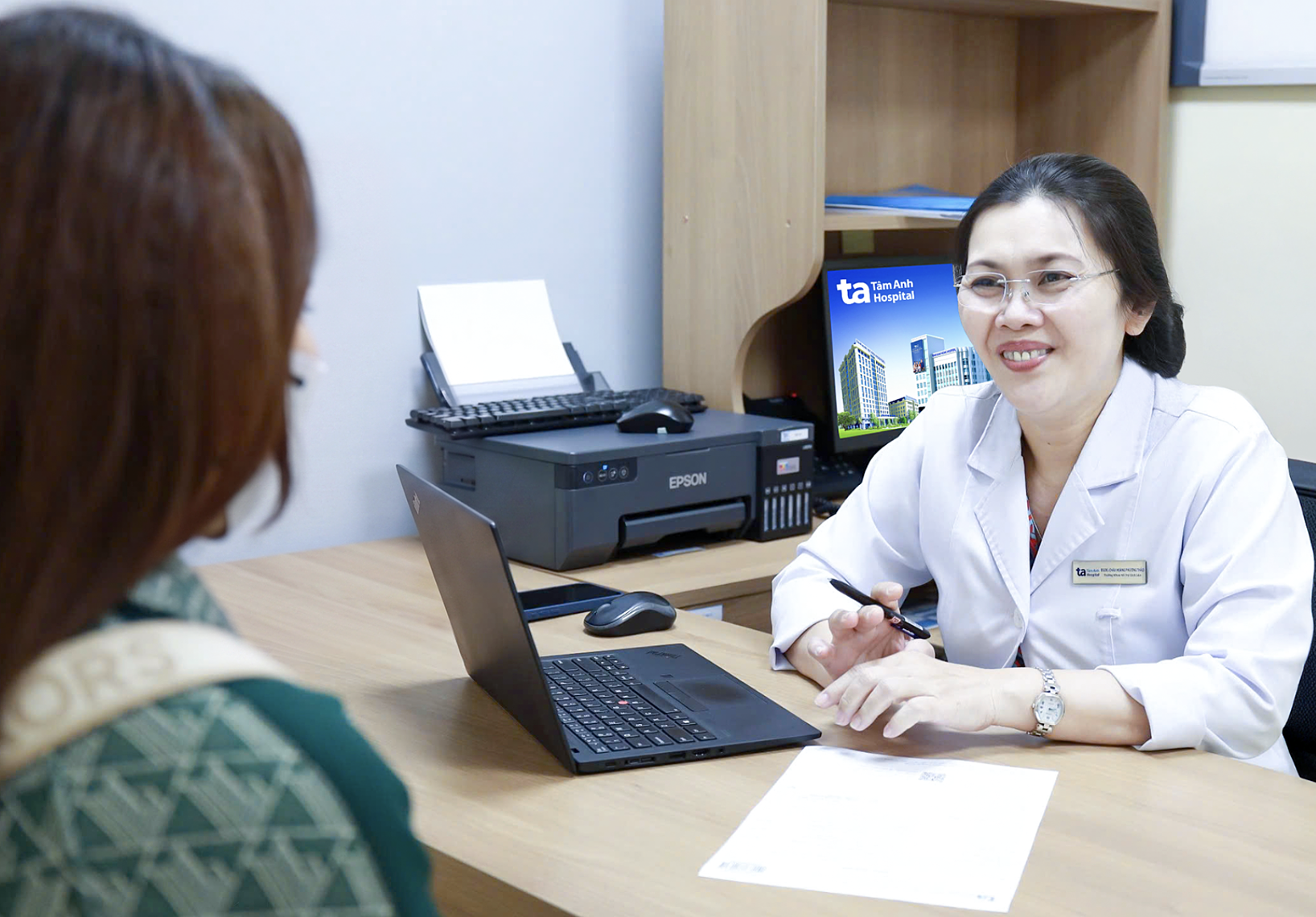 |
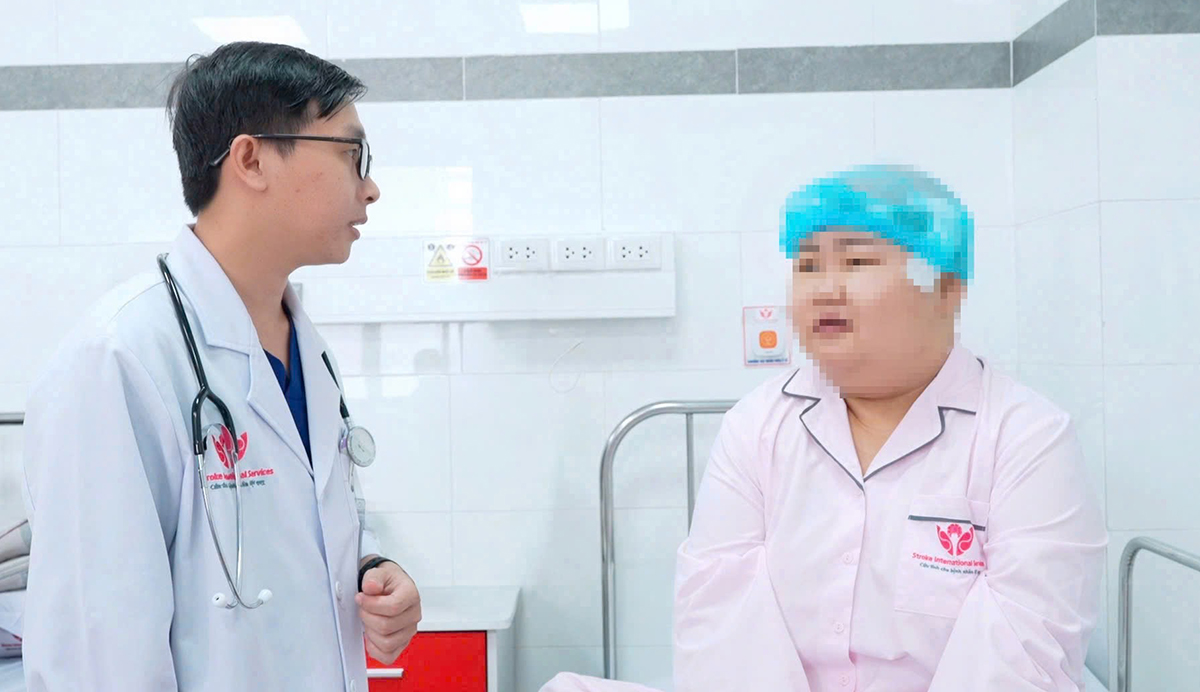
Dr. Thao advising Tuyet on pregnancy care before her return to the US. *Photo: IVF Tam Anh*
Dr. Thao emphasized that in cases of recurrent embryo transfer failures, hysteroscopy is crucial for detecting uterine abnormalities not visible on routine ultrasound, such as chronic endometritis or Asherman's syndrome. Addressing the underlying cause significantly improves embryo implantation potential. Additionally, older couples should consider preimplantation genetic testing to select healthy embryos, thereby increasing pregnancy rates and reducing the risk of miscarriage.
Nguyet Nhi