"Cochlear implants can save the entire life of a congenitally deaf child, but the biggest barrier today is the cost," stated Associate Professor, Doctor, Specialist Level 2 Le Tran Quang Minh, Director of TP HCM Ear, Nose, and Throat Hospital, at the annual scientific and technical conference on Diagnosis and Treatment of Ear, Nose, and Throat diseases in the digital transformation era on 13/12.
To date, TP HCM Ear, Nose, and Throat Hospital has performed cochlear implant surgeries for over 800 cases, with over 90% being congenitally deaf children. International recommendations suggest that children should receive cochlear implants before two years old for optimal language development. In the US, Europe, or Australia, children can undergo surgery from 11-12 months old.
In Vietnam, the number of children receiving cochlear implants before two years old remains low, primarily due to delayed detection of hearing loss and families bearing the full cost of surgery. The largest group of children currently undergoing surgery at the hospital is between two and five years old. The later the surgery, especially after five years old, the significantly reduced the potential for language development. Currently, health insurance (BHYT) does not cover this procedure.
"This is a congenital condition, a type of sensory disability that can be effectively treated with early intervention; just one surgery can save a child's entire future," Associate Professor Minh explained.
The cost of cochlear implants currently ranges from 400-500 million VND per ear for common devices, while high-end models can reach 600-700 million VND. This expense exceeds the financial capacity of many families, preventing children with surgical indications from receiving the procedure.
Statistics at the hospital show that on average, only one in 40 deaf-mute children requiring cochlear implant surgery receives it. Annually, the hospital performs approximately 50-70 cochlear implant cases, which is about 0.25% of the actual need. Congenital deaf-mutism is often associated with prenatal risk factors such as maternal rubella or cytomegalovirus infection, and it is frequently observed in low-income families.
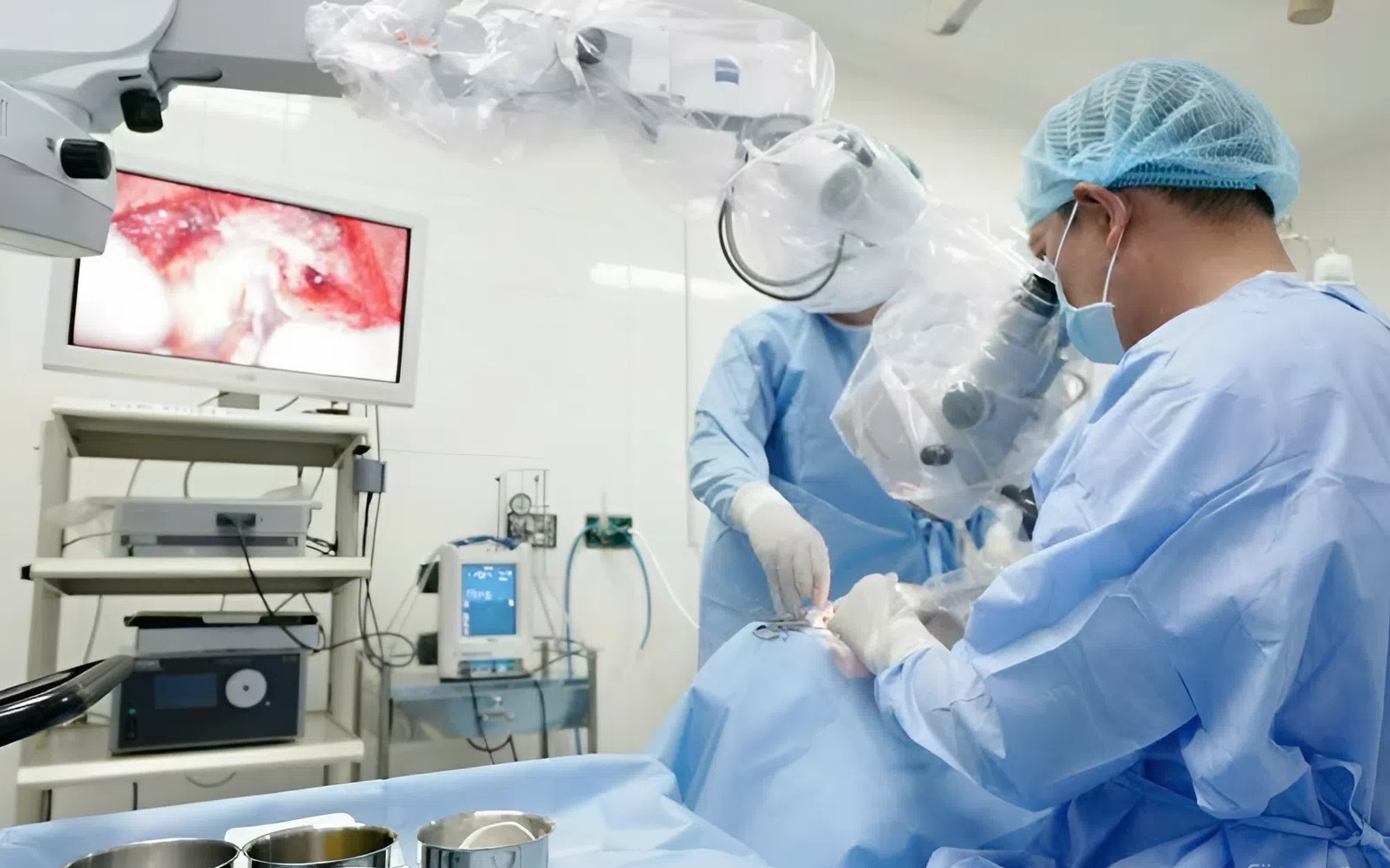 |
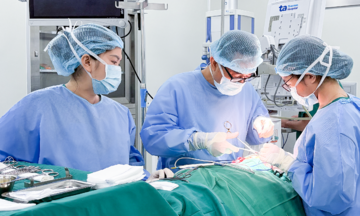
Cochlear implant surgery at TP HCM Ear, Nose, and Throat Hospital. Photo: Hospital provided |
Children who cannot hear, despite having normal vocal cords, cannot speak. Before cochlear implantation, congenitally deaf children live in a "silent world," learning to communicate through signs or lip-reading. This often leads to limited language and intellectual development, along with various psychosocial difficulties. For profound deafness, hearing aids are largely ineffective.
Treatment effectiveness is significant with early intervention. Doctors cited a pediatric patient who underwent cochlear implant surgery for both ears in 2017 and 2018. After seven years of follow-up, the child can hear, speak well, and sing like typically developing children. This technique also yields high effectiveness for adults with profound bilateral deafness due to sudden hearing loss or meningitis sequelae.
Cochlear implant technology is continuously advancing. The hospital uses software for three-dimensional CT scan image analysis before surgery, which helps assess surgical difficulty and select appropriate devices. Newer generation devices are thinner, with electrodes that receive sound better. Additionally, post-operative hearing and speech training programs are enhanced, helping children recover language earlier than before.
To assess hearing, doctors use audiometers or observe reactions to speech. At home, without specialized equipment, family members can detect early signs of hearing loss by speaking softly behind the child and observing their reaction or ability to repeat words. For infants and young children, parents should note if the child reacts to sounds by blinking, startling, or moving their limbs. In developed countries, newborns undergo hearing screenings immediately after birth to detect abnormalities early and intervene promptly during the critical language development period.
The leadership of TP HCM Ear, Nose, and Throat Hospital proposes that health insurance (BHYT) partially cover cochlear implant procedures, allowing more congenitally deaf children to access treatment. Timely intervention can reduce the long-term burden on families and society. The hospital has partnered with device manufacturers to provide some free cochlear implant surgeries for disadvantaged children, but the number remains limited compared to the actual demand.
Le Phuong