On 15/12, Dr. Mai Van Luc, from the Department of Urology and Andrology at E Hospital in Hanoi, stated that an 80-year-old patient was admitted by his family. The external part of the catheter was severed, and the tip had retracted into his bladder. His family reported that after doctors had inserted a urinary catheter to monitor urinary retention at home, the man found the tube cumbersome and tangled, so he cut the catheter himself.
Doctors successfully removed the segment of the tube endoscopically. Fortunately, the foreign object was extracted in time, without causing serious damage or dangerous complications for the patient.
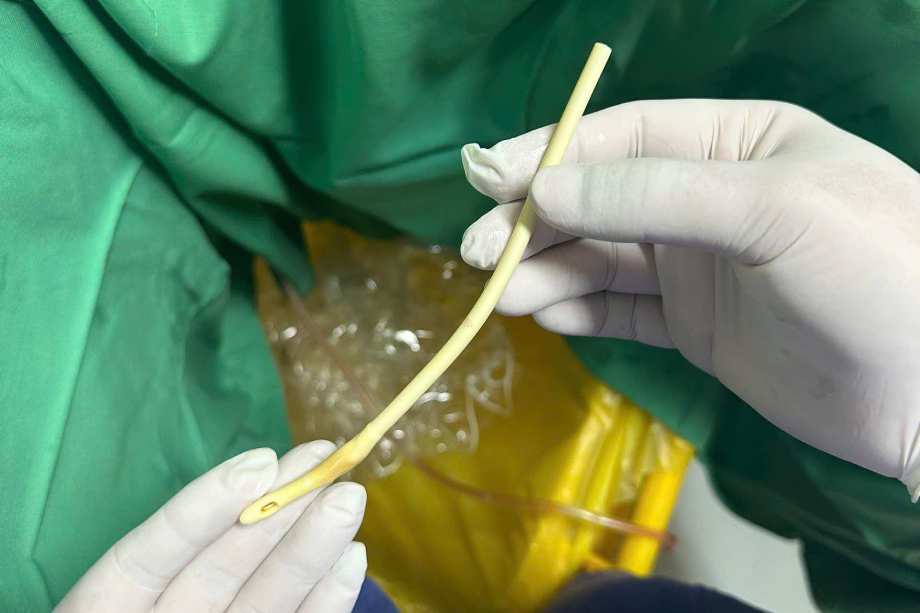 |
The catheter cut by the patient. Photo: Hospital provided |
Dr. Luc emphasized that elderly individuals showing signs of dementia, confusion, or impaired awareness may arbitrarily pull out or cut infusion tubes or catheters. They might also take incorrect medication dosages or mistake pills for candy. A significant risk arises for patients using anticoagulants: an overdose can lead to gastrointestinal bleeding or cerebral hemorrhage, while forgetting a dose increases the risk of embolism and recurrent stroke.
A stuck catheter can lead to dangerous complications, including: urinary tract infections (bladder inflammation, urethritis, kidney inflammation), urethral damage, bladder spasms, urinary retention, or even bladder rupture.
Doctors recommend caution when caring for the elderly. Caregivers should closely manage sharp objects like knives and scissors. It is vital to prepare and directly administer medication to patients at the correct dosage. Additionally, securely fix catheters and choose appropriate clothing to limit self-intervention by patients.
Thuy Quynh