During an outing, 12th-grade student Thao met a young man and engaged in oral sex. "I was only afraid of getting pregnant, I didn't think I would contract a disease if it was just oral sex," Thao said.
Thao's mouth became swollen and red, with painful ulcers appearing in her throat and mouth. She thought she had canker sores or a food allergy, so she bought lozenges and topical gel from a nearby pharmacy. When the ulcers spread, making it difficult to eat and swallow, Thao informed her parents to seek medical attention. Upon receiving the diagnosis of gonorrhea, Thao felt remorse and self-conscious.
Quoc, 16, arrived at the hospital with genital warts and a burning sensation in his lower abdomen. Previously, he believed that non-penetrative sexual acts, such as manual or oral sex, would prevent infection. "I heard many people say it would be safer, and I was curious to try it once, but I didn't expect to get sick," Quoc recounted.
Examination results revealed he had genital warts caused by the human papillomavirus (HPV). Fortunately, it was detected early; the disease had not spread and required treatment and monitoring for recurrence. After the initial treatment, Quoc limited his outings due to embarrassment and fear of his friends finding out.
 |
Adolescents tend to be curious about sex, which can lead to unsafe sexual practices. Illustration: *Vecteezy* |
Hospitals report a growing number of adolescents seeking treatment for sexually transmitted infections (STIs). According to statistics from the Ho Chi Minh City Hospital of Dermatology and Venereology, the number of STI patients under 18 has steadily increased over the years. Specifically, 533 adolescent patients required procedural intervention for STIs during the first 8 months of 2025. In Hanoi, the National Hospital of Obstetrics and Gynecology sees approximately 150 to 200 adolescent patients with STI-related conditions each month, a slight annual increase.
Dr. Nguyen Van Quang, medical manager at VNVC Vaccination System, assessed that this situation reflects a trend of early sexual activity and a lack of safe sex knowledge among adolescents. This readily leads them to believe misinformation and experiment with risky sexual behaviors without anticipating the consequences. For instance, a 2023 study of 598 high school students in Thai Nguyen showed that only 35.3% had good knowledge of contraception and sexually transmitted infections.
Many young people trust online posts, believing that simply avoiding penetrative intercourse or using condoms is enough to prevent STIs. However, according to Doctor Quang, many viruses and bacteria causing sexually transmitted infections can enter through skin-to-skin contact or bodily fluids, spreading to areas not covered by condoms.
Furthermore, the reluctance and fear of being judged as "promiscuous" cause many adolescents to delay seeking medical attention when unusual symptoms appear. Many are hesitant to visit hospitals, instead seeking out disreputable treatment centers to keep personal information private, or self-researching treatments, buying, and applying medications. This exacerbates their condition, increases the risk of spreading the infection to others, and misses opportunities for proper treatment.
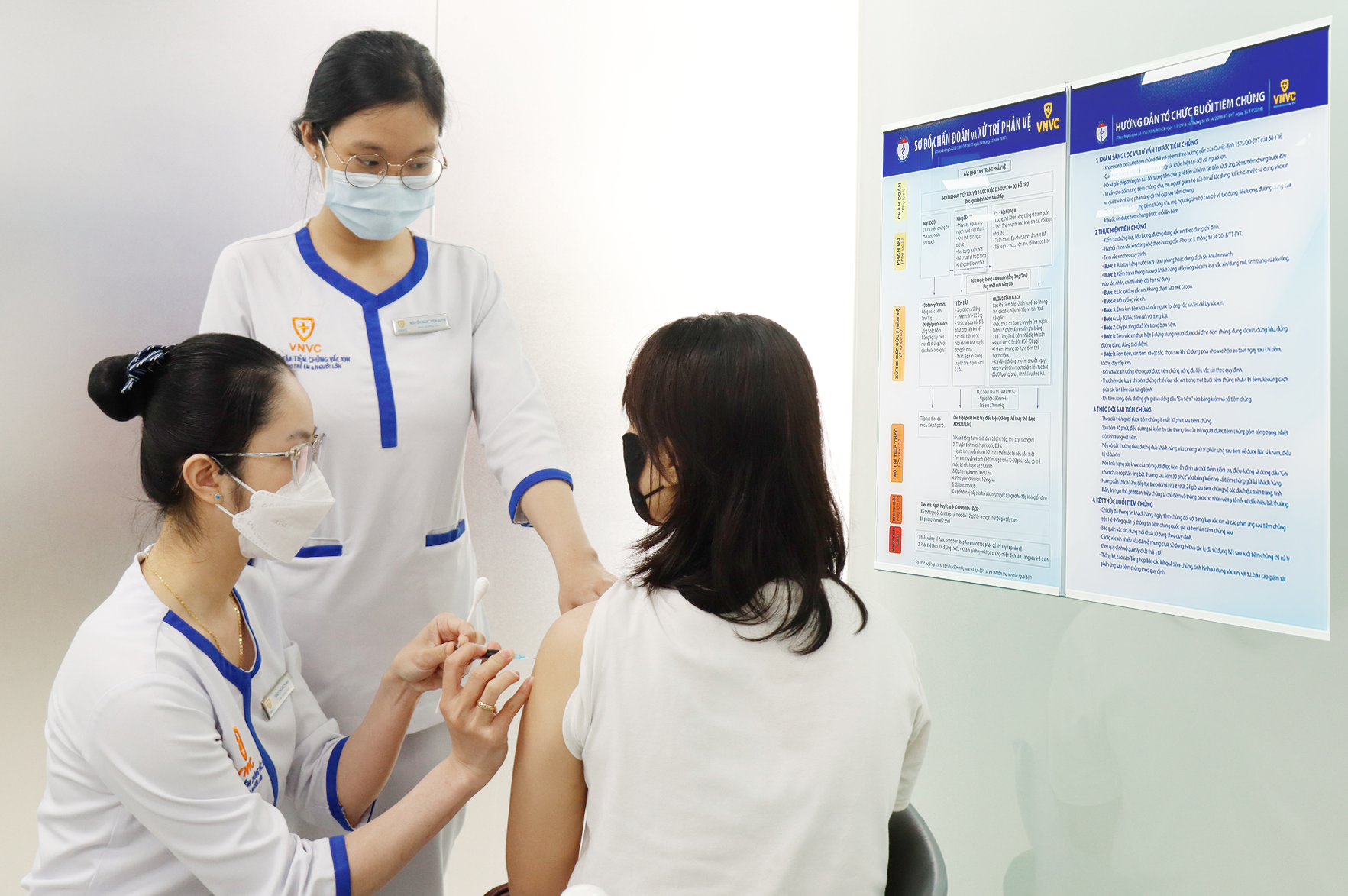 |
Young people receiving human papillomavirus (HPV) vaccine at VNVC Vaccination System. Photo: *Binh An* |
Common sexually transmitted infections such as gonorrhea, syphilis, genital warts, chlamydia, genital herpes, and human immunodeficiency virus (HIV)/acquired immunodeficiency syndrome (AIDS) can progress silently, causing prolonged inflammation and affecting reproductive health. Many diseases can lead to sequelae like infertility, cervical cancer, anal cancer, oropharyngeal cancer, vaginal cancer, and vulvar cancer if not detected and treated early.
Therefore, adolescents need to be equipped with early sex education and reproductive health knowledge, understanding the risks of infection and how to protect themselves. When unusual symptoms appear, such as pimples, ulcers, burning pain, discharge, or discomfort in the genital area, they should seek timely examination and consultation at a specialized medical facility, absolutely avoiding self-treatment to prevent secondary infections.
Doctors recommend that adolescents can currently receive hepatitis B vaccine and human papillomavirus (HPV) vaccine to prevent hepatitis B, genital warts, and reproductive cancers. The hepatitis B vaccine comes in a monovalent type and a combined type that also prevents hepatitis A. It involves a three-dose schedule over 6 months, with testing before vaccination and booster shots when antibody levels decrease. The HPV vaccine currently has two types: Gardasil, which protects against 4 types for females aged 9 to 26, and Gardasil 9, which protects against 9 types for both males and females aged 9 to 45.
*Binh An*