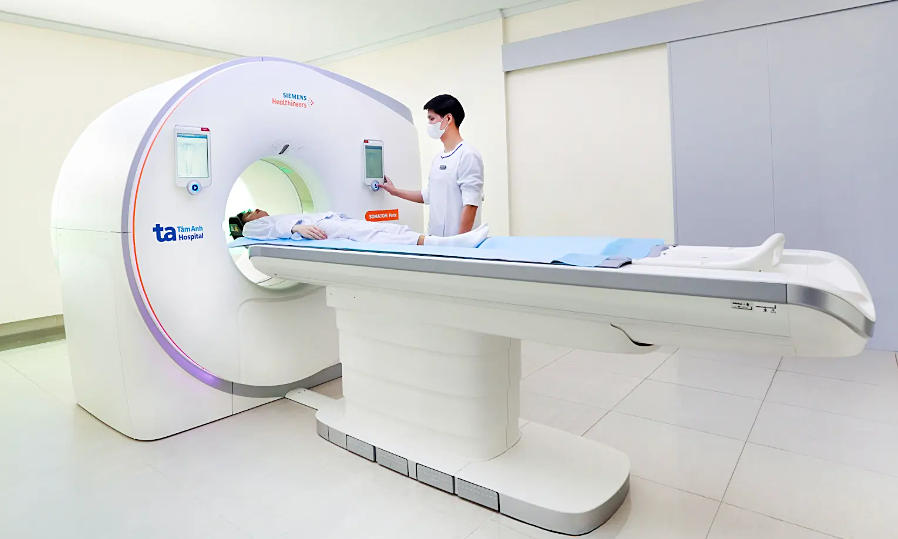
Mr. Tan began smoking and consuming alcohol heavily in his twenties. He suffered a stroke 15 years ago, which left him with weakness on his right side. This led him to reduce alcohol consumption, but he continued to smoke half a pack of cigarettes daily. Recently, he experienced coughing and fatigue. Doctors at Tam Anh General Hospital in TP HCM diagnosed him with pneumonia. Subsequent cardiovascular screening revealed severe narrowing and blockages in three main coronary arteries, which are the primary blood vessels supplying the heart.
The patient's right coronary artery was completely blocked, while the left anterior descending artery and circumflex artery were over 90% narrowed. The left main coronary artery also showed an 80% narrowing, indicating an imminent risk of myocardial infarction. An echocardiogram revealed an ejection fraction (EF) of only 42% (normal is over 50%), demonstrating impaired heart muscle function due to prolonged blood deprivation.
Master, Second Degree Specialist Doctor Huynh Hoang Khang, Head of the Cardiovascular Surgery Department at the Interventional Cardiology Center, Tam Anh General Hospital in TP HCM, stated that smoking is a leading risk factor for coronary artery disease. Nicotine in cigarette smoke gradually damages blood vessels, promoting the formation of atherosclerotic plaques that narrow or even block the vessel lumen. Prolonged alcohol abuse also increases inflammatory response, oxidative stress, and myocardial damage, thereby accelerating atherosclerosis and heart failure.
"Mr. Tan's heart was supplied with very little blood; the blockage of even one more coronary artery could lead to a heart attack, arrhythmia, or sudden death," Doctor Khang said.
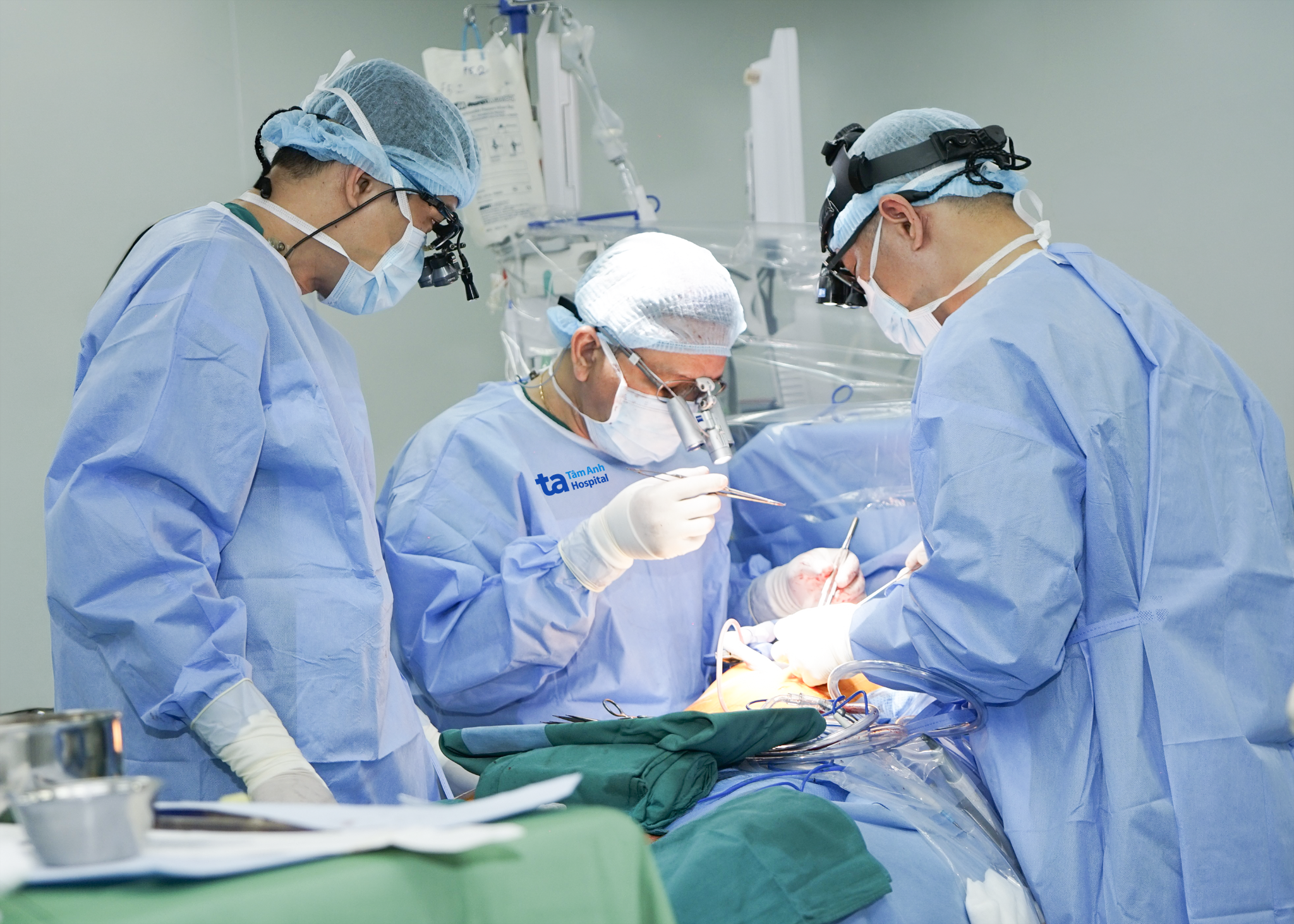 |
Doctor Khang (center) and the team performing off-pump coronary artery bypass surgery on the patient. *Photo: Tam Anh General Hospital* |
Given the patient's history of stroke and numerous atherosclerotic plaques in the aorta and cerebral arteries, a multidisciplinary consultation was conducted. The team determined that conventional surgery, involving cardiopulmonary bypass and cardioplegia, could lead to aortic clamping, potentially dislodging plaques and causing a second stroke. Additionally, using a heart-lung machine would increase the inflammatory response, worsening the patient's pneumonia. To mitigate these risks, the team opted for off-pump coronary artery bypass (OPCAB) surgery, where the heart continues to beat without cardiopulmonary bypass.
The surgery lasted 5 hours. Doctors harvested healthy blood vessels from the patient's internal mammary artery and saphenous vein, creating three bypass grafts. These grafts rerouted oxygen-rich blood past the narrowings, restoring supply to the heart muscle. This method helped reduce the risk of stroke, minimized the need for blood transfusions, lessened inflammatory response, preserved heart function, and supported respiratory recovery post-surgery.
A post-operative ultrasound confirmed that the grafts were functioning well, and blood flow to the heart was abundant again. Mr. Tan was extubated after 4 hours and continued treatment for pneumonia. One week later, his health indicators were stable, and heart function improved to 48%. He no longer experienced shortness of breath, could walk gently, and was discharged.
 |
Doctor Khang checking the patient's health before discharge. *Photo: Tam Anh General Hospital* |
Coronary artery disease often progresses silently over many years. Many individuals only discover the disease after complications such as myocardial infarction, heart failure, or sudden death have occurred.
To prevent the early progression of coronary artery disease, Doctor Khang recommends that everyone: avoid smoking, limit alcohol, maintain a healthy weight, eat a healthy diet, exercise regularly, and get enough sleep. Individuals over 55 or those with risk factors such as current or past smoking, hypertension, diabetes, dyslipidemia, a family history of heart disease, or a sedentary lifestyle should undergo cardiovascular check-ups and screenings every 6 to 12 months. If symptoms like chest pain, shortness of breath, gasping for air, palpitations, or irregular heartbeat appear, seek medical attention to determine the cause and receive timely treatment.
Thu Ha
*Patient's name has been changed
| Readers can submit questions about cardiovascular disease here for doctors to answer |