For many Vietnamese families, vegetable boiling water has long been a staple soup. While many consider it a nutritious part of their meal, rich in soluble vitamins and minerals, concerns also exist regarding potential nitrates or chemical residues if the vegetables are not safely sourced, according to Doctor Nguyen Trong Thuy, former head doctor of the National and U23 Vietnam Teams.
Overall, vegetable boiling water offers beneficial nutrients when prepared from clean vegetables and consumed properly.
It is rich in soluble vitamins and minerals.
During the cooking process, water-soluble vitamins like vitamin C and B vitamins, along with minerals such as potassium, calcium, and magnesium, leach into the water. However, vitamin C is susceptible to degradation by heat, light, and air. To maximize nutrient retention, it is best to consume the vegetable boiling water immediately after preparation.
It aids in hydration and electrolyte replenishment.
Containing potassium, calcium, and magnesium, vegetable boiling water can help rehydrate the body and restore electrolytes, particularly after physical activity or during hot weather when fluid loss is significant. Potassium is crucial for cardiovascular, nervous, and muscular function, while calcium and magnesium support bone health and nerve function.
Different vegetables offer distinct benefits.
Beyond general nutrients, the water from boiling various vegetables contains unique bioactive compounds. For instance, mustard greens provide glucosinolates, which convert into isothiocyanates—compounds researched for their potential in cell protection. Sweet potato leaves are rich in antioxidant polyphenols, supporting cell health and sugar metabolism. Amaranth contains betacyanin, a natural pigment with antioxidant properties that helps reduce inflammation. Broccoli releases glucosinolates, potassium, and magnesium, imparting a natural sweetness to the water.
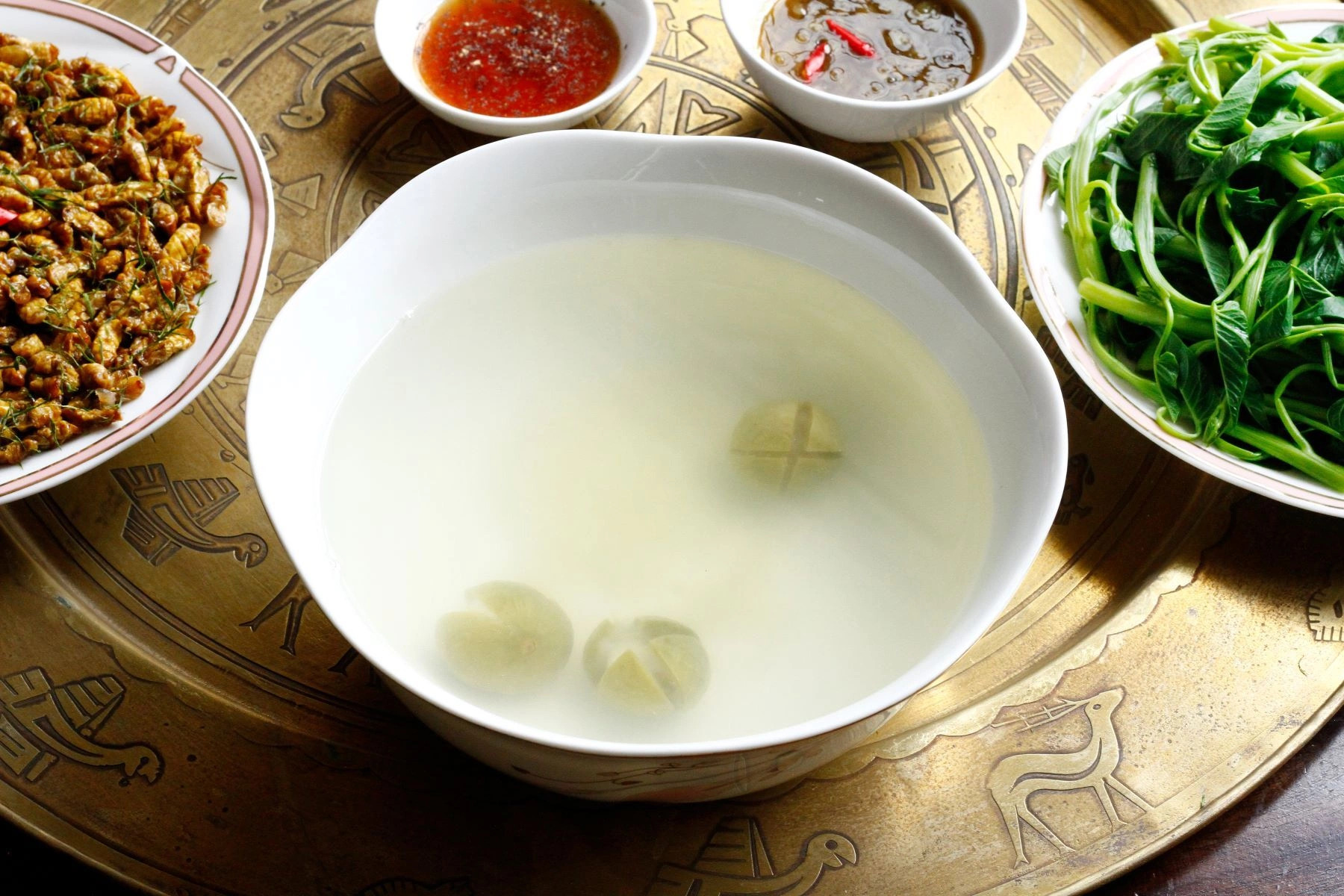 |
Vegetable boiling water contains many vitamins and minerals. Photo: Bui Thuy |
Despite its benefits, vegetable boiling water carries potential risks if the ingredients are subpar. Vegetables over-fertilized with nitrogen may accumulate high nitrate levels, which readily dissolve into the water during boiling. If left at room temperature for extended periods or stored improperly, these nitrates can transform into nitrites due to microbial activity. Furthermore, vegetable boiling water left overnight or reheated multiple times loses its initial nutritional value and can undergo changes in its compounds during storage.
Safe practices for consuming vegetable boiling water
To maximize the benefits and minimize risks, experts advise the following:
: Choose fresh vegetables from reputable sources to ensure food safety.
: Wash vegetables thoroughly under running water before cooking.
: Consume the boiling water immediately after preparation, either as a drink or a soup.
: Avoid leaving the water overnight or reheating it multiple times.
: Do not use water from withered, bruised, or unidentifiable vegetables.
When vegetables are sourced safely and the boiling water is consumed promptly, it can be a beneficial addition to your diet. It helps utilize dissolved vitamins, minerals, and antioxidant compounds from cooking, while also contributing to hydration and electrolyte balance. Nevertheless, consumers should avoid water from unknown vegetable sources or water that has been left out for extended periods or repeatedly reheated, to mitigate potential health risks.
Thuy Quynh