The patient had a history of uterine fibroids for many years, which she had monitored and treated at various medical facilities. Recently, the tumor grew rapidly, causing lower abdominal pain and persistent menorrhagia. This led to increasingly severe anemia and significantly impacted her daily activities.
During her examination at Viet Phap Hanoi Hospital, doctors observed an abnormally enlarged uterus due to a fibroid measuring 210x180x100 mm. Imaging revealed abundant vascularization supplying the tumor, indicating a high risk of bleeding during surgical intervention. The large size of the tumor also compressed nearby pelvic organs, including the bladder, ureters, and rectum.
Following a consultation, the medical team decided to perform a subtotal hysterectomy to remove the tumor. The uterus containing the fibroid was successfully removed without any complications, and with minimal blood loss. Post-surgery, the tumor was found to weigh approximately 3,4 kg.
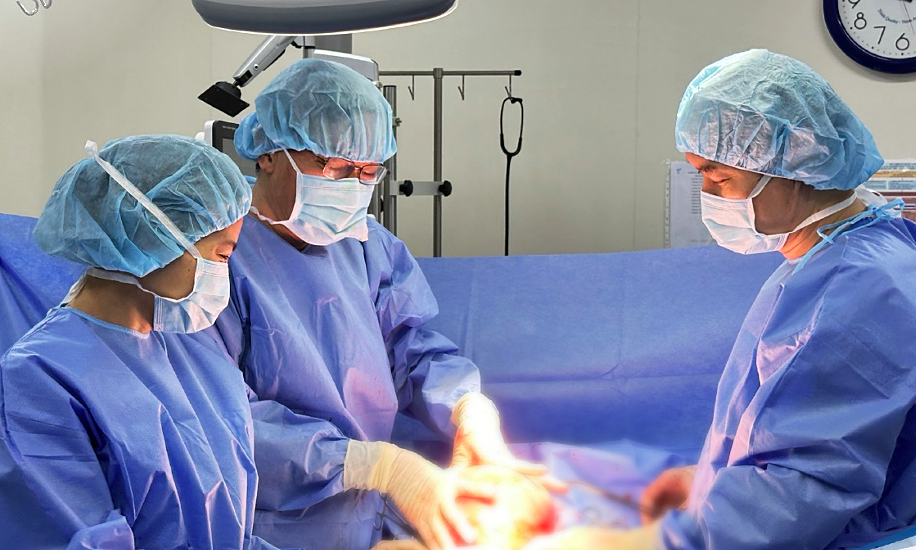 |
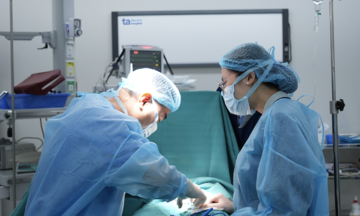
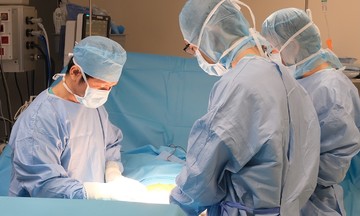
Doctors surgically remove the tumor from the patient. *Photo: Hospital provided*
Doctor Ho Van Thu, Head of the Department of Obstetrics and Gynecology, explained that the tumor’s immense size presented numerous surgical challenges. These included the risk of adhesion and compression of adjacent organs such as the bladder, ureters, and rectum. The rich vascularization of the fibroid also increased the risk of intraoperative bleeding. Furthermore, the patient’s pre-existing anemia necessitated strict blood loss control during the procedure.
During the surgery, the team meticulously dissected each anatomical layer, effectively controlling the tumor’s blood supply and preserving surrounding structures as much as possible. Thanks to an efficient blood loss control strategy, total blood loss was only about 150 ml, with no intraoperative complications recorded. Following the surgery, the patient recovered smoothly, with stable hemodynamics and mild pain, allowing for early mobilization the very next day.
Doctor Thu advises that uterine fibroids are common benign conditions among middle-aged women. However, patients should seek early specialist examination if the tumor grows rapidly, causes prolonged menstrual bleeding, anemia, or severe pain. Regular monitoring and timely intervention help limit complications and reduce the complexity of surgery.
Le Nga