A 6-year-old girl was rushed to a local hospital in critical condition with heart failure and suspected fulminant myocarditis after rapidly deteriorating from influenza A/H3. Her parents stated that she had not received the seasonal flu vaccine. Initially, she presented with common flu symptoms such as cough, fever, and runny nose, but her condition worsened quickly.
The child was transferred to the Intensive Care Unit, Department of Internal Medicine, National Children's Hospital. Doctors diagnosed her with influenza A/H3 accompanied by severe complications: fulminant myocarditis, rhabdomyolysis, acute kidney injury, and a cytokine storm—an excessive systemic inflammatory response. The child did not respond to conventional medications and supportive treatments.
On 23/12, Associate Professor Doctor Ta Anh Tuan, head of the Intensive Care Unit, Department of Internal Medicine, explained that the girl's organ damage stemmed from two causes. The first was direct damage caused by the influenza virus. The second was the cytokine storm, where the body's inflammatory response became overly aggressive, leading to silent but severe organ dysfunction. Additionally, influenza infection increased the risk of bacterial superinfection, further complicating and worsening her condition.
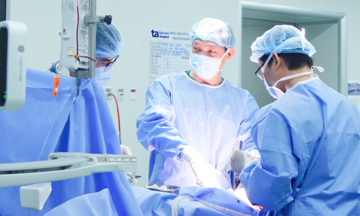
Given her non-responsiveness to internal medicine treatments, the patient underwent multiple intensive resuscitation measures simultaneously. She received mechanical ventilation, ecmo (extracorporeal membrane oxygenation), continuous hemodialysis combined with adsorption hemodialysis, plasma exchange, ivig (intravenous immunoglobulin), influenza antiviral medication, and powerful broad-spectrum antibiotics.
After 10 days on ecmo and 18 days of continuous hemodialysis, the patient's condition gradually came under control. Currently, her health is stable, organ functions are slowly recovering, and she remains under observation.
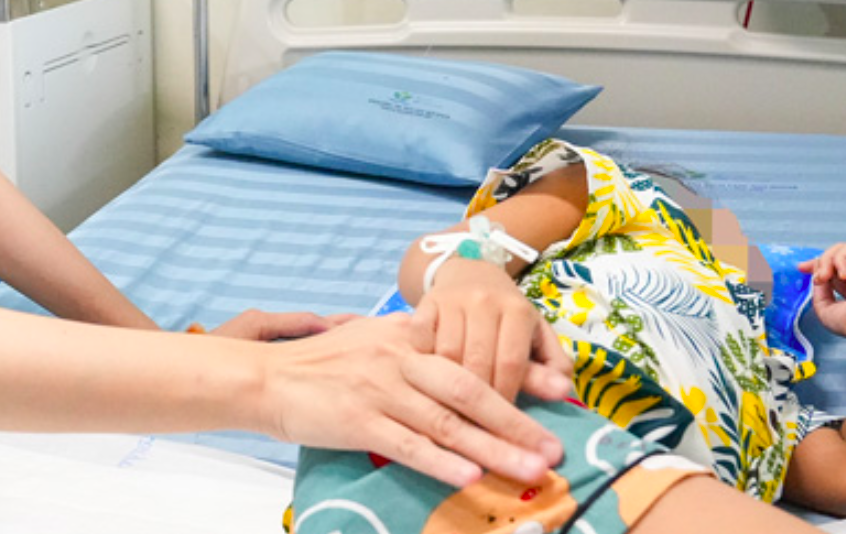 |
The patient receiving treatment at National Children's Hospital. Photo: Hospital provided |
Master Doctor Tran Dang Xoay, from the Intensive Care Unit, Department of Internal Medicine, noted that this case was a rare and severe complication of influenza A/H3. According to medical literature, very few influenza A cases globally have reported concurrent severe complications such as acute myocarditis, rhabdomyolysis, and cytokine storm to the degree seen in this patient.
Seasonal influenza in general, and influenza A in particular, can lead to numerous life-threatening complications in children if not detected and treated promptly.
The Ministry of Health recommends annual seasonal flu vaccination to reduce severe complications. Therefore, parents should proactively vaccinate children aged 6 months and older every year. If children exhibit unusual signs such as prolonged high fever, severe fatigue, rapid breathing, muscle pain, decreased urination, or altered consciousness, they must be taken to a medical facility for timely examination and treatment.
Le Nga