On December 23, a representative from the National Hospital for Tropical Diseases reported on a patient who had been healthy with no significant medical conditions. Eight days prior to admission, he suddenly experienced seizures and numbness in his left hand. After an initial examination at a medical facility, doctors suspected a brain tumor or infection, leading to his transfer to the National Hospital for Tropical Diseases for further evaluation.
Upon admission, the patient was conscious, without fever, and hemodynamically stable. There were no clear focal neurological signs or meningeal syndrome. However, he reported severe headaches, seizures, and numbness in his left hand.
A cranial magnetic resonance imaging (MRI) scan revealed a small cystic lesion in the left frontal lobe with mild brain edema. This image strongly suggested a parasitic lesion rather than a primary brain tumor. Subsequent tests confirmed a positive result for dog tapeworm. Doctors diagnosed a parasitic brain lesion and initiated medical treatment, focusing on symptom control and close neurological monitoring. The patient's condition improved significantly after about 10 days.
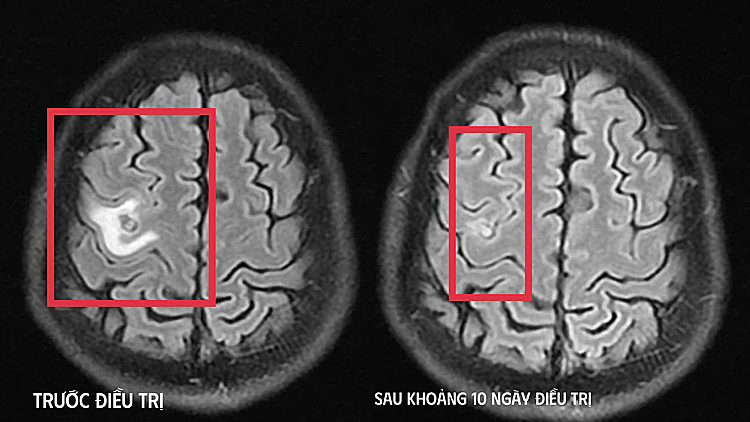 |
Imaging before and after treatment. Photo: *Hospital provided*. |
Doctor Nguyen Van Phuong, Deputy Director of the Center for On-Demand and International Medical Examination and Treatment, stated that brain worm infection is not rare but is often overlooked due to its non-specific initial symptoms. Patients may experience seizures, transient numbness or weakness, or mild headaches, easily mistaken for brain tumors or strokes. Transmission typically occurs through unhygienic eating habits, such as consuming raw vegetables, undercooked food, or contaminated water, allowing parasite eggs to enter the body and migrate to the brain, rather than direct contact with pets.
Brain worm disease, a central nervous system infection, can cause memory loss, headaches, and blurred vision. Patients may develop high fever, headaches, and vomiting due to increased intracranial pressure, potentially leading to seizures, peripheral facial paralysis (cranial nerve VII paralysis, hemiplegia), and even death if not promptly diagnosed and treated. Many patients are misdiagnosed with epilepsy, stroke, or mental illness, leading to years of treatment in psychiatric hospitals. By the time they seek specialized care, the condition is often advanced, with parasites having caused significant neurological damage.
Doctors advise individuals not to ignore unusual neurological symptoms, even if fleeting. Maintaining habits of eating thoroughly cooked food, drinking boiled water, washing hands, and ensuring food hygiene are essential for preventing dangerous parasitic diseases, which are fully manageable if detected early.
Thuy Quynh