Ms. Hue occasionally experienced blood in her urine without burning pain. Master of Science, Doctor Nguyen Tan Cuong, Deputy Head of Urology Department, Urology - Nephrology - Andrology Center, Tam Anh General Hospital, Ho Chi Minh City, identified a 3 cm tumor at the dome of the patient's bladder. A cystoscopy revealed that the tumor was infiltrative and had spread widely into the bladder wall. Additionally, a smaller tumor, about 5 mm, was present nearby, with no lymph node involvement.
Doctor Cuong performed a transurethral resection of the bladder tumor endoscopically and collected tissue samples for histopathological biopsy. However, this method could only remove the small tumor; the larger one could not be completely removed due to its deep invasion into the bladder wall.
Following the endoscopic surgery, Ms. Hue received her first dose of chemotherapy (immediate chemotherapy) instilled into her bladder within the initial 24 hours to eliminate any remaining cancer cells.
Two weeks later, Ms. Hue returned for a follow-up. The pathology results indicated that the malignant bladder tumor was muscle-invasive. Doctor Cuong explained that the optimal approach was to surgically remove the entire bladder and create a urinary diversion using a bowel segment. However, the patient wished to preserve her bladder, so the doctor opted for a partial bladder resection to remove the tumor, assisted by the Da Vinci Xi robot.
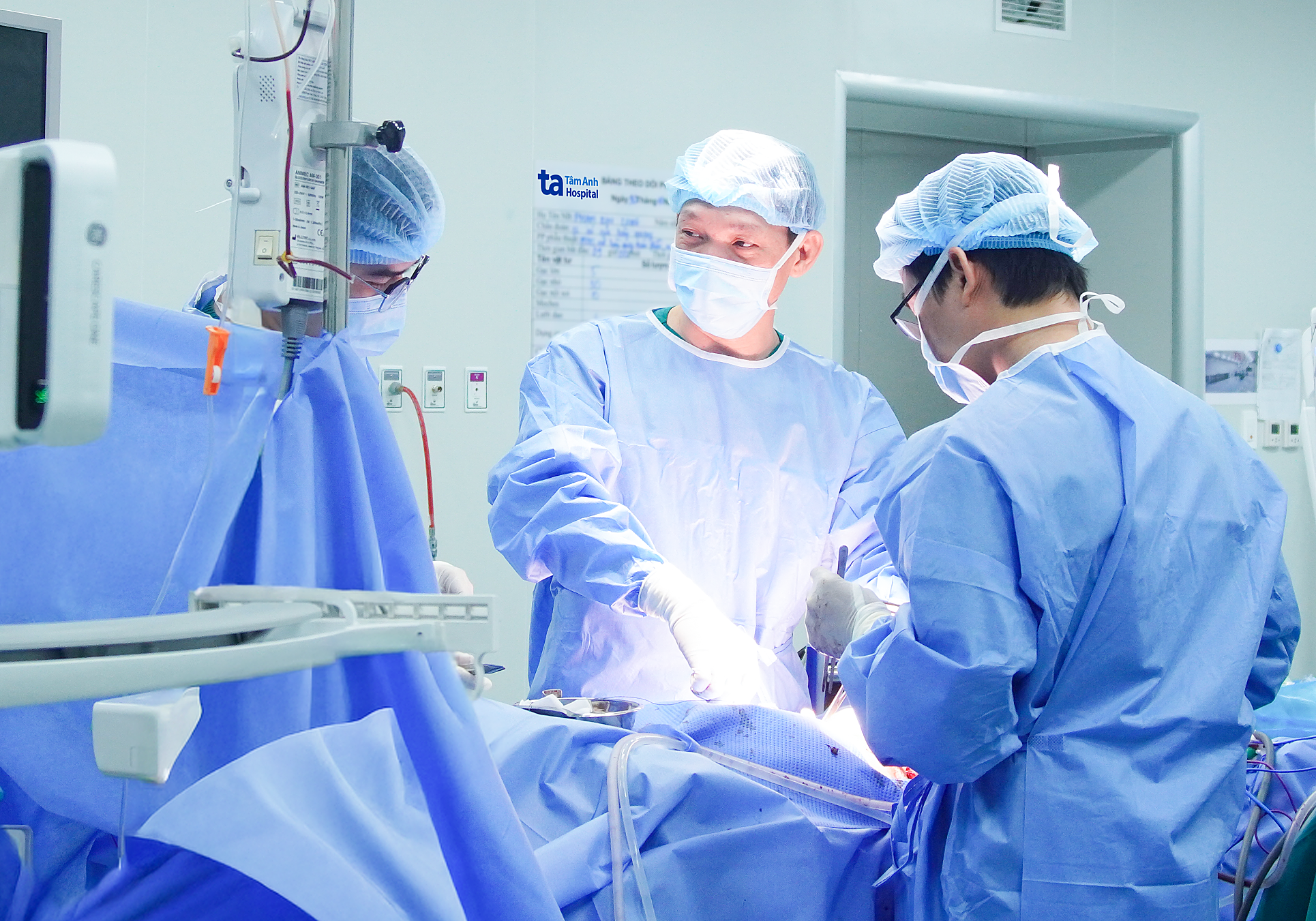 |
The team used the Da Vinci Xi robot to surgically remove the tumor and a portion of Ms. Hue's bladder. Photo: Tam Anh General Hospital
The surgery proceeded smoothly because Ms. Hue's tumor was isolated and located at the bladder dome. The surgical team, controlling the robot, removed the tumor-affected part of the bladder while preserving the healthy portion for the patient. This approach helped maintain bladder function and facilitated a quicker recovery compared to open surgery or traditional endoscopy. After the operation, Ms. Hue resumed normal eating and was discharged five days later.
Due to the extensive invasion of the tumor, doctors scheduled Ms. Hue for a follow-up visit after one month to assess her condition. She may require additional chemotherapy or radiation therapy to eliminate any residual cancer cells and reduce the risk of recurrence.
According to Globocan, Vietnam recorded over 1,900 new cases of bladder cancer in 2022. High-risk factors include smoking, exposure to harmful chemicals, chronic inflammation, or prolonged use of chemotherapy. Common symptoms of bladder cancer are intermittent blood in the urine, urinary dysfunction, pain in the lower abdomen, flank, or fever, chills, weight loss, and leg swelling.
In early stages, doctors perform transurethral tumor resection and instill chemotherapy into the bladder. For advanced disease, a total bladder removal surgery is necessary, or a combination of surgery, chemotherapy, radiation therapy, and other supplementary treatments, depending on the stage. Bladder cancer carries a high risk of recurrence even after treatment. Patients must attend regular follow-up appointments, typically every three to six months for the first two years, for monitoring, early detection, and timely treatment.
Ha Thanh
*Patient's name has been changed