Mr. Binh felt discomfort in his throat immediately after drinking the wine. However, he only sought medical attention at Tam Anh General Hospital in Hanoi when the soreness, difficulty swallowing, and nasal congestion persisted. An initial throat endoscopy revealed swollen and congested mucous membranes. Doctors determined this was not a simple case of rhinitis and ordered an upper gastrointestinal endoscopy.
The gastrointestinal endoscopy revealed severe lesions extending from the soft tissue behind his mouth down to his stomach. The mucous membranes in Mr. Binh's throat and stomach were swollen, inflamed, soft, and prone to bleeding, with numerous shallow ulcers covered by a white membrane. His esophagus was also swollen and peeling, with some ulcers measuring about one-third of the circumference, their bases covered by a white membrane and showing signs of necrosis.
Doctor Vu Truong Khanh, Head of the Department of Gastroenterology, Hepatology, and Pancreatology, assessed Mr. Binh's lesions as distinctly different from those caused by chronic inflammation, gastroesophageal reflux, or H. pylori bacteria infection. These lesions resembled chemical corrosion. "The severe inflammation and ulcers were likely caused by the fruit wine the patient consumed," Doctor Khanh said.
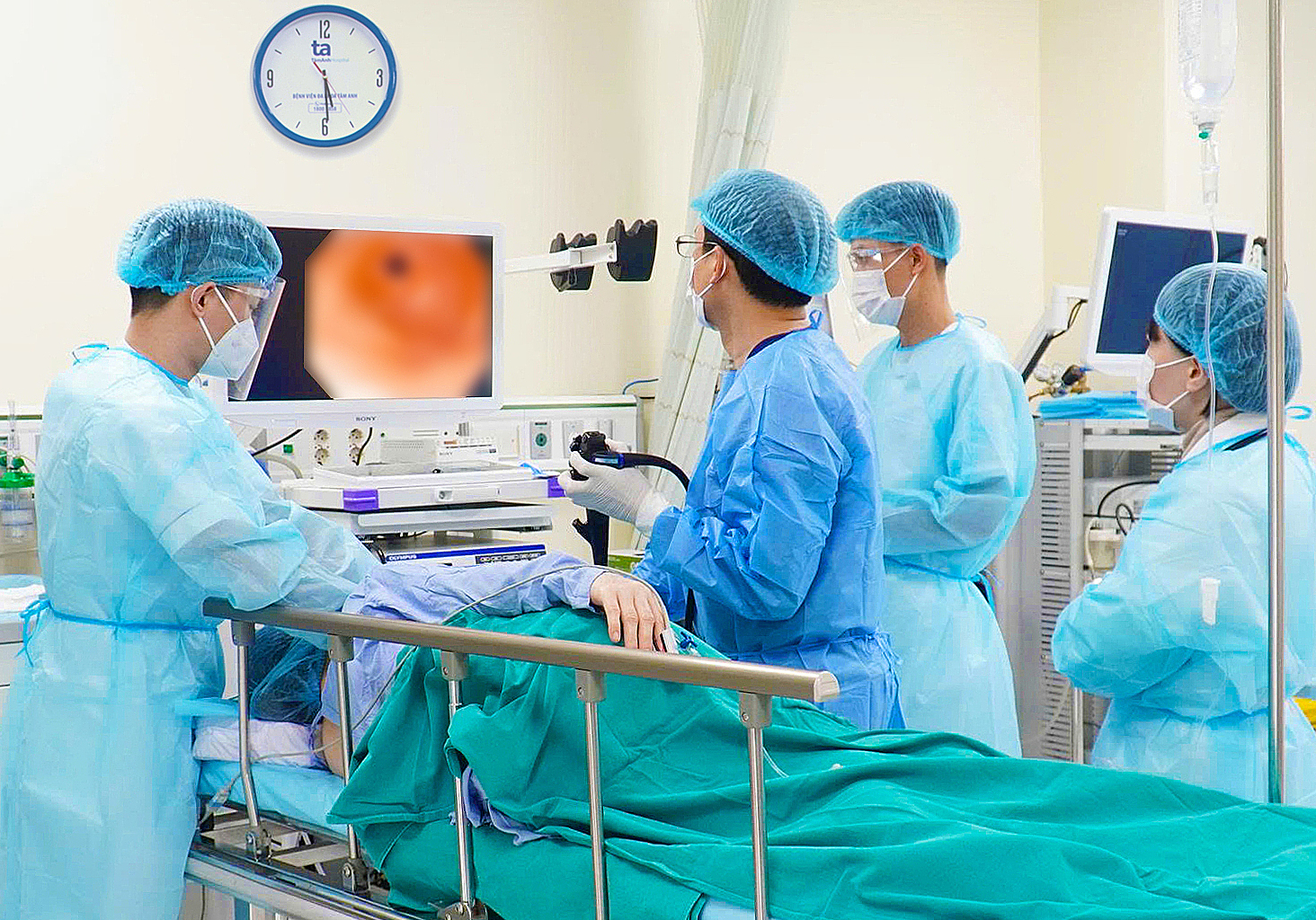 |
Doctor Khanh performing an upper gastrointestinal endoscopy on a patient. Photo: Tam Anh General Hospital
According to Doctor Khanh, certain types of homemade wine, low-quality alcohol, or industrially produced alcohol of unknown origin can damage the mucous membranes of the upper digestive tract, including the throat, esophagus, and stomach. Alcohol and chemicals in these beverages can corrode the protective lining, compromising the natural protective barrier, which leads to inflammation, ulcers, and bleeding. This damage occurs more rapidly if the alcohol has a high concentration, contains toxic impurities, or if the drinker has underlying conditions such as chronic gastritis or reflux. Chemical corrosion can progress quickly, leading to serious complications like infection, bleeding, and esophageal perforation. Prolonged cases may result in esophageal stricture, permanently affecting the ability to swallow and absorb nutrients.
Doctors advised Mr. Binh to temporarily restrict oral intake to minimize further damage, and to use mucosal protective medication and stomach acid inhibitors.
After one month of treatment, a follow-up endoscopy showed that the mucous membranes of his throat and esophagus were beginning to heal, the ulcers were less red, and the pseudomembrane had thinned. His stomach and duodenum also showed significant improvement. Mr. Binh requires regular monitoring, prioritizing soft and easily swallowed foods, and consuming them in several small meals throughout the day. He should avoid alcoholic beverages, spicy foods, and anything too hot or too cold.
Doctor Khanh advises everyone to limit the consumption of homemade wines and to absolutely avoid purchasing alcohol of unknown origin or products that do not guarantee food safety and hygiene. If symptoms like a sore throat, difficulty swallowing, chest pain, vomiting blood, or abdominal pain occur after drinking alcohol, immediate medical attention is necessary.
Ly Nguyen
*Patient's name has been changed