The young patient presented at VISI Eye Hospital, where his vision was limited to light perception. His family reported that the boy had suffered from cataracts since childhood, with previous treatments proving ineffective, leading to a progressive decline in his sight.
His mother explained that since birth, the boy had struggled with blurry vision, making it difficult to recognize family members' faces. Daily activities required constant adult guidance or assistance with movement. By the time he reached school age, his vision had deteriorated significantly, preventing him from clearly seeing the blackboard or textbooks. This severe impairment had forced him to miss school for the past half year.
On 25/5, Dr.CK2 Tran Ba Kien confirmed the boy had bilateral cataracts and a history of retinopathy of prematurity (ROP). He noted that this presented a complex case. Unlike adult patients, treating children involves more than just removing the cloudy lens; it also hinges on the timing of intervention, the child's visual development, and any co-existing conditions. For children with a history of retinopathy of prematurity, recovery prospects further depend on the health of the retina and optic nerve.
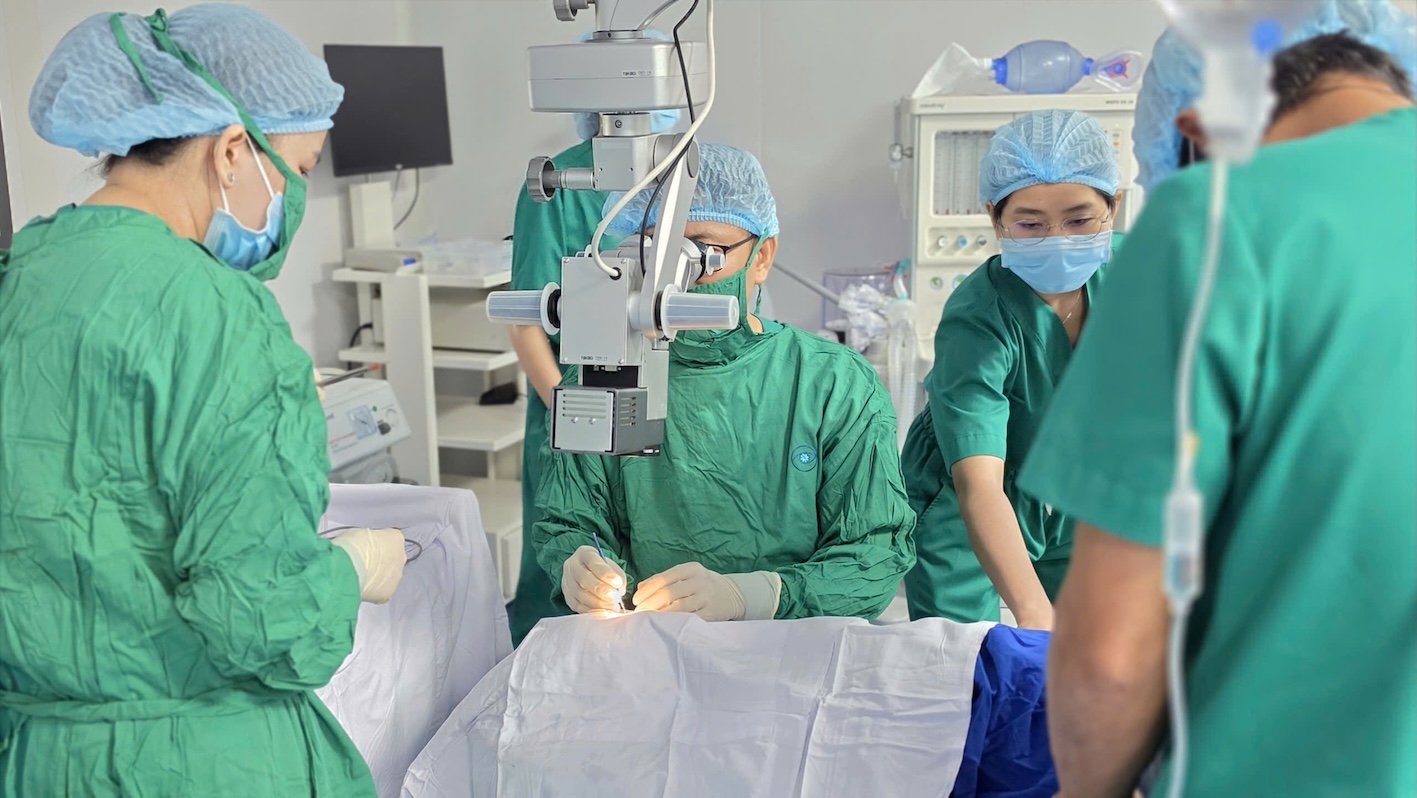 |
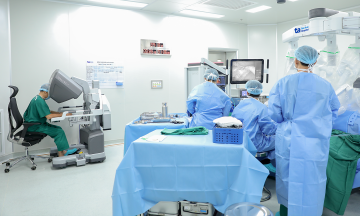
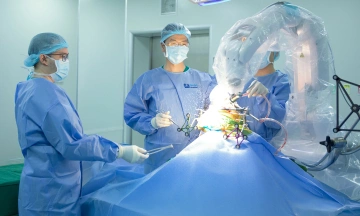
Doctors performing surgery on the young patient. *Photo: Hospital provided*
Following a comprehensive evaluation, doctors opted for phaco surgery combined with intraocular lens implantation. This procedure utilizes ultrasound energy to emulsify the cloudy lens, which is then aspirated and replaced with an artificial intraocular lens. Given the patient's young age, general anesthesia was administered to ensure safety and minimize discomfort during the surgery.
Doctors also carefully considered several factors unique to a child's developing eye. These included the still-maturing eyeball structure, potential for post-operative inflammation, the child's adaptation to the intraocular lens, and the underlying retinal condition caused by prematurity. This meticulous planning aimed to optimize the chances of vision recovery.
Post-surgery, the boy's vision significantly improved, allowing him to see and move independently. He will continue to receive regular follow-up care to monitor eye stability and further vision recovery.
Doctors emphasize that children with a history of prematurity, retinal conditions, or persistent vision loss symptoms require early, specialized eye examinations. Prompt detection and intervention can significantly improve vision, thereby minimizing adverse effects on a child's education and daily life.
Le Phuong