Doctor Ngo Chinh Triet, a compiling member of the "Taiwan Clinical Diagnosis and Treatment Guidelines for Chronic Kidney Disease 2025" and a chief physician in Nephrology at Guo General Hospital in Tainan, warns that kidneys begin to age from 40 years old. Without vigilance, individuals could face dialysis by 60 years old. Many people who believe they are health-conscious harbor harmful misconceptions, thinking they are protecting their kidneys when they are, in fact, damaging them.
After 40 years old, most people focus on preventing cardiovascular disease and cancer, often overlooking kidney health. However, underestimating kidney health carries a steep price for both individuals and society.
For individuals, dialysis marks the beginning of a cascade of systemic complications. Doctor Ngo emphasizes, "The mortality rate for dialysis patients is 10-20 times higher than that of healthy individuals, with the risk of myocardial infarction or stroke skyrocketing by 20-30 times." This burden can erode a patient's dignity and exhaust their entire family.
Under normal conditions, kidney function naturally declines by about one point each year after adulthood. If starting from a healthy level (90 points) down to the threshold for dialysis (10 points), well-cared-for kidneys could potentially function until 120 years old.
However, statistics show that in Taiwan, the prevalence of chronic kidney disease jumps to 17% just past 50 years old; for those 75 years and older, it reaches 35% (one in every three elderly individuals is affected). This accelerated deterioration is often due to unhealthy lifestyle habits. If kidney function declines rapidly by 4 points each year after 40 years old, you will deplete your kidney's "capital" in just 20 years and require dialysis by 60 years old.
Below are six common mistakes in kidney care, summarized by Doctor Ngo Chinh Triet from his clinical experience.
Mistake one: Believing a normal egfr means healthy kidneys
Many people undergo general check-ups, see a normal "estimated glomerular filtration rate (egfr)" on their report, and automatically assume their kidneys are perfectly healthy.
"This is an extremely common misunderstanding," Doctor Ngo states frankly. Medically, if albuminuria or abnormal kidney function persists for over three months, even with a normal egfr, it is classified as chronic kidney disease. The crucial indicator not to overlook in this situation is the urinary albumin to creatinine ratio (uacr).
The amount of microalbumin in urine is the most direct predictor of dialysis risk. Higher albuminuria significantly increases the rate of dialysis, overall mortality, and future cardiovascular risk.
Standard urine dipstick tests in routine health check-ups have limited sensitivity, often only detecting kidney damage when it has become severe. The doctor recommends an additional uacr test for early detection of potential crisis.
Mistake two: Excessive water intake
Many people believe the notion that "drinking plenty of water helps detoxify and protect kidneys," leading them to blindly consume excessive amounts of water daily.
Doctor Ngo warns, "Insufficient water intake is harmful, but too much also damages the body." Especially for patients with heart disease, chronic kidney disease, or cardiorenal syndrome, excessive water intake can cause mild generalized edema or, in severe cases, directly trigger acute heart failure.
How to determine adequate water intake by urine color:
Light yellow, clear: Just the right amount of water.
Colorless, transparent: Over-hydrated.
Dark yellow: The body is dehydrated and needs immediate replenishment.
Mistake three: Fearing Western medicine will harm kidneys
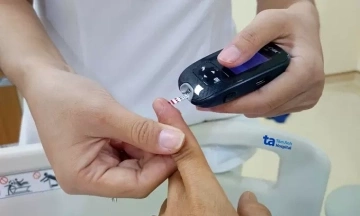
Many people with the "three highs" (high blood pressure, high blood sugar, high blood fat/cholesterol) after 40 years old do not take their medication on time, fearing that "Western medicine harms the kidneys." This is a completely misguided notion.
Data shows that among dialysis patients, 50% are due to poorly controlled diabetes and 20% due to high blood pressure. This means that up to 70% of dialysis cases stem from uncontrolled "three highs," not from the treatment medications.
Medications for the "three highs" help stabilize blood vessel pressure and reduce the toxicity of high blood sugar to protect the kidneys. If high blood sugar and blood pressure are left unchecked, the body's microvessels will be damaged, leading to organ failure within a few years.
 |
Many people do not take their medication on time due to fear that "Western medicine harms the kidneys." Photo: Quynh Tran |
Many people do not take their medication on time due to fear that "Western medicine harms the kidneys." Photo: Quynh Tran
Mistake four: Believing traditional Chinese medicine, herbal remedies, and natural supplements are safe
Many people believe that only chemically synthesized Western medicines are harmful, while traditional Chinese medicine, herbal remedies, or natural ingredient supplements are safe.
"This is an extremely dangerous perception," Doctor Ngo points out. Everything ingested must be metabolized by the liver and kidneys; therefore, excessive intake can overload these organs. Arbitrarily purchasing herbal remedies of unknown origin, then boiling and consuming them according to folk remedies, carries significant risks because the source of the soil, water, and medicinal ingredients cannot be traced, making contamination with toxins easy.
A prime example is "aristolochic acid," which once existed in some herbal remedies. This substance has extremely high kidney toxicity, causing acute and chronic kidney failure, and is classified by the WHO as a Group one carcinogen (likely to cause urinary tract carcinoma). Although herbal medicines containing this substance have been banned since 2003, the risk of it being mixed into wild folk remedies still exists. People seeking to regulate their bodies should consult legally certified traditional Chinese medicine practitioners and absolutely avoid self-prescribing.
Mistake five: Assuming healthy kidneys if there is no discomfort
The mentality of "waiting for symptoms before seeking medical attention" is a fatal error in kidney disease prevention. Statistics show that 96% of early-stage chronic kidney disease patients are completely unaware they have the condition because the kidneys do not have pain-sensing nerves.
By the time discomfort appears and patients actively seek medical attention, the disease has often progressed to the mid-to-late stages, or even to the brink of requiring dialysis.
Individuals over 40 years old, those with the "three highs," a family history of kidney disease, or long-term users of chronic medications and pain relievers, need to establish a habit of annual regular screenings.
Mistake six: Believing in "dialysis-free" therapies
Many end-stage patients, fearing dialysis, desperately seek out underground remedies advertised to reverse kidney function and regenerate organs. Doctor Ngo emphasizes that with current medical science, no miracle cure can restore shrunken, necrotic kidneys.
Blindly trying these therapies comes at a high cost for patients: financial depletion (spending tens or hundreds of thousands of NTD) and delayed opportunities for legitimate treatment. Many cases involve patients avoiding hospitals to take unverified medications, leading to a worsening condition in just a few weeks, causing acute uremic poisoning, hyperkalemia, or cardiac arrhythmia.
"Many people are ultimately brought to the emergency room by ambulance in a state of full-body edema, unable to breathe; some even die from cardiac arrest on the way," Doctor Ngo shares with a heavy heart. When suffering from kidney disease, the only solution to maintain life and quality of life is to adhere to professional monitoring at a reputable nephrology department.
My Y (According to 50plus)