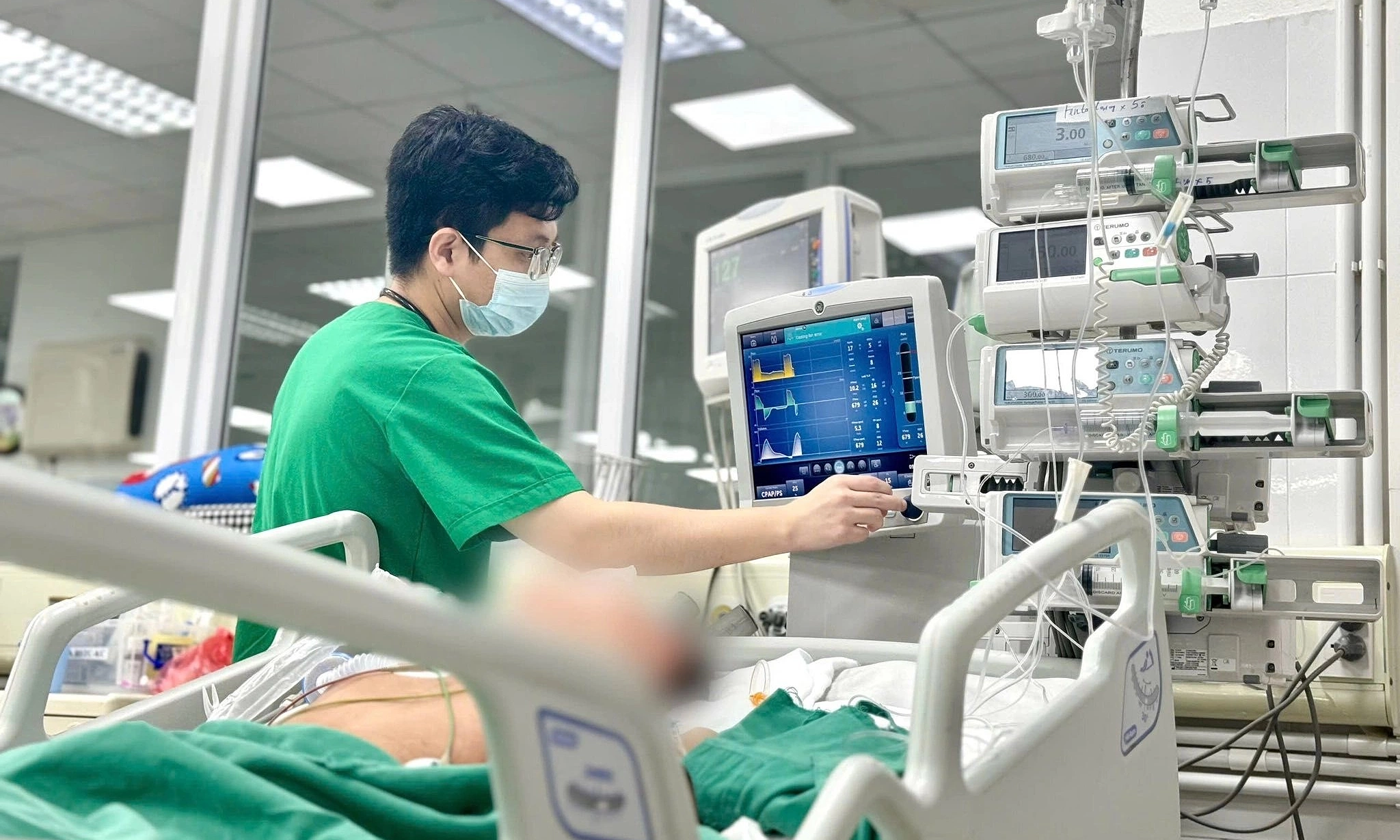
On 17/7, Professor Le Van Quang, Director of K Hospital, announced the launch of the first robot-assisted laparoscopic surgery training course. This program is designed for oncology surgeons from K Hospital, Cho Ray Hospital, and Ho Chi Minh City Oncology Hospital, and features leading national and international experts.
"This is Vietnam's first comprehensive training course in robot-assisted surgery for digestive, urinary, gynecological, head and neck, and thoracic cancers", Professor Quang stated. "It opens a new phase, moving beyond just application to direct training and technology transfer."
During the initial two weeks, doctors successfully performed six complex surgeries across various specialties. Notably, a patient with advanced esophageal cancer, post-chemotherapy and radiation, underwent a complete esophagectomy and radical lymph node dissection performed by a robot.
Another patient, 69 years old, with kidney cancer and underlying cardiovascular disease requiring anticoagulants, received a partial nephrectomy instead of a total nephrectomy. The robot system precisely identified tumor boundaries, ensured excellent vascular control, and reduced the warm ischemia time of the kidney, helping to preserve maximum renal function.
The surgical team also successfully operated on two patients with advanced rectal cancer following preoperative treatment. High-resolution 3D imaging and flexible robotic arms allowed surgeons to perform complete mesorectal excision and lymph node dissection, while preserving pelvic nerves and the anal sphincter – critical factors for post-treatment quality of life.
A patient with localized prostate cancer underwent a radical prostatectomy using a robot. The system assisted surgeons in performing precise suturing in the narrow pelvic cavity, while maximizing the preservation of the urethral sphincter and neurovascular bundles, thereby reducing the risk of urinary incontinence and erectile dysfunction post-surgery.
"Robots do not replace surgeons, but they extend the surgeon's hands, enabling precise, minimally invasive interventions and enhancing patients' quality of life", Professor Quang explained.
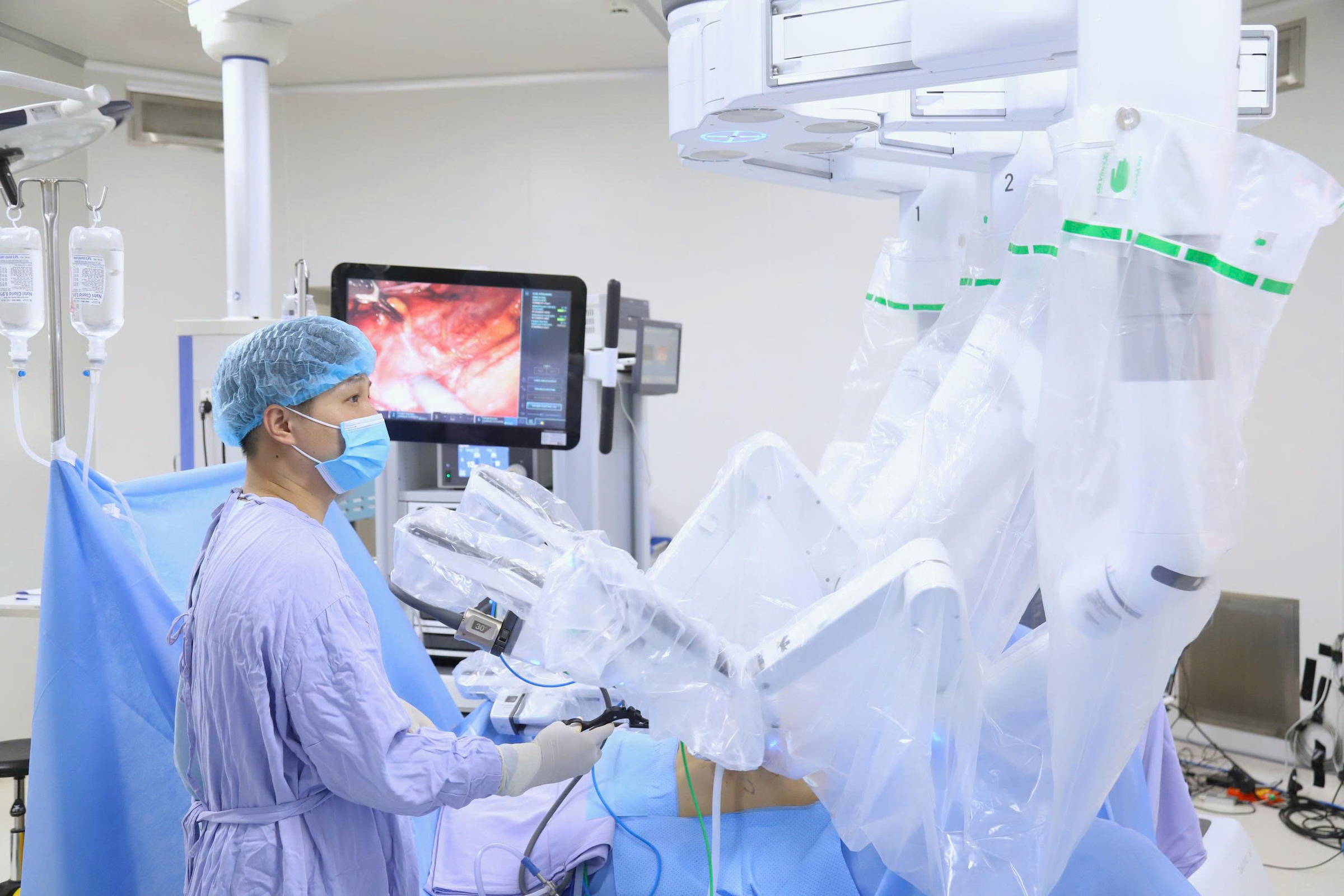 |
A doctor uses a robot for cervical cancer surgery. *Thai Ha* |
In practice, with magnified 3D imaging, flexible manipulation, and high precision, robots enable surgeons to access deep, narrow anatomical areas, perform thorough lymph node dissection, control bleeding effectively, and minimize damage to critical structures. Beyond treatment efficacy, this technique also reduces invasiveness, lessens post-operative pain, shortens hospital stays, and accelerates patient recovery.
According to Professor Quang, the training course's greatest significance lies not only in the successful implementation of surgeries but also in establishing a standard training program, gradually building a team of robot-assisted surgeons in Vietnam. This is a crucial foundation for expanding the technique to numerous cancer treatment facilities nationwide, thereby improving treatment quality and bringing Vietnamese oncology surgery closer to advanced centers regionally and globally.
Deputy Minister of Health Tran Van Thuan noted Vietnam is actively promoting the use of robots in complex surgical fields such as oncology, neurosurgery, and spinal surgery to optimize precision, minimize invasiveness, and shorten patient recovery times. To advance this trend, the Deputy Minister urged healthcare facilities to not only invest in equipment but also focus on developing clinical data, strengthening scientific research, and facilitating technology transfer to master these technologies. The ultimate goal is to establish Vietnam as a high-tech medical hub in the region.
Le Nga