Many diseases, when entering the body, only cause fever, headache, fatigue, and nausea, making them easily underestimated. However, some agents can deeply attack the brain and nervous system, requiring special attention to prevention, explained Dr. Nguyen Tien Dao, Medical Manager at VNVC Vaccination System.
Japanese encephalitis
Japanese encephalitis is transmitted from pigs and wild birds to humans through mosquito bites, primarily Culex mosquitoes, accounting for approximately 10-15% of all viral encephalitis cases in Vietnam. The disease occurs when the virus directly invades brain cells, causing widespread inflammation in the brain and meninges.
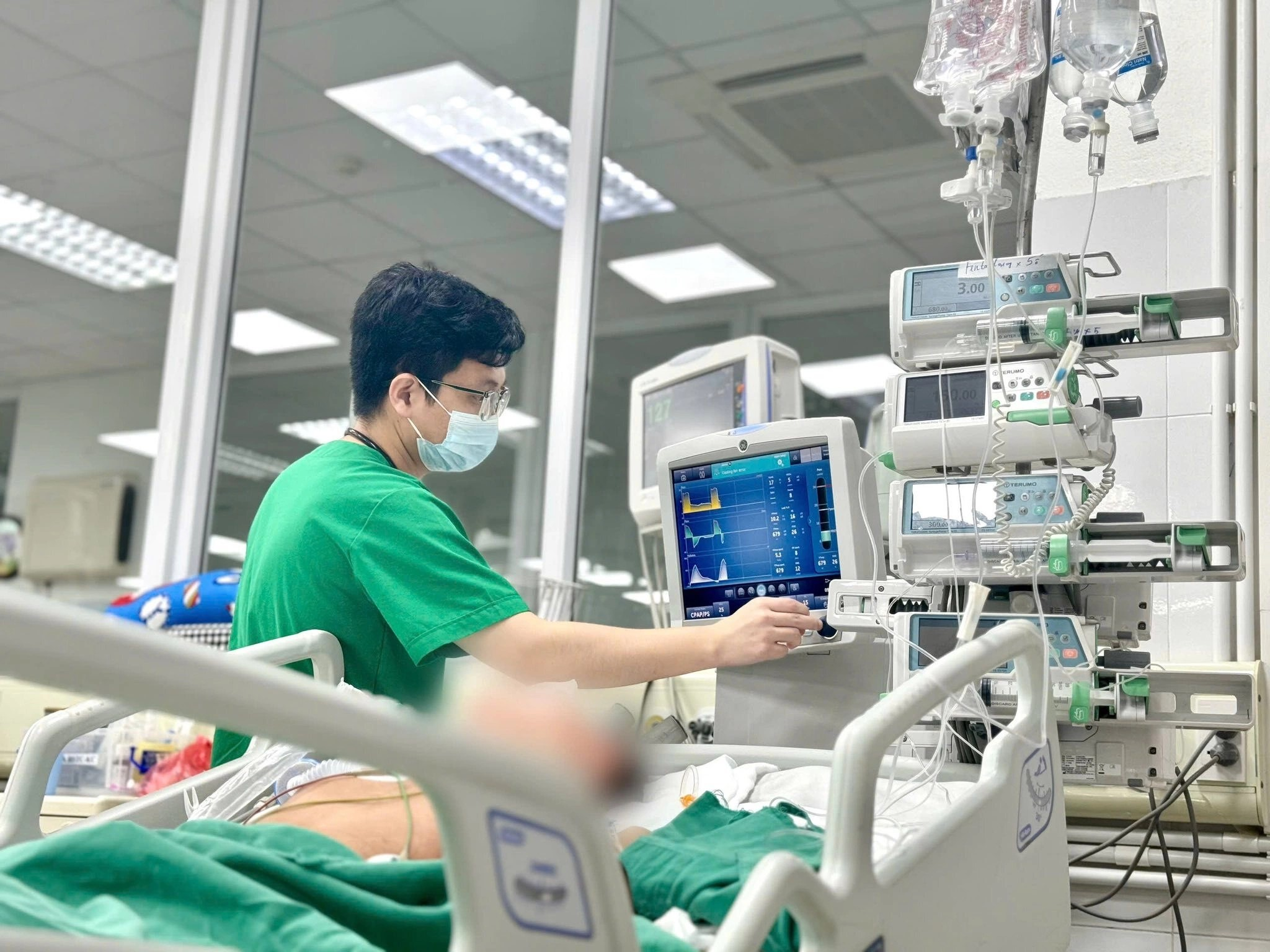 |
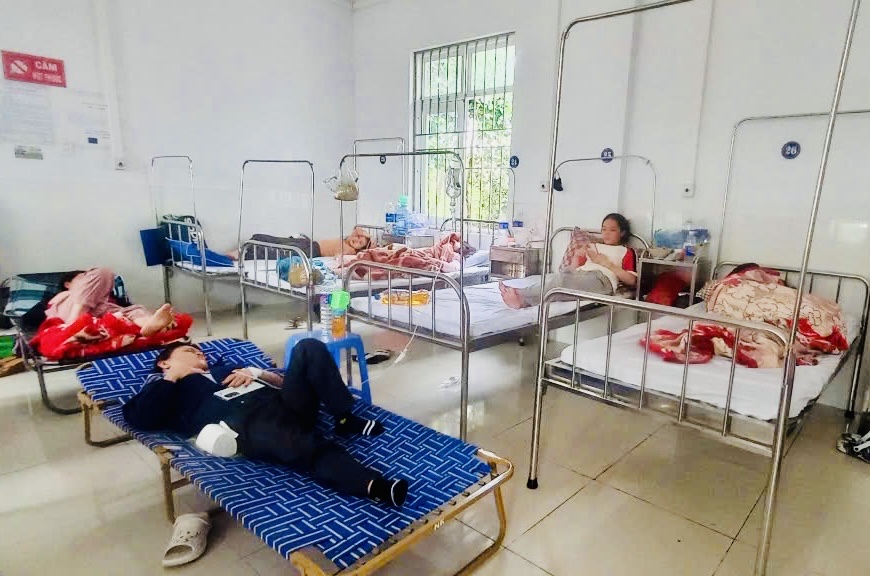
A patient with Japanese encephalitis, treated at the National Hospital for Tropical Diseases in 7/2025. Photo: National Hospital for Tropical Diseases |
A patient with Japanese encephalitis, treated at the National Hospital for Tropical Diseases in 7/2025. Photo: National Hospital for Tropical Diseases
In its full-blown stage, the disease can cause convulsions, consciousness disorders, coma, and focal neurological damage, with a mortality rate of 20-30%. Even if patients recover, 30-50% may still suffer lifelong sequelae such as paralysis, deafness, movement disorders, intellectual impairment, or behavioral changes. Even those considered recovered may experience prolonged difficulties in learning, communication, and movement. In young children, the disease can lead to delayed intellectual and language development, or even loss of self-care ability, becoming a long-term burden for families.
Currently, Vietnam has three types of vaccines for Japanese encephalitis available for both children and adults through expanded immunization programs and private services. The expanded immunization program offers Jevax vaccine, produced in Vietnam, which requires a booster every three years after the primary vaccination schedule. Private vaccination services offer Jevax, Imojev (Thailand), and JEEV (India). Among these, the Imojev vaccine does not require booster doses if the full course is completed.
Meningococcal disease
Neisseria meningitidis bacteria cause two common clinical conditions: septicemia and meningitis. Meningitis accounts for 50% of invasive meningococcal disease cases, with some cases involving meningitis combined with septicemia.
According to Dr. Dao, after entering the body, the bacteria can penetrate the bloodstream, cross the blood-brain barrier, and enter the cerebrospinal fluid. There, they attach to cells, multiply rapidly, and cause severe inflammation, damaging the meninges and brain parenchyma. Once in the brain, the bacteria and toxins stimulate the body to release inflammatory substances, increasing the permeability of the protective barrier, leading to brain edema, increased intracranial pressure, and neurological dysfunction.
The disease often has a sudden onset with high fever, headache, vomiting, stiff neck, fatigue, and sometimes petechiae. Patients can quickly become confused, fall into a coma, and if not treated promptly, can rapidly go into shock, suffer multi-organ failure, and die within 24 hours.
Currently, vaccines are available to prevent the five most dangerous serogroups of meningococcal disease, including ba types for groups A, C, Y, W, and hai types for group B or B, C. The age and vaccination schedule vary depending on the vaccine type, with some administered as early as 6 weeks of age and no age limit for adults. Each person needs a combination of vaccines for full protection against these five groups.
Hib bacteria
Hib meningitis occurs when Haemophilus influenzae type B bacteria invade the meninges, the protective layers surrounding the brain and spinal cord. The disease is common in children under 5 years old, especially between 6-18 months of age, when the immune system is still immature.
In Vietnam, Hib accounts for approximately 1/3 to 1/2 of bacterial meningitis cases in young children. The disease can be fatal in 5-10% of cases and leaves long-term sequelae in 15-30% of affected children, such as brain damage, deafness, intellectual impairment, learning disabilities, or movement disorders.
To prevent the disease, children from 2 months of age, and as early as 6 weeks of age, are recommended to receive a vaccine containing the Hib component (in a 5-in-1 or 6-in-1 combination vaccine). The vaccination schedule consists of 4 doses and should be completed before 2 years of age for optimal protection.
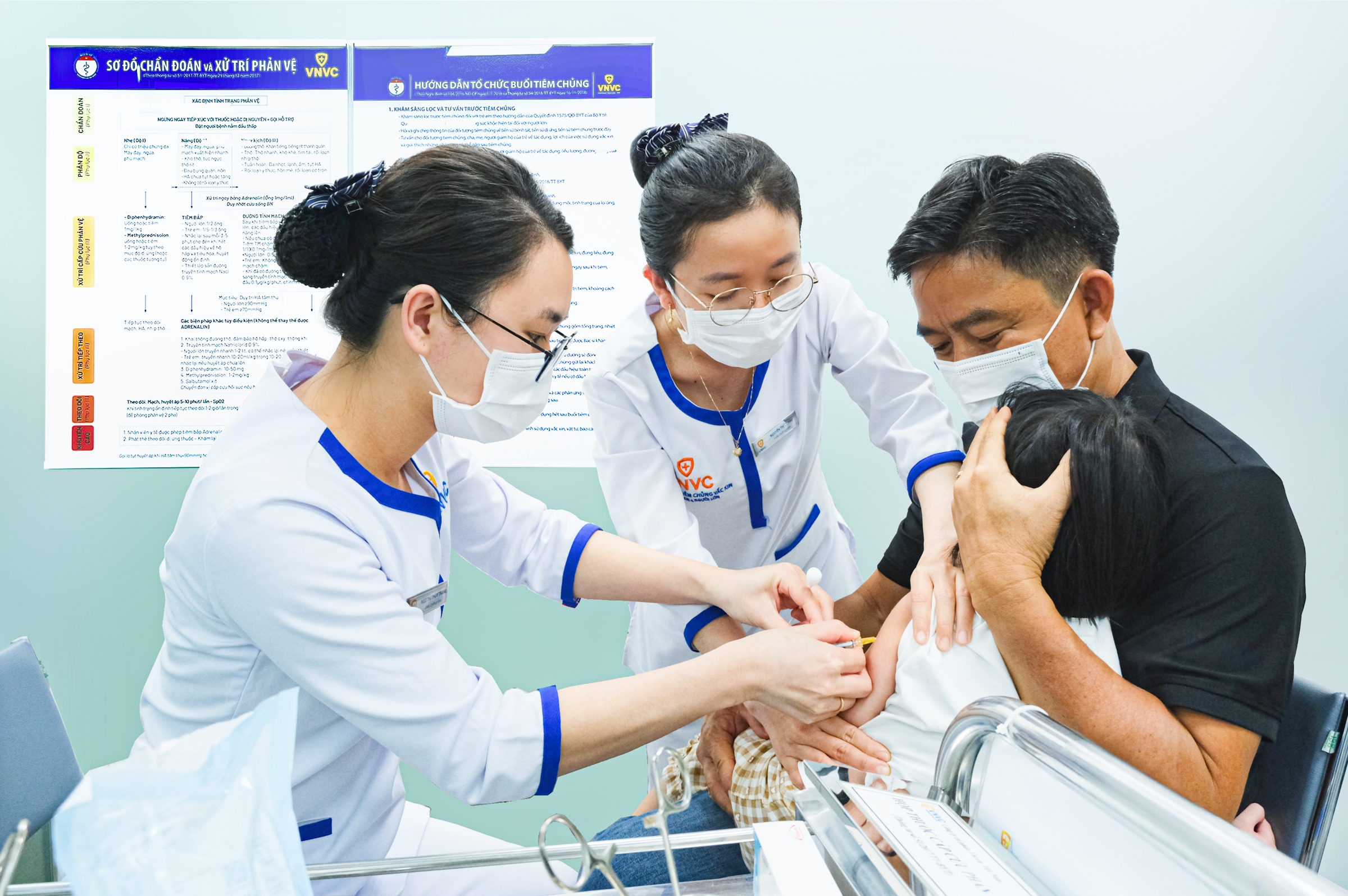 |
Young children receiving vaccines at VNVC Vaccination System. Photo: Moc Thao |
Young children receiving vaccines at VNVC Vaccination System. Photo: Moc Thao
Measles
Approximately 0,1-0,6% of people with measles can develop encephalitis, usually appearing in the first few days of the rash. In such cases, the disease has a sudden onset with high fever, headache, convulsions, consciousness disorders, or even coma or paralysis. The mortality rate for measles complicated by encephalitis can be as high as 10-40%.
Even after recovery, patients remain at risk of severe sequelae such as weakness, paralysis, vision loss, deafness, or intellectual impairment, which can long-term affect learning and daily activities, especially in school-aged children. Additionally, measles can cause subacute sclerosing panencephalitis, which occurs when the virus persists in the brain. This condition progresses silently with signs like memory loss, concentration issues, and behavioral changes, eventually leading to dementia and movement disorders. This risk is higher in young children who have not been vaccinated.
Currently, Vietnam has many types of measles vaccines, including monovalent measles vaccine, measles-rubella combination, measles-mumps-rubella, and measles-mumps-rubella-chickenpox. Children need at least hai doses, with an efficacy of up to 98% in preventing measles and its complications. Adults without immunity need at least hai vaccine doses, with a one-month interval between doses.
Hand, foot, and mouth disease
Hand, foot, and mouth disease caused by Enterovirus 71 (EV71) is the main cause of severe complications such as encephalitis, myocarditis, and acute pulmonary edema in young children. After entering through the mucous membranes of the mouth, throat, or intestines, the virus travels into the bloodstream, crosses the blood-brain barrier, and directly attacks the central nervous system.
Complications often appear early, within 2-5 days from when the child first develops fever or blisters. Brainstem encephalitis is the most common neurological complication, accounting for more than 50% of neurological complication cases. This condition disrupts the autonomic nervous system, affecting the cardiovascular and respiratory systems.
The virus can also increase pulmonary capillary permeability, leading to acute pulmonary edema or pulmonary hemorrhage. Children may show signs of dyspnea, rapid breathing, cyanosis, coughing up pink frothy sputum or blood, and require immediate emergency care. Many cases progress very rapidly, potentially leading to death within just a few hours if not treated promptly.
There is currently no specific antiviral drug for the disease. Last March, Vietnam licensed an EV71 vaccine for hand, foot, and mouth disease, indicated for children from 2 months to under 6 years of age. Through a strategic partnership with Substipharm Biologics, the vaccine owner, VNVC Vaccination System is accelerating progress to provide more opportunities for proactive prevention of the disease's dangerous complications.
Binh An