The intense heatwaves of summer are often most uncomfortable at night. When the weather is too stifling, many people toss and turn all night on a sweat-drenched mattress. Conversely, turning to an air conditioner can lead to waking up in a freezing room with dry skin. In this context, maintaining a gentle fan breeze all night might seem like the most ideal compromise for staying cool, but this habit can also bring a number of unpleasant side effects.
Doctors recently pointed out the health impacts of continuous fan airflow, primarily the risk of irritating allergies and asthma. Running a fan all night can disturb allergens in the room such as dust, pollen, and pet dander, exacerbating symptoms of allergic rhinitis or asthma.
According to Dr. William Lu, medical director at the digital sleep clinic Dreem Health, US, for individuals with sensitive respiratory tracts, the combination of circulating allergens and dryness can worsen symptoms like coughing, wheezing, or nasal congestion. Fan blades also often accumulate a lot of dust, increasing the amount of dust particles dispersed throughout the room.
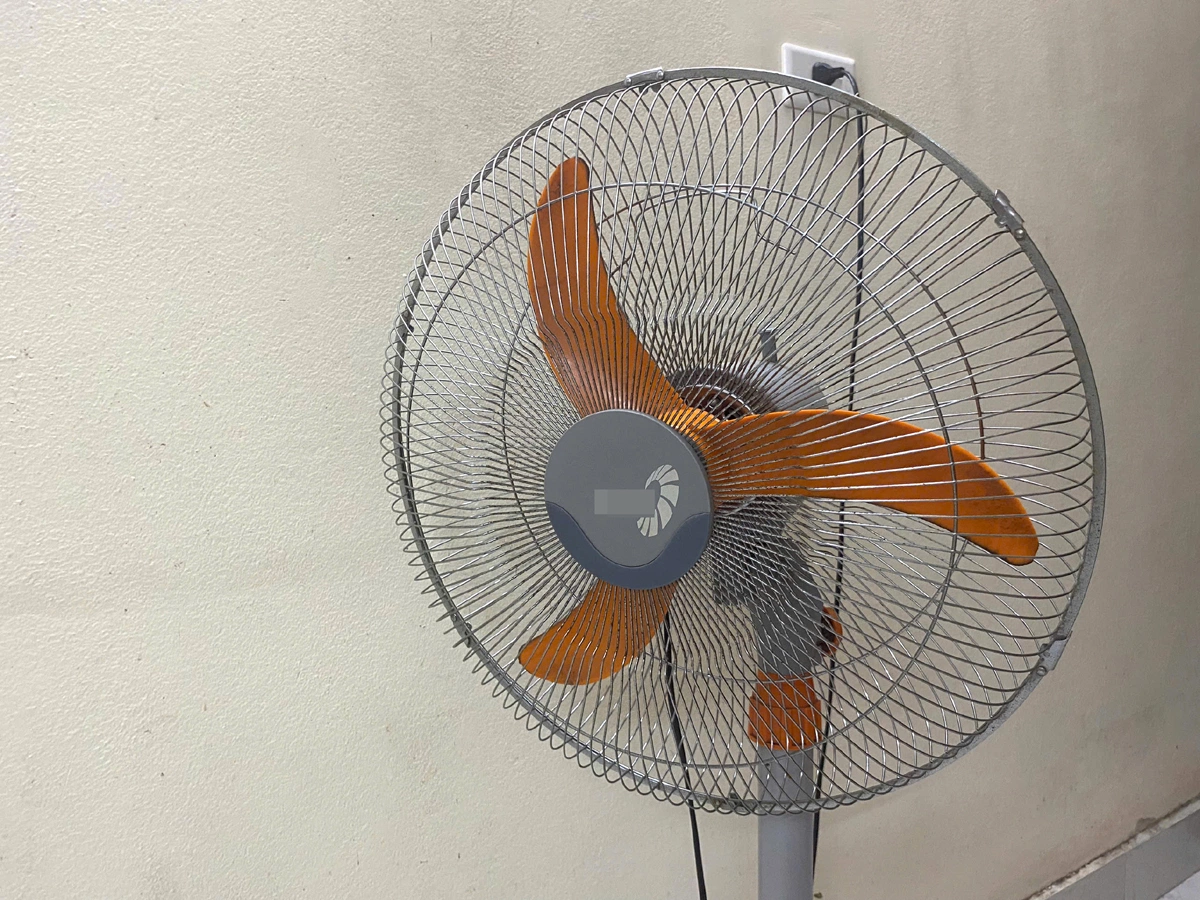 |
Electric fan. Illustration: Binh Minh |
Beyond impacting the respiratory system, cold air concentrated on one body area for an extended period can cause muscle spasms or cramps due to reduced local blood circulation. Combined with the body often maintaining one posture for many hours during sleep, sleepers can easily wake up feeling sore, particularly with a stiff neck. Simultaneously, continuous airflow can dry out the nose, mouth, and throat, prompting the body to increase mucus production to counteract the dryness. Excessive mucus production can lead to nasal congestion, resulting in symptoms such as sore throat, blocked nose, cough, and sinus headaches.
Further explaining this mechanism, Dr. Julius Goh, an Ear, Nose, and Throat specialist in Malaysia, stated that the mucus-clearing system, which consists of microscopic cilia resembling hairs that sweep mucus and allergens out of the nasal passages, requires humidity to function. When the environment is dried out, the nose's natural protective barrier is inadvertently disabled, allowing allergens to linger longer, and sleepers may wake up with continuous sneezing fits right before breakfast. Additionally, steady cold airflow also dehydrates the skin and eyes, worsening conditions for those who already suffer from eczema, psoriasis, or dry eyes.
However, if one still wishes to maintain coolness in the summer with a fan, users can certainly adopt some preventive measures to avoid waking up with a stiff neck or dry skin. Experts recommend placing the fan at a distance and directing the airflow away from the body rather than pointing it directly at oneself, or ideally, using the oscillating mode for even air distribution.
Dr. Michael DeShields, a clinical advisor at the Discovery Institute, New Jersey, US, shared that if sleeping in cool temperatures helps improve sleep, then it is not necessary to completely abandon fans. Negative effects can be easily mitigated by regularly cleaning the fan, changing the air filter of the ventilation system, maintaining indoor humidity at 30-50%, and adjusting the fan direction to avoid blowing directly at the head. For those who frequently wake up with a dry nose, spraying saline solution into each nostril before bed is also an effective supporting solution.
Furthermore, maintaining a clean home by regularly vacuuming, wiping surfaces, and thoroughly cleaning fan blades will prevent dust and allergens from spreading widely. Sleeping with a fan on, while potentially causing some minor inconveniences, does not lead to long-term damage or serious medical conditions. However, users should also note that a fan does not actually reduce air temperature; it only circulates air across the skin, helping sweat evaporate faster and providing a cooler sensation to the body.
Binh Minh (According to Independent)