Eng English
China 中国人

Eng English
China 中国人
  • News
  • World
  • Business
  • Entertainment
  • Sports
  • Law
  • Education
  • Health
  • Lifestyle
  • Travel
  • Science
  • Digital
  • Automobiles
  • Trở lại Thể thao
  • Health
Wednesday, 29/7/2026 | 17:02 GMT+7

Doctor outlines six controllable factors to prevent stroke

Stroke is not a random event; most cases are linked to six controllable risk factors: high blood pressure, diabetes, high cholesterol, heart disease, smoking, and obesity.

Stroke is the second leading cause of death worldwide, trailing only myocardial infarction (heart attack), and stands as the primary cause of disability. Globally, nearly 12 million new cases are recorded annually, with approximately 6,5 million deaths attributed to this condition. Doctor Hoang Tien Trong Nghia, Head of the Neurology Department at Military Hospital 175, highlighted these statistics during the "Updating Diagnosis and Treatment of Stroke Across the Military" training on 29/7.

Doctor Nghia noted that while many perceive strokes as sudden events, about 90% of stroke risks are modifiable. These risks can be effectively managed if detected and controlled early.

High blood pressure is the most significant risk factor, contributing to both ischemic and hemorrhagic strokes. A concerning aspect is that high blood pressure often progresses silently, lacking clear symptoms, leading many to discover the condition only after complications arise. A meta-analysis involving over 613,000 individuals demonstrated that even a 10 mmHg reduction in systolic blood pressure significantly lowers the risk of cardiovascular events and stroke.

High cholesterol promotes the formation of atherosclerotic plaques, which narrow or block blood vessels supplying the brain, leading to ischemic stroke. This risk factor can be managed through diet, regular exercise, and medication when necessary.
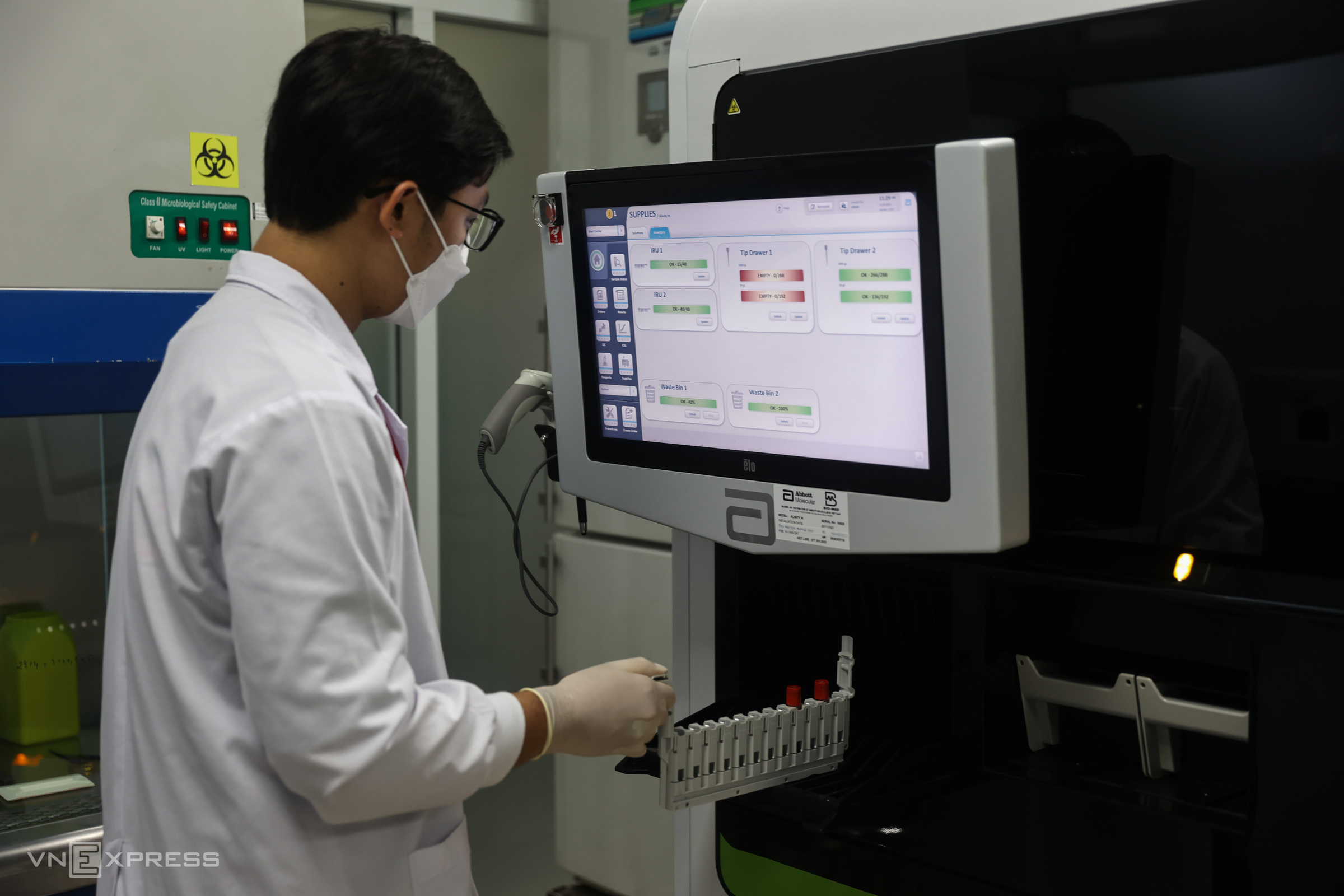
Patient testing at Military Hospital 175. Photo: Quynh Tran

Heart disease, including atrial fibrillation, heart failure, valvular heart disease, or myocardial ischemia, increases the risk of blood clot formation, which can block brain arteries. A 30-year study of 289,000 individuals revealed that heart failure patients face two times higher risk of hemorrhagic stroke and five times higher risk of ischemic stroke compared to the general population.

Diabetes significantly elevates stroke risk, with individuals experiencing double the likelihood. This is because prolonged high blood sugar damages blood vessel walls, promotes atherosclerosis, and disrupts cerebral circulation.

Obesity and physical inactivity contribute to several risk factors, including high blood pressure, diabetes, and dyslipidemia. Maintaining a healthy weight and engaging in regular physical activity can substantially reduce stroke risk.

Smoking and excessive alcohol consumption are also critical factors. Tobacco smoke damages blood vessels and increases the formation of blood clots. Notably, reducing the number of cigarettes smoked daily offers benefits; a study indicated that lighter smokers have a significantly lower stroke risk compared to those who smoke 20 cigarettes daily.

Doctor Hoang Tien Trong Nghia, Head of the Neurology Department at Military Hospital 175, at the "Updating Diagnosis and Treatment of Stroke Across the Military" training on 29/7. Photo: Hospital provided

Doctor Nghia emphasized that effectively managing these six factors not only prevents a first stroke but also limits the risk of recurrence for individuals who have previously experienced one. "Stroke is a medical emergency, but most risks can be prevented very early through chronic disease management and lifestyle changes," he stated.

The BE FAST principle helps in early stroke recognition. It includes: sudden loss of Balance, blurred or lost vision (Eyes), facial drooping (Face), arm or leg weakness (Arms), and slurred Speech. If any of these signs appear, immediate emergency medical attention is crucial, as approximately 1,9 million brain cells are lost every minute that passes.

Le Phuong
By VnExpress: https://vnexpress.net/bac-si-neu-6-yeu-to-kiem-soat-duoc-giup-ngua-con-dot-quy-5102889.html
Tags: high blood pressure stroke

News in the same category

Evening habits to avoid for lung protection

Evening habits to avoid for lung protection

Consuming alcohol, overeating, and staying up late can impair lung function and elevate the risk of respiratory diseases.

Chinese doctor identifies three food groups that can damage the liver

Chinese doctor identifies three food groups that can damage the liver

To protect the liver, experts advise limiting sweets, fried foods, and salt, as these can contribute to fatty liver, chronic inflammation, and edema.

Hospital 108 receives skin care technology from the US

Hospital 108 receives skin care technology from the US

The aesthetic center at Military Central Hospital 108 receives the Apyx One Console device, utilizing renuvion J-plasma technology for minimally invasive facial skin tightening and tissue contraction.

Why is it difficult to lose weight even when eating less?

Why is it difficult to lose weight even when eating less?

Eating less but still struggling to lose weight can be due to hidden calorie intake, insufficient protein, low physical activity, or inadequate sleep, which can disrupt hormones controlling hunger and satiety.

Does Hot Weather Reduce Sperm Quality?

Does Hot Weather Reduce Sperm Quality?

I often work outdoors in hot weather. Can high temperatures reduce sperm quality and affect fertility? What precautions should I take? (Manh Quan, Ho Chi Minh City)

Brain aneurysm ruptures after three days of headaches

Brain aneurysm ruptures after three days of headaches

Ms. Tim, 58, experienced a dull headache accompanied by vomiting, leading doctors to diagnose subarachnoid hemorrhage from a ruptured brain aneurysm.

Chinese expert identifies 6 habits that 'feed' cancer cells

Chinese expert identifies 6 habits that 'feed' cancer cells

Many habits, such as consuming excessive sweets, eating burnt grilled food, using poor-quality plastic, staying up late, or ignoring chronic inflammation, can create an environment conducive to cancer development.

Home-based cardiovascular health care using a semiconductor laser

Home-based cardiovascular health care using a semiconductor laser

The Zhi Dun semiconductor laser device utilizes low-power laser technology, assisting users in home-based cardiovascular health care.

Retinal hemorrhage due to malignant hypertension crisis

Retinal hemorrhage due to malignant hypertension crisis

Mr. Manh, 37, suddenly experienced a severe headache and darkened vision in both eyes; doctors diagnosed vision loss due to complications of hypertension and diabetes.

Doctor suggests a 7-day low-calorie menu for fat loss and a slimmer waist

Doctor suggests a 7-day low-calorie menu for fat loss and a slimmer waist

Doctor Phan Thai Tan, a weight loss coach, recommends an effective 7-day low-calorie menu for fat loss and body detoxification.

Eng English
China 中国人
  • News
  • World
  • Business
  • Entertainment
  • Sports
  • Law
  • Education
  • Health
  • Lifestyle
  • Travel
  • Science
  • Digital
  • Automobiles
FPT Tower, 10 Pham Van Bach Street, Dich Vong Ward,
Cau Giay District, Hanoi, Vietnam
Email: contacts@vnportal.net
Tel: 028 7300 9999 - Ext 8556
Advertise with us: 090 293 9644
Register
© Copyright 2026 vnnow.net. All rights reserved.
Terms of use Privacy policy Cookies