Answer:
The key factor determining how quickly you become intoxicated is the rate at which your stomach empties. When your stomach is empty, alcohol passes almost directly into the small intestine, allowing a rapid influx of alcohol into your bloodstream. You might notice your face reddening quickly, your head starting to feel light, increased talkativeness, and slowed reflexes. Conversely, if there is food in your stomach, especially a balanced meal, alcohol is retained longer, absorption becomes more gradual, and the peak blood alcohol level is lower.
In fact, many studies have noted that individuals who drink alcohol on an empty stomach typically have significantly higher blood alcohol levels compared to those who consume the same amount of alcohol after eating. For those who have eaten, enzymes in the stomach lining have time to metabolize one portion of the alcohol locally, acting as a "preliminary filter". This helps reduce the amount of alcohol that actually enters the bloodstream, although the effect is not enough to completely "neutralize" the alcohol.
The alcohol concentration in beverages also strongly affects the rate of intoxication. Alcohol levels between 12% and 20% are generally absorbed faster than levels that are too low or too high. If the concentration is too high, above 40%, alcohol can irritate and constrict the pyloric region, causing the stomach to retain alcohol longer. This sometimes leads to slower intoxication but greater mucosal damage.
Carbonated beverages such as beer, champagne, and cocktails mixed with soda create pressure in the stomach, opening the pylorus and pushing alcohol into the small intestine more quickly. This causes intoxication to arrive more suddenly and intensely.
 |
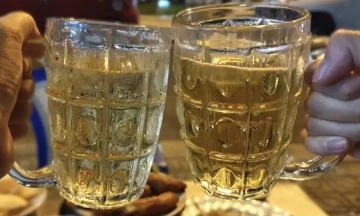
The time it takes to eliminate alcohol from the body varies depending on individual tolerance, amount consumed, body weight, and other factors. *Photo: Nguyen Huyen*
Experts recommend that men should not consume more than 720 ml of beer, or 300 ml of wine, or 60 ml of whisky per day. For women, the daily limit should not exceed 360 ml of beer, or 150 ml of wine, or 30 ml of whisky. Avoid consuming alcoholic beverages from unknown sources.
You can calculate your blood alcohol content and the time required for it to return to zero after drinking, using the table below.
Doctor Nguyen Huy Hoang
Vietnam Undersea and Hyperbaric Medicine Association