Long-distance journeys during holidays, especially Tet, offer the joy of relaxation, but the aches and pains in the neck, shoulders, and lower back from prolonged sitting in vehicles are a common concern for many.
According to Doctor of Medicine, Level 2 Specialist Huynh Tan Vu from University Medical Center HCMC - Campus 3, the human body is designed for movement, not for remaining in one fixed position for extended periods. Prolonged sitting causes joints to stiffen and restricts blood circulation, leading to blood pooling in the lower limbs, which can result in swelling of the calves and feet.
Why does travel cause spinal pain?
Several factors negatively impact the spine during a journey:
Seat design: Seats on public transport prioritize quantity and safety over comfort. C-shaped seats often lack lumbar support, pushing the head and neck forward and disrupting the spine's natural S-curve.
Limited space: Cramped seating reduces the ability to change positions, increasing the load on the lumbar spine.
Poor posture: Falling asleep with your head bent or tilted to one side, or sitting on overly soft seats that offer inadequate support.
Muscle contraction: Prolonged sitting shortens muscle groups in the posterior thigh, pelvis, buttocks, and lower back, leading to muscle tension when standing up.
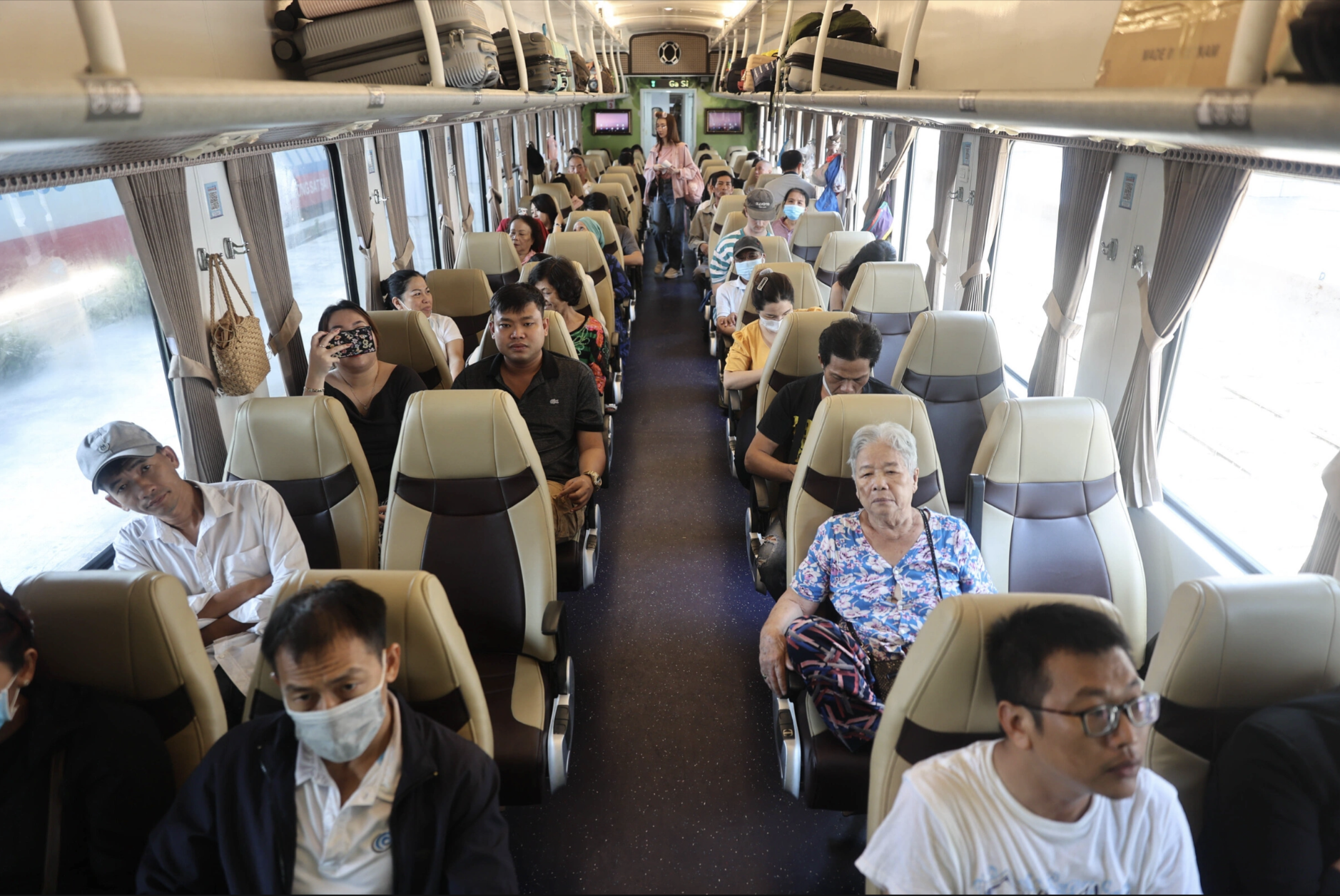 |
Passengers on a train at Saigon Station, 4/2024. Photo: Quynh Tran |
Solutions to alleviate pain before, during, and after your trip
To protect your spine, Doctor Vu suggests a health care plan divided into three stages:
Preparing before your trip
Managing existing conditions: If you have a musculoskeletal condition, consult your doctor for stable treatment before departing.
Light luggage: Avoid carrying excessively heavy items that could cause sudden injury. Opt for wheeled suitcases or seek assistance from station or airport staff.
Exercise: Maintain a regular exercise routine for a few weeks before your trip to keep your back muscles flexible and reduce spasms from prolonged sitting.
Medication: Prepare common pain relievers, such as acetaminophen or ibuprofen, as advised by your doctor.
While traveling
Change positions: Choose an aisle seat to easily stand up, walk around, or stretch without disturbing others.
Recline your seat appropriately: Sitting upright at 90 degrees puts significant pressure on the spinal discs. Slightly reclining your seat shifts body weight to the backrest, reducing the load on your spine.
Use supportive accessories:
C-shaped neck pillow: Helps maintain a natural resting position for your head, preventing your neck from bending when you sleep.
Lumbar pillow: Place a small pillow (or a rolled-up jacket) in the curve of your lower back to maintain its natural physiological curve.
Leg position: Keep your knees at a 90-degree angle to your hips. If your feet do not reach the floor, place a blanket or pillow under them to relieve tension in your lower back.
Recovering after your trip
If pain persists after your journey, you can try these measures:
Warm compress: Helps relax muscles and improve blood circulation in the affected area.
Acupressure massage: This is an effective way to soften stiff muscles, reduce stress, and improve sleep after a long trip.
Adequate rest: Avoid scheduling a packed itinerary immediately after arriving. Dedicate time to sleep to allow your body to regenerate energy.
If neck and back pain persists and shows no signs of improvement after resting, consult a musculoskeletal specialist for appropriate treatment.
My Y