Dr. CKI Nguyen Huu Hieu, from the Pediatrics Department at Tam Anh General Hospital, Ho Chi Minh City, stated that Trung had lobar pneumonia and did not respond to previous conventional antibiotic treatments. Chest X-ray results showed a homogeneous opaque mass occupying one lung lobe. Blood tests revealed a white blood cell count of 20,000/mm3 (normal range is approximately 4,000-10,000 mm3) and a C-reactive protein (CRP) level of 91 mg/L, nine times higher than normal.
Trung received broad-spectrum antibiotics, but two days later, his fever and phlegmy cough showed no signs of improvement. Doctors then switched to stronger, broader-spectrum antibiotics to target pneumococcal, staphylococcal, and atypical bacteria.
The boy's fever subsided, and he began eating normally. He was discharged after seven days of antibiotics, continuing the medication at home for an additional week to prevent recurrence or abscess formation. Doctors advised his parents on nutrition, keeping him warm, and maintaining a clean home environment to ensure his lungs fully recovered.
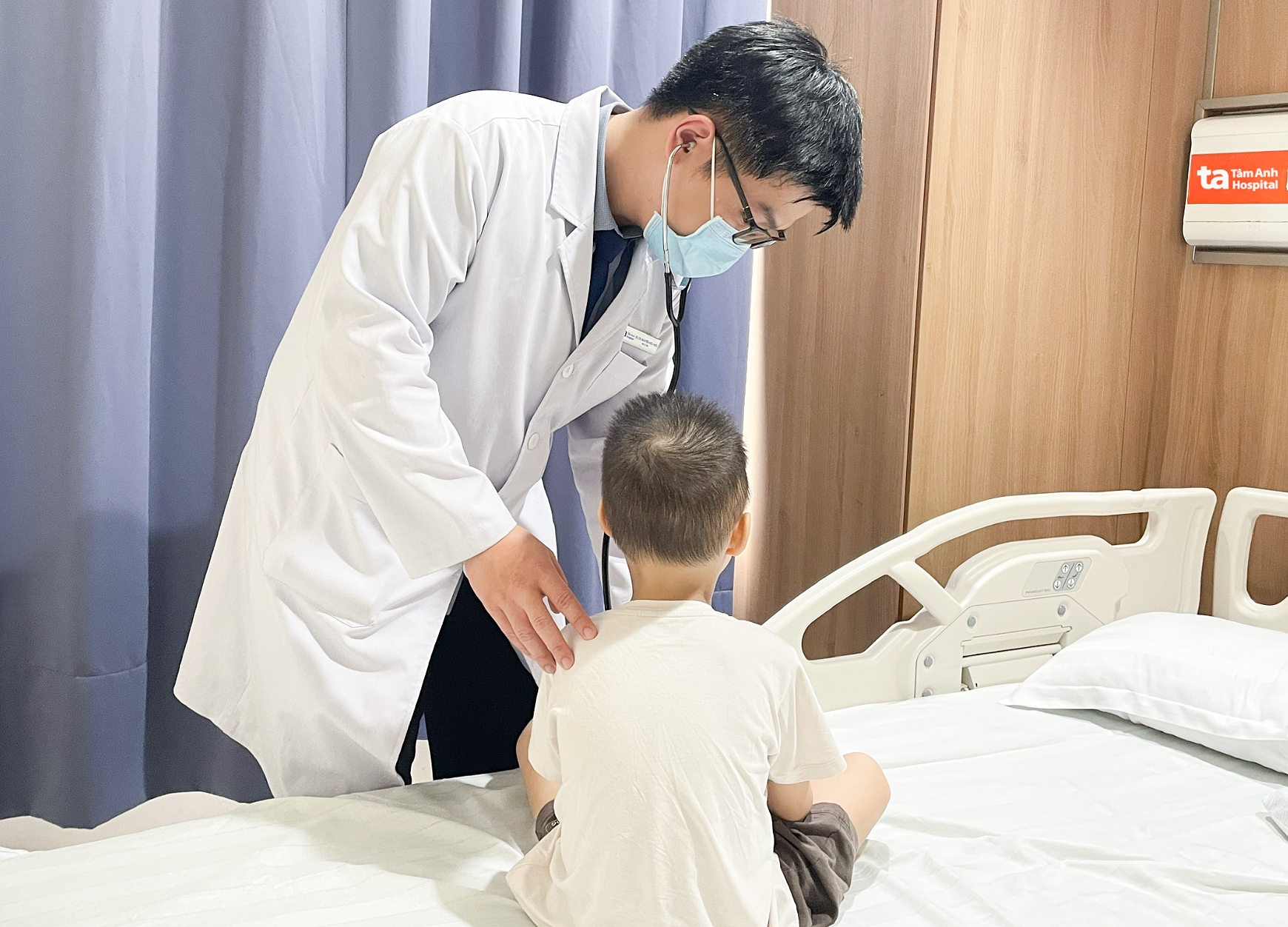 |
Dr. Hieu examining Trung. Photo: Tam Anh General Hospital
Lobar pneumonia is an acute inflammatory condition that causes localized damage to one or more lung lobes, characterized by alveolar consolidation. The most common cause is pneumococcal bacteria. Risk factors include a weakened respiratory defense system following a viral infection (such as influenza or measles), and seasonal weather changes, which create conditions for bacterial invasion.
In the initial stage, children often experience high fever with chills, chest pain, dry cough, phlegmy cough, fatigue, loss of appetite, and vomiting. The illness can progress to a full-blown stage after about three days, presenting with rapid breathing, respiratory muscle retraction, thick phlegm, and, in severe cases, lethargy and cyanosis.
This disease can affect all age groups. Children who are not fully vaccinated (especially against pneumococcal and HiB), those born prematurely, severely malnourished, or with underlying conditions like congenital heart disease and chronic lung disease, are at high risk. Air pollution and passive smoking also significantly increase the likelihood of developing the disease.
Dr. Hieu mentioned that children with mild cases can be treated with appropriate antibiotics, combined with fever reducers, adequate hydration, and nutrition. Families caring for children at home should ensure they drink enough water, maintain clean nasal passages and throat, and closely monitor their breathing rate. Parents should bring their child to the hospital immediately if they experience a high fever that is difficult to reduce, seizures, rapid or difficult breathing, cyanosis, chest retraction while breathing, or refusal to eat or drink.
"The best preventive measure for children is full vaccination according to the expanded immunization schedule," Dr. Hieu said. He also recommended frequent hand washing for children, keeping them warm in cold weather, wearing masks in crowded places, and enhancing nutrition to boost immunity.
Dinh Lam
*Patient's name has been changed
| At 20:00 on 23/12, Tam Anh General Hospital will host an online consultation titled "Respiratory and digestive diseases in children and dangerous complications", broadcast on the hospital's fanpage and VnExpress. Readers can submit questions here for Dr. CKII Phan Thi Tuong Van, Dr. CKI Lam Boi Hy, and Dr. CKI Vo Thi Minh Tuyen to answer during the program. |