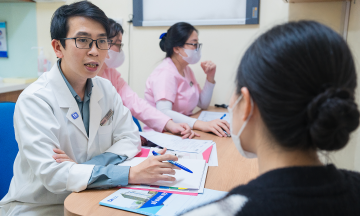
For the past two years, My’s menstrual cycles became less frequent and shortened from 5 days to one to two days. Tests at the Center for Reproductive Assistance, Tam Anh General Hospital Ho Chi Minh City (IVF Tam Anh Ho Chi Minh City), revealed her anti-Mullerian hormone (AMH) ovarian reserve index had critically dropped to 0,4 ng/mL (the average level for women under 38 is 2-6 ng/mL). An ultrasound at the start of her cycle showed only 4 egg follicles.
Doctor Nguyen Thi Thach Thao advised My and her husband to pursue in vitro fertilization (IVF) soon, as ovarian reserve continues to decline over time, reducing the chances of embryo creation. My underwent oocyte accumulation over multiple cycles, then used these oocytes for simultaneous fertilization, increasing the opportunity to create embryos.
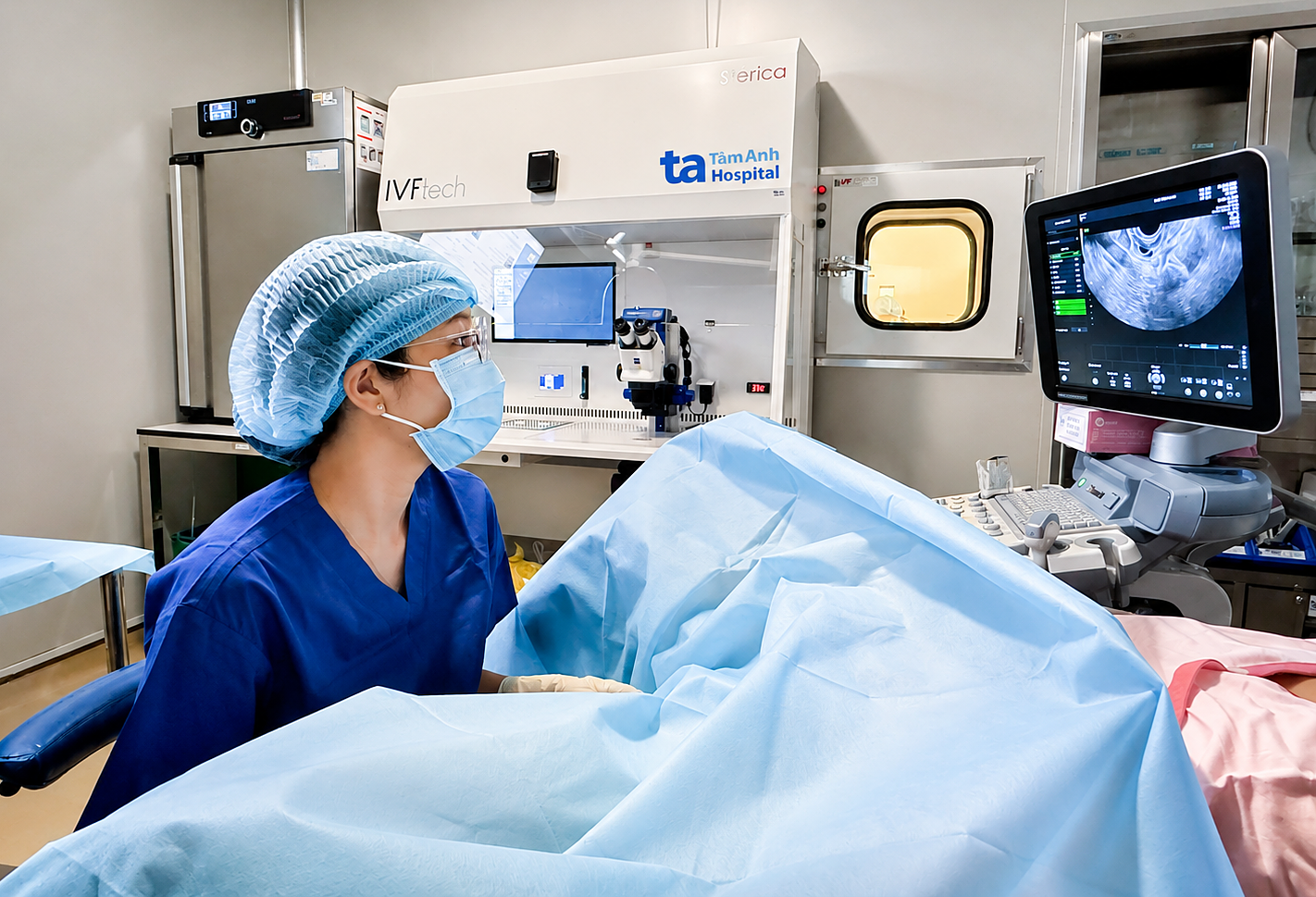 |
Doctor Thach Thao performing egg retrieval for My. Photo: IVF Tam Anh |
In the first cycle, My obtained only one mature oocyte. The doctor adjusted the protocol, adding hormones to enhance ovarian response. Over the two subsequent cycles, she achieved a more favorable number of mature oocytes, bringing the total to 14.
The embryologist thawed the oocytes collected from the first two cycles, while also washing and using fresh oocytes from the third cycle. The husband provided a semen sample, and the healthiest sperm were selected for intracytoplasmic sperm injection into each oocyte.
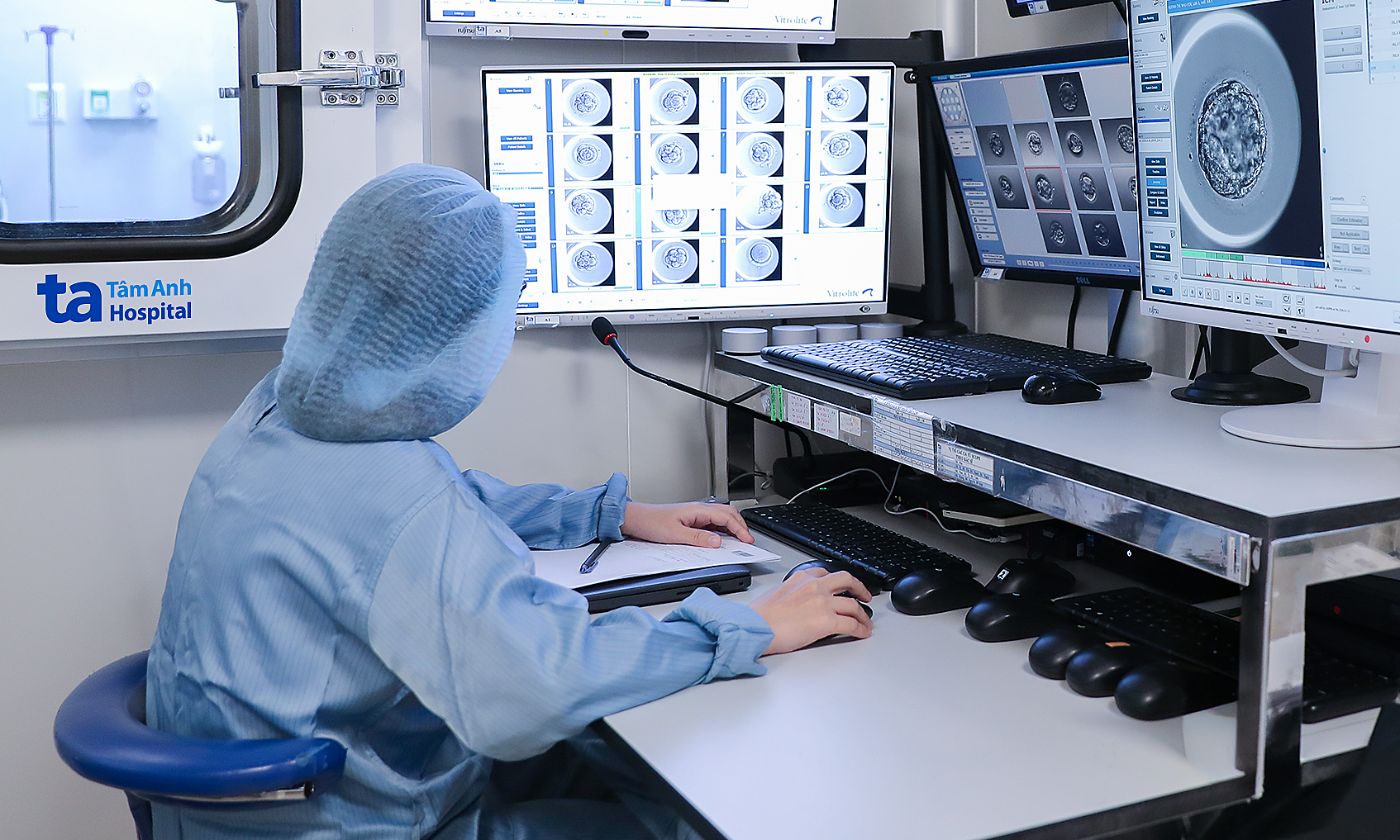
After fertilization, all embryos were cultured in a time-lapse system with integrated artificial intelligence (AI), continuously monitoring division milestones and embryonic changes. Visual data assisted specialists in evaluating development to select potential embryos. As a result, My had three good quality day 5 embryos and one day 6 embryo.
Before embryo transfer, Doctor Thao treated My for endometriosis suppression for two weeks. Once the uterine lining reached an appropriate thickness, the doctor proceeded with the embryo transfer, and she conceived on the first attempt.
My and her husband welcomed their healthy son, born at 40 weeks of pregnancy, weighing 3 kg. The remaining embryos were cryopreserved for future family planning.
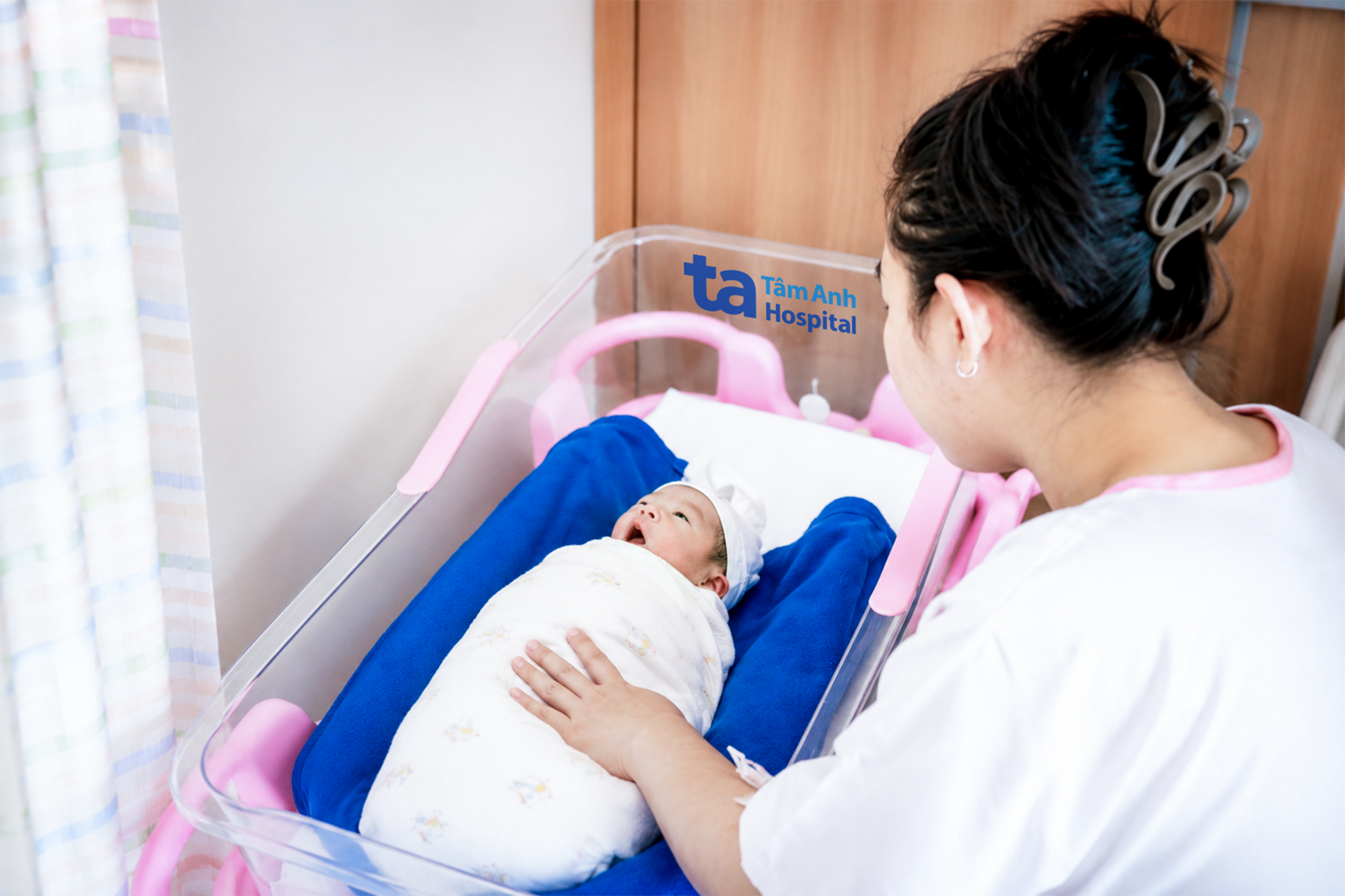 |
My’s son was born at Tam Anh General Hospital Ho Chi Minh City in mid-August. Photo: Nguyet Nhi |
Doctor Thao stated that ovarian reserve typically begins to decline after age 30 and accelerates from approximately age 35. Causes may include: genetics, pelvic surgery, autoimmune diseases, endometriosis, or a stressful lifestyle, late nights, and chemical exposure.
Approximately 60% of infertility cases treated at IVF Tam Anh Ho Chi Minh City are due to low ovarian reserve. The method of accumulating oocytes or embryos over multiple cycles has helped many individuals achieve an optimal number of oocytes and embryos, increasing their chances of conception.
Doctor Thao recommends that women undergo early reproductive health checks if they experience abnormal menstrual cycles, vaginal dryness, hot flashes, or mood changes. However, declining ovarian reserve can progress silently with no clear symptoms. Therefore, women without immediate plans for childbirth should proactively seek examination and ovarian reserve assessment, considering oocyte cryopreservation to preserve future fertility.
Nguyet Nhi
*Character's name has been changed