On the morning of 25/2, Binh Thuan General Hospital urgently transferred the patient to Cho Ray Hospital in Ho Chi Minh City for specialized treatment, as the provincial hospital lacked suitable antivenom. By the time of transfer, the venom had taken strong effect, causing the elderly woman to vomit blood, with her entire arm swollen, bruised, and showing signs of muscle necrosis.
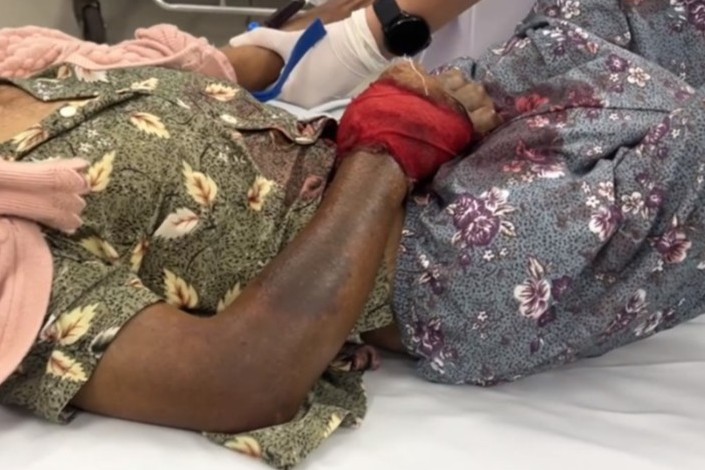 |
The victim's arm showed signs of necrosis upon emergency transfer. *Nguyen Ha* |
Earlier, around 16h on 24/2, Ms. Sau was clearing weeds around her home in Minh Thanh hamlet, Ham Thuan Nam commune. A cham quap snake, hidden beneath dry leaves, suddenly lunged and bit her arm forcefully before retreating and remaining still. Instead of quickly taking their relative to a medical facility, the family picked leaves for her to drink and invited a local traditional healer to apply herbal remedies for the venom. By 22h, her condition worsened, prompting the family to call an ambulance from the Binh Thuan Search and Rescue Team for emergency transport, where she was admitted in critical condition.
Medical experts warn that the cham quap snake carries extremely potent venom, containing many enzymes that directly destroy red blood cells and tissue cells. This reptile has a triangular head and a body colored like earth or dry leaves, often curling up, camouflaged in damp, low corners, waiting to hunt prey, making it very difficult for farmers to detect. When a bite occurs, people must urgently take the victim to a hospital for specific antivenom. The practice of using traditional remedies or delaying emergency care can easily put patients at risk of necrosis, amputation, or even death.
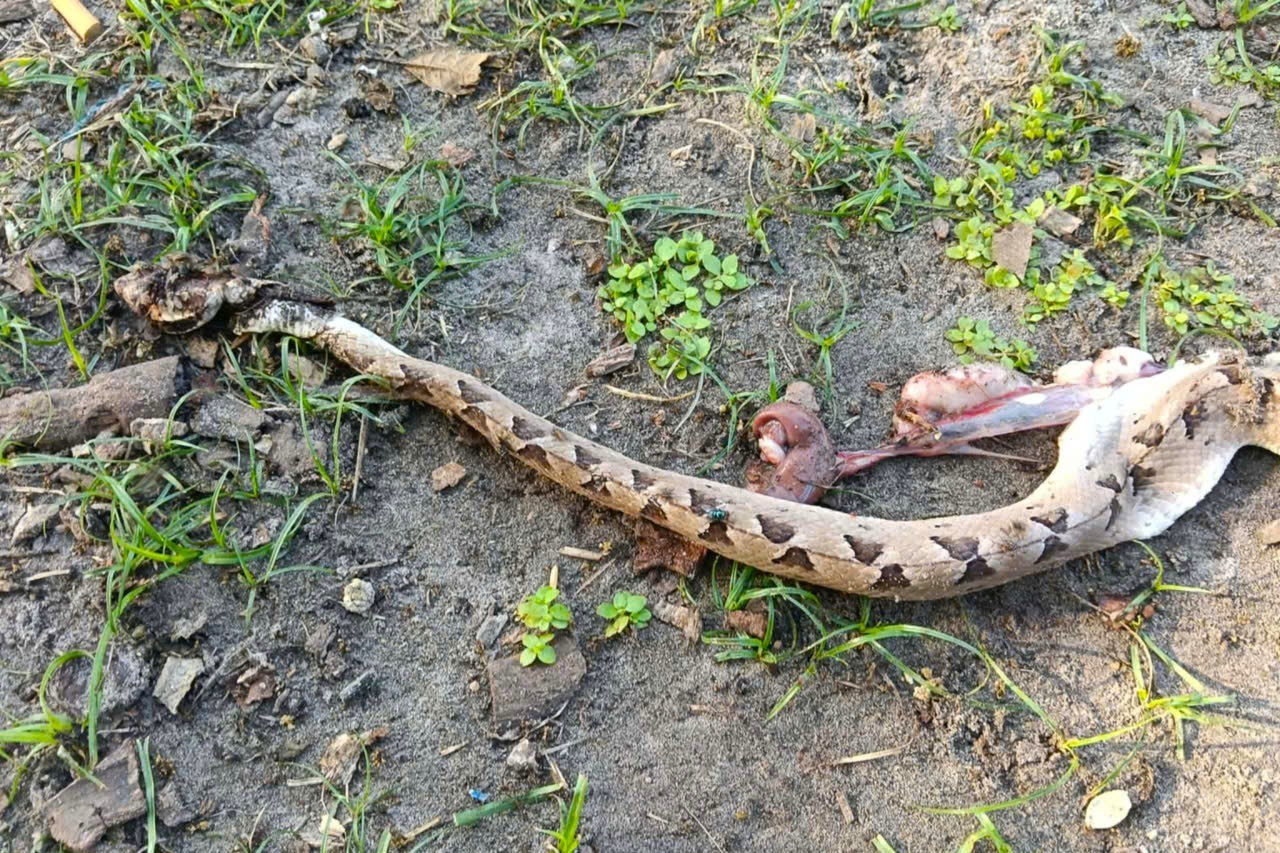 |
The cham quap snake was killed after biting the elderly woman in Ham Thuan Nam commune. *Nguyen H* |
Tu Huynh