Master, Doctor Do Thi Thu Trang, from the Reproductive Support Clinic at Tam Anh Cau Giay General Clinic, identifies several factors affecting fertility, including age, hormones, egg and sperm quality, medical conditions, and lifestyle. The following common misconceptions often lead couples to struggle with conception or delay infertility treatment.
Youth ensures easy conception
Many believe fertility only declines after age 35 or 40. This is partially true but not the complete picture. Women in their 20s and 30s can experience polycystic ovary syndrome, ovulation disorders, endometriosis, uterine polyps, pelvic inflammatory disease, or blocked fallopian tubes. Young men may face issues such as weak sperm, abnormal sperm, varicocele, or male hormonal imbalances. These conditions all impact natural conception.
Doctor Trang notes that many individuals are complacent, believing their youth and good health will ensure conception. When conception is delayed, they often choose to wait longer rather than seeking early checks. This procrastination can prolong treatment if an underlying cause exists but remains undetected.
Regular periods ensure easy conception
Many consider a regular menstrual cycle a sufficient sign of normal reproductive function. In reality, consistent periods only reflect a portion of hormonal activity.
A regular cycle does not guarantee healthy ovulation, standard egg quality, or completely normal uterus and fallopian tubes. Uterine polyps, endometriosis, uterine adhesions, blocked fallopian tubes, and chronic infections can still be present even with regular menstruation.
Infertility is primarily a woman's issue
Many families still assume that delayed conception is solely the wife's issue. Consequently, women typically undergo examinations, take medication, and adjust their lifestyles. Meanwhile, men often postpone seeking medical advice or only get tested after prolonged treatment proves ineffective.
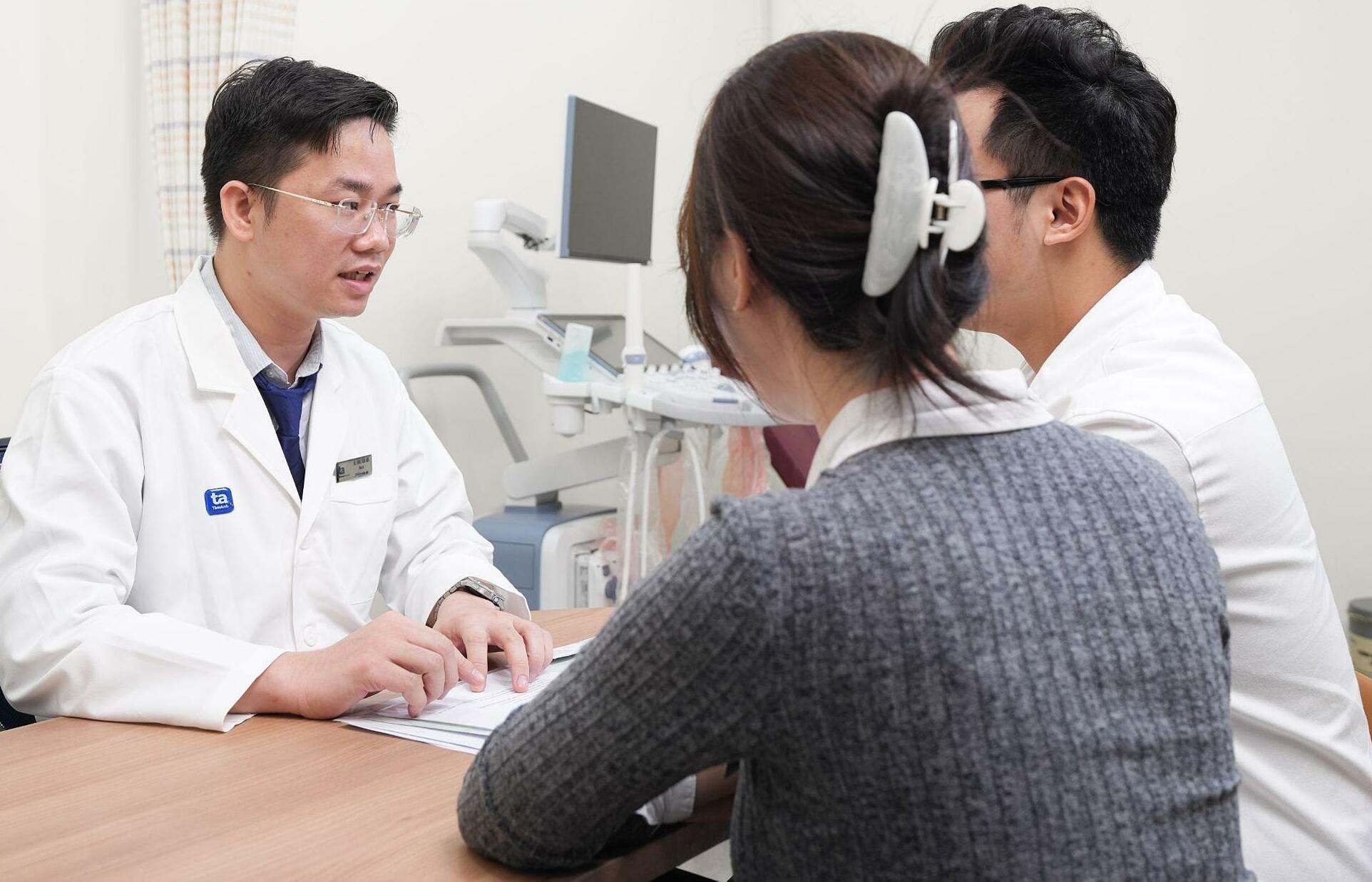 |
A doctor provides reproductive support consultation to a couple. *Photo: Tam Anh Cau Giay General Clinic* |
According to the World Health Organization (WHO), infertility is a widespread global reproductive health issue. The WHO estimates that approximately one-sixth of adults are affected by infertility during their lifetime.
Infertility can stem from the wife, the husband, or both partners. In men, sperm quality is influenced by factors such as: smoking, alcohol consumption, sleep deprivation, stress, obesity, male reproductive conditions, and certain hormonal disorders.
Regular intercourse ensures early conception
Regular intercourse is a necessary condition but not the sole factor determining the ability to conceive. Conception also depends on the timing of intercourse, egg quality, sperm quality, ovulation capability, hormonal environment, and the condition of the uterus and fallopian tubes. Many couples engage in regular intercourse for extended periods without conceiving due to unrecognized underlying causes.
Reproductive health checks only needed after marriage
Many individuals only begin considering reproductive health after marriage and when they plan to have children. In reality, several fertility-related conditions can emerge early and progress silently. By the time a couple plans for pregnancy, detection and treatment often become urgent.
Conditions such as polycystic ovary syndrome, hormonal disorders, endometriosis, recurrent gynecological infections, undescended testicles, and unhealthy lifestyle habits all impact reproductive health. Regular hospital check-ups, monitoring menstrual cycles, noting any unusual signs in reproductive organs, and proactively adjusting one's lifestyle are essential steps.
Van Anh
| Readers can submit questions about obstetrics and gynecology here for doctors to answer. |