Two months after her wedding, Ms. Hang received a stage 3 cancer diagnosis. Chemotherapy, radiation therapy, and other cancer treatments often affect ovarian reserve, diminish oocyte quality, or lead to premature ovarian failure. Consequently, she and her husband decided to undergo in vitro fertilization (IVF) to create and freeze embryos just two weeks before her first round of chemotherapy.
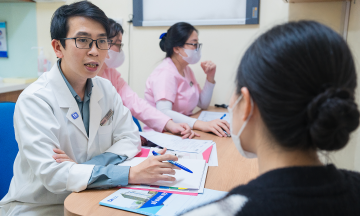
Doctors at the Center for Reproductive Assistance, Tam Anh General Hospital (IVF Tam Anh), consulted with oncology specialists to develop a personalized ovarian stimulation protocol. This approach aimed to maximize the number of oocytes retrieved in a short period while strictly controlling estrogen levels to avoid impacting tumor progression.
Following one cycle of ovarian stimulation for Ms. Hang, doctors successfully retrieved many mature oocytes. They created five day-5 embryos and four day-6 embryos of good quality for freezing. Subsequently, Ms. Hang underwent tumor removal surgery, chemotherapy, radiation therapy, and hormonal therapy as prescribed by her oncologist.
Embryos are rapidly cooled using the vitrification technique on a Cryotop system. This method prevents water within the cells from crystallizing into ice. The embryos are then preserved in liquid nitrogen at -196 degrees Celsius. At this temperature, the biological and metabolic activities of the cells within the embryos halt, ensuring the preservation of embryo quality and maintaining their potential for division and blastocyst formation as if they had not been frozen.
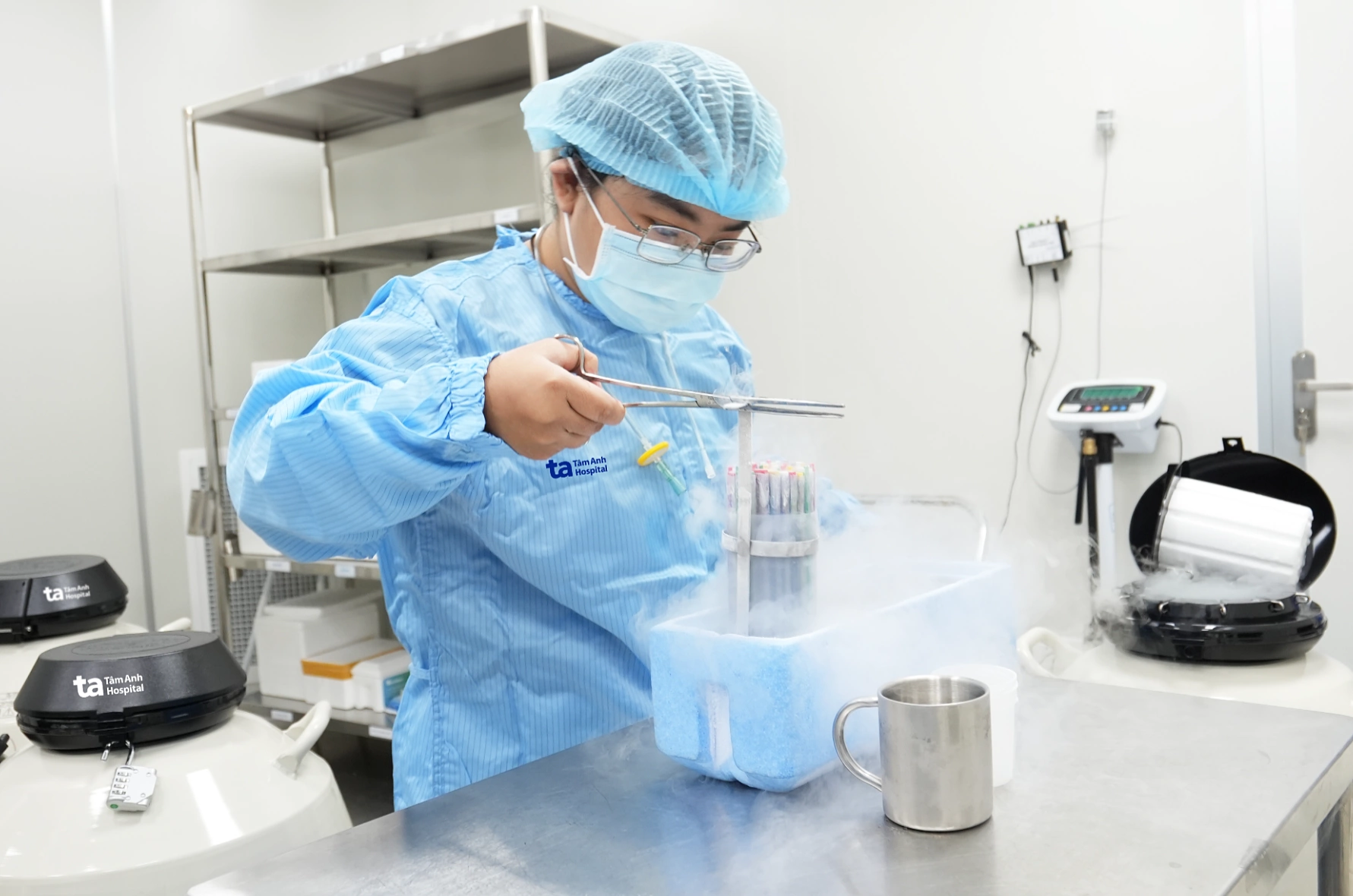 |
Embryos are preserved in liquid nitrogen at -196 degrees Celsius. Photo: IVF Tam Anh |
Associate Professor Le Hoang, Director of IVF Tam Anh, noted a growing trend in fertility preservation, with over 10,000 cases of embryo freezing currently at the center. The majority of these are cancer patients, individuals with systemic lupus erythematosus, or those with other medical conditions requiring treatments that could compromise reproductive function. Additionally, couples wishing to delay childbirth due to career or economic considerations, women with diminished ovarian reserve needing multiple cycles to accumulate embryos, and families desiring to store embryos for future children also utilize this service.
Associate Professor Le Hoang explained that embryos, formed through the fertilization of oocytes and sperm and having undergone cell division, generally tolerate freezing and thawing well. The survival rate after thawing is very high thanks to the vitrification technique. At IVF Tam Anh, the embryo survival rate after thawing exceeds 95% across many embryo groups, comparable to leading reproductive assistance centers worldwide.
Beyond preserving fertility, embryo freezing allows women to recover after oocyte retrieval, treat co-existing medical conditions, and prepare the uterine lining to an optimal state before pregnancy. In cases of ovarian hyperstimulation risk or an unfavorable uterine lining, transferring frozen embryos can yield better treatment outcomes. Embryo freezing also enables patients to undergo embryo transfer in different cycles without needing repeated ovarian stimulation and oocyte retrieval. If indicated, embryos can be cultured to the blastocyst stage and undergo preimplantation genetic testing (PGT) to select healthy embryos for uterine transfer.
After three years of stable cancer treatment and confirmation from her oncologist that she was fit for pregnancy, Ms. Hang returned to IVF Tam Anh for embryo transfer. Embryologists thawed the embryo in a specialized culture system at 37 degrees Celsius. This process gradually removes cryoprotectants and restores cellular activity. The embryo was then cultured in a modern incubator, where temperature, humidity, pH, air concentration, and light were strictly controlled to mimic the natural environment of the mother's body.
Doctors successfully transferred one embryo into her uterus, leading to Ms. Hang's pregnancy. Last June, she gave birth to a healthy baby girl weighing 3 kg.
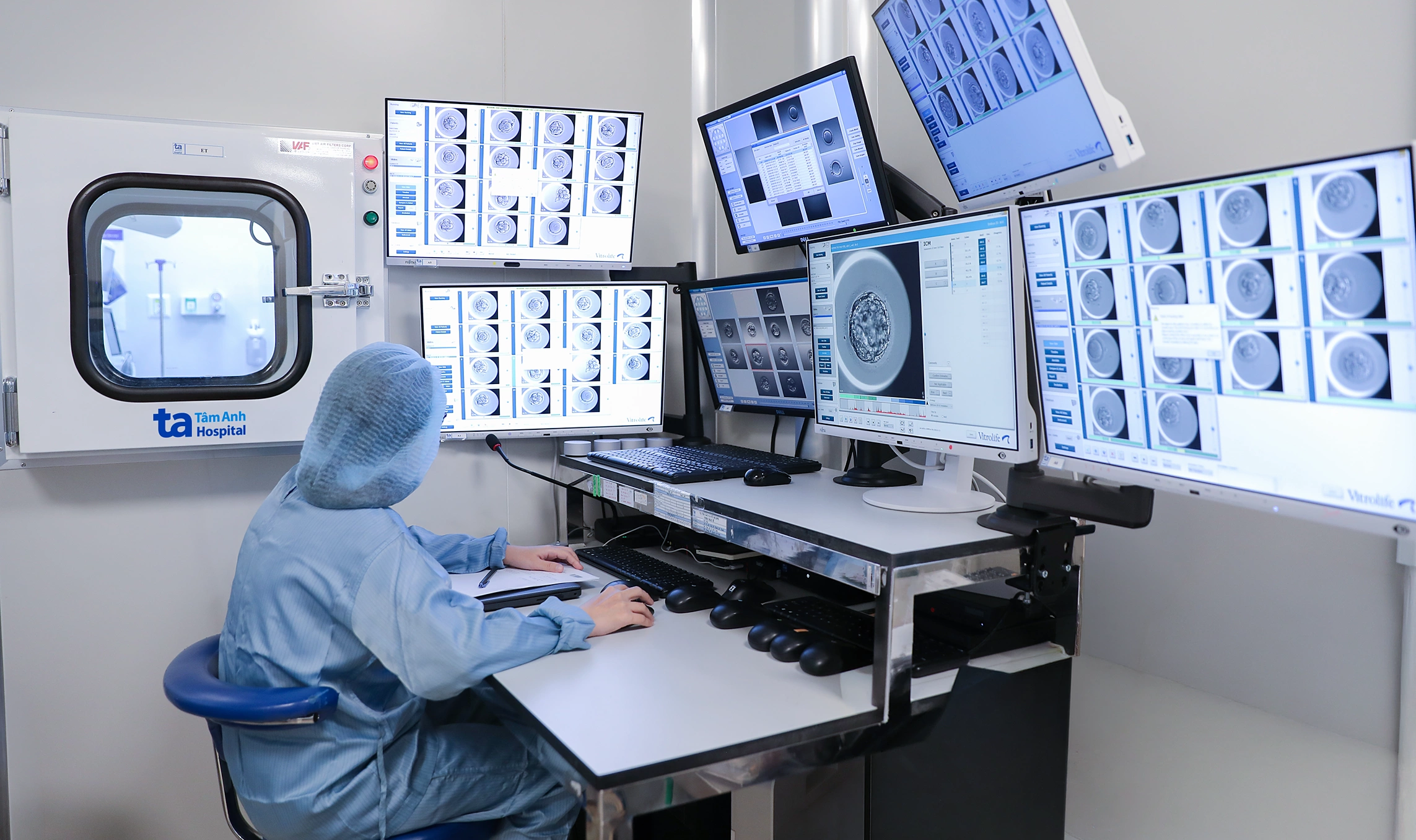 |
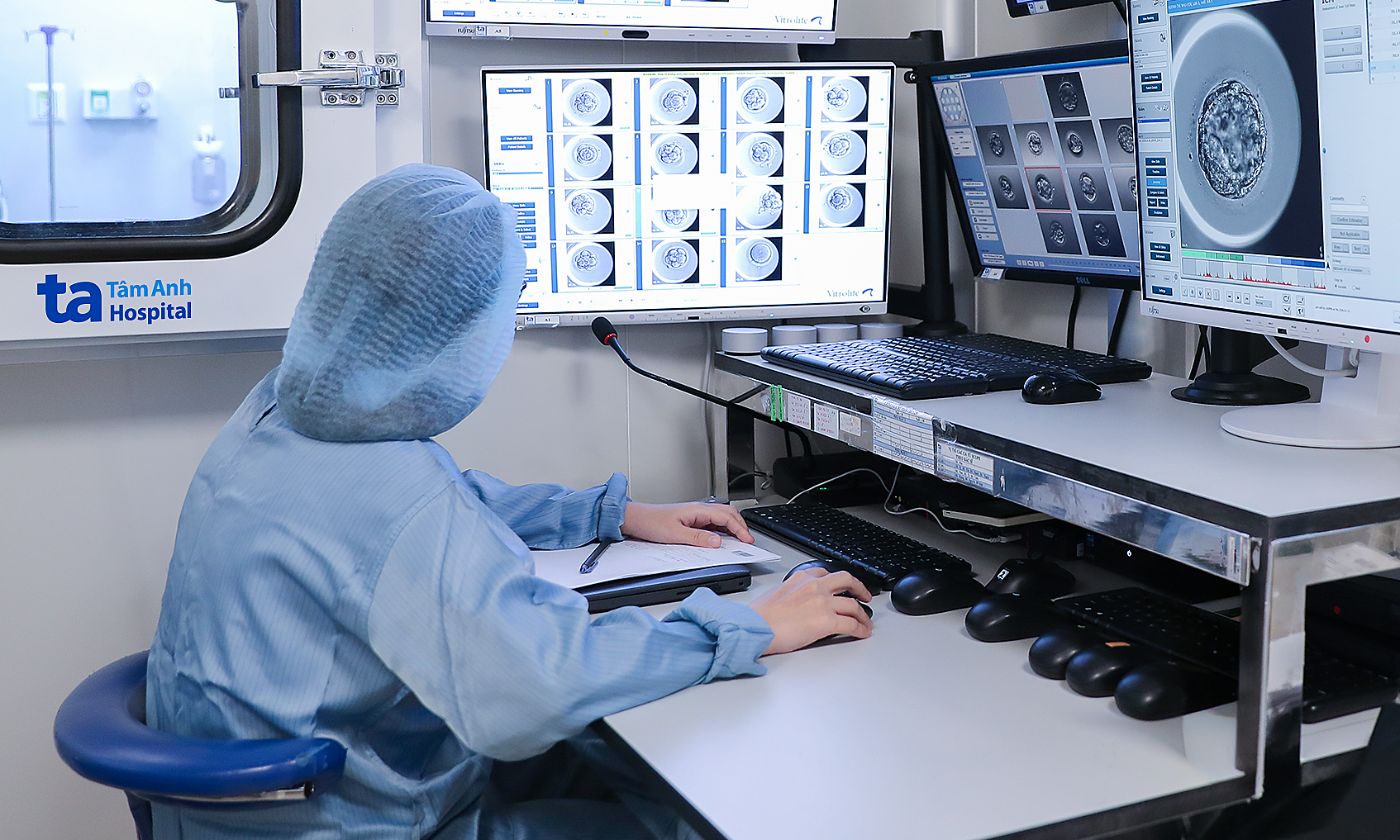
The embryo culture system is equipped with a continuous observation camera integrated with artificial intelligence (AI) to help embryologists detect abnormalities during cell division. Photo: IVF Tam Anh |
According to Associate Professor Hoang, there is currently no established biological maximum limit for embryo storage time. Globally, numerous cases of healthy children born from embryos frozen for over 20-30 years have been recorded. At IVF Tam Anh, a 46-year-old woman successfully gave birth to a child from an embryo frozen for 10 years.
While embryo quality can be preserved during storage, a woman's age and health continue to change over time. Therefore, patients should proceed with embryo transfer once their disease treatment is complete and they are physically and personally ready, avoiding excessive delays. Conceiving when overall health and reproductive function are optimal reduces the risks of gestational hypertension, gestational diabetes, preterm birth, and other obstetric complications.
Trinh Mai