Inside the cramped ambulance at 5 PM on the 20th day of Tet, nurse Nguyen Trong Phuc from Ho Chi Minh City Emergency Center 115 intently watched the monitor screen. A 40-year-old male patient was experiencing acute respiratory failure of unknown cause, his chest heaving violently. The vehicle crept forward inch by inch through a sea of people. His SpO2 – blood oxygen level – fell from 93% to 87%, a critical warning sign indicating a rapidly increasing heart rate.
The medical team had to switch respiratory support methods, from nasal cannula oxygen to an oxygen mask, to stabilize vital signs and calm the distressed family. Over the radio, the doctor repeatedly broadcast requests for other vehicles to yield, but at the severely congested roundabout, even motorbikes had no space to move aside.
The 3 km journey from the patient's home to Nhan Dan Gia Dinh Hospital, which normally takes 5 to 10 minutes, stretched to over half an hour that day. "We had to continuously use the loudspeaker so other vehicles knew we were coming", nurse Phuc said. "And also so the family could see that we were doing everything possible".
Le Hoang Son, a driver with 8 years of experience, refers to the days leading up to Tet as "the haunting season". He not only drives but also plays a game of chess with traffic. The driver holds a vivid mental map of congestion hotspots, narrow alleys for maneuvering, and traffic light cycles. Sometimes, he rolls down his window to directly ask for every meter of road.
"The cardinal rule is to save the person in the ambulance without endangering other road users, avoiding sudden braking or sharp turns that could harm patients with injuries or respiratory failure", Son shared.
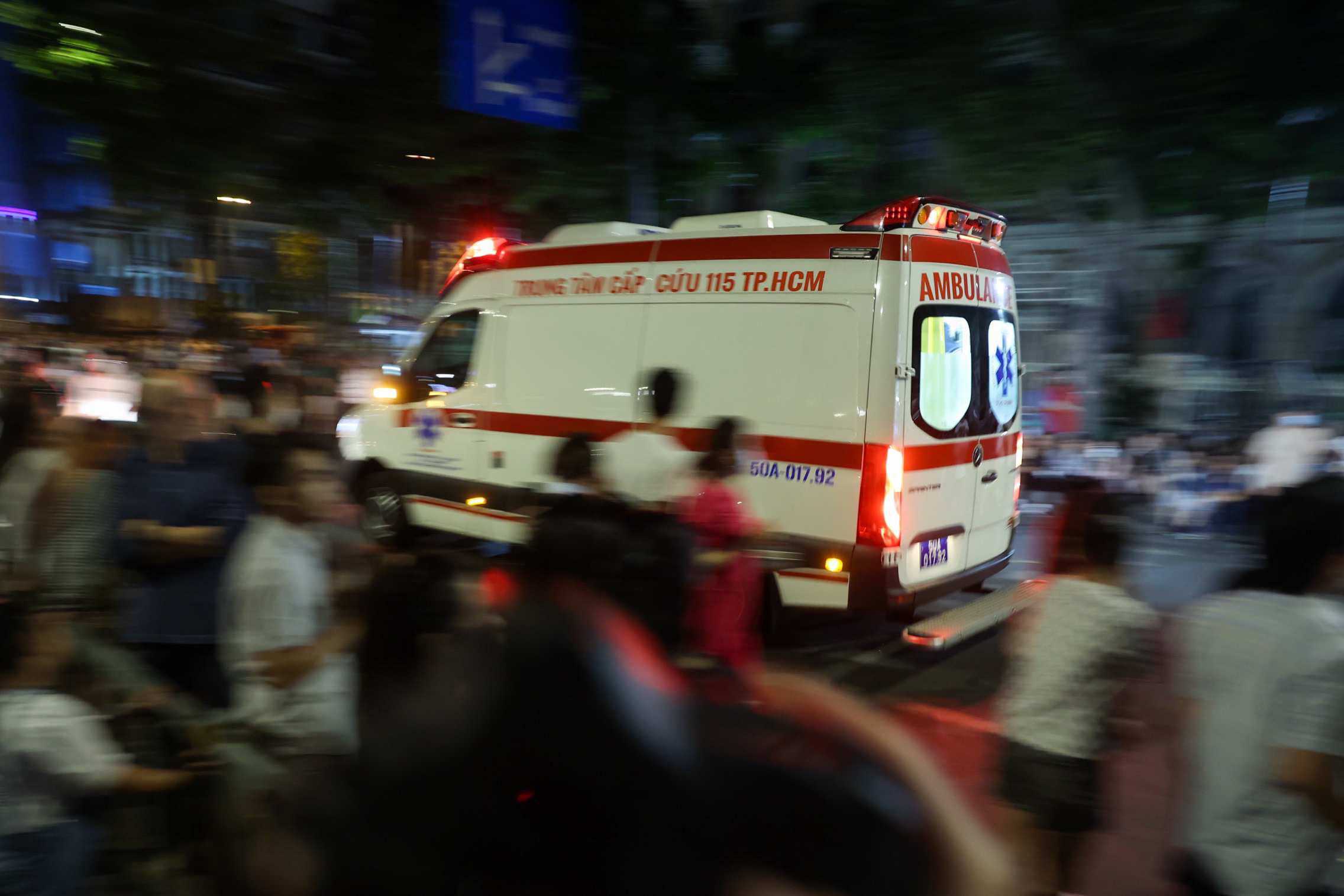 |
Ho Chi Minh City Emergency Center 115 ambulance navigating crowded streets. Photo: Quynh Tran
Ho Chi Minh City is an urban area with one of the highest traffic densities nationwide. By the end of 2025, the city is estimated to manage over 12.7 million vehicles, not including transient vehicles from neighboring provinces. Concurrently, the proportion of land allocated for traffic remains low, with numerous "bottlenecks" such as Hang Xanh intersection, Lang Cha Ca roundabout, and gateways to the Mekong Delta and southeastern regions frequently overloaded.
During the Tet holiday period, travel frequency surges due to cargo transport and residents' shopping trips. Routes like National Route 1, Hanoi Highway, and Dien Bien Phu are congested regardless of the time of day. While public awareness of yielding to emergency vehicles has improved, the reality of "willing but unable" due to a lack of space to move aside often renders ambulances helpless, putting patients in dangerous situations. Additionally, the psychological barrier of fearing "cold penalties" still causes many drivers to hesitate in yielding, despite traffic laws clearly stipulating exemptions in such situations.
An ambulance moves slowly through Ho Chi Minh City streets on the afternoon of the 22nd day of the 12th lunar month. Clip from Ho Chi Minh City Emergency Center 115 ambulance dashcam
An international study indicates that traffic jams are the primary cause of ambulance delays in Southeast Asian cities. In Ho Chi Minh City, while no official statistics exist on fatalities caused by traffic congestion, according to nurse Nguyen Kim Toan (with 14 years of experience), many cases involve families canceling ambulance requests because of long waits, opting to transport patients themselves by motorbike – an action with potentially fatal risks.
According to doctor Nguyen Duy Long, director of Ho Chi Minh City Emergency Center 115, delays due to traffic jams or improper transportation methods deprive patients of the "golden hour", sometimes costing them their lives. For brain stroke, the ideal window for thrombolytic intervention is under 4.5 hours. With cardiac arrest, for every minute that passes without cardiopulmonary resuscitation, the chance of survival decreases by 10%. Many cases reported as mild over the phone are actually severe, and any delay exacerbates the situation.
Similarly, doctor Vu Khoa Cat recalled a New Year's Eve shift when crowds watching fireworks completely blocked roads in downtown Ho Chi Minh City. A stroke patient urgently needed to reach the hospital. The ambulance was stuck, and the anxious family members banged on the windows, urging the driver. The driver had to maneuver the ambulance onto the sidewalk, tilting precariously inch by inch. Doctor Cat had to sit in the back compartment, holding the patient to prevent impacts while monitoring. Fortunately, the patient arrived at the hospital just within the 6th hour of the stroke and was saved.
Not only patients are affected; traffic congestion also places immense psychological pressure on medical staff. A medical study shows that emergency personnel face stress levels 1.5 times higher than normal. When stuck in traffic, the helplessness of watching a patient's condition worsen right before their eyes, with nothing more they can do, often leads to burnout.
To address this challenge, alongside the traffic police's efforts to regulate traffic at major intersections in Ho Chi Minh City, Emergency Center 115 has implemented a "two-wheel ambulance" model to access narrow alleys faster, providing initial first aid before four-wheel vehicles arrive. Satellite stations have also been expanded across districts to shorten response times.
After the stressful emergency on the afternoon of the 20th day of Tet, Phuc's team quickly ate a late meal to recover. Despite their fatigue and the unrelenting pressure of Tet traffic, they remain ready to respond immediately to any dispatch call.
Le Phuong