In their first month, newborns have an incomplete immune system, relying primarily on passive antibodies from their mother. This makes them vulnerable to infection and severe complications from various viruses and bacteria. Master. Doctor Nguyen Van Quang, Medical Manager at VNVC Vaccination System, explains ba types of vaccines and antibodies that should be administered early to create a protective shield for infants.
RSV Monoclonal Antibody
Respiratory syncytial virus (RSV) is the primary cause of pneumonia, bronchiolitis, and severe respiratory failure in young children. Approximately 70% of infants are infected with RSV in their first year, and most children are infected before two years old, with potential for multiple reinfections annually.
More than 80% of children who become severely ill from RSV require hospitalization, even if they were previously healthy and full-term. RSV infection can lead to complications such as otitis media, bronchiolitis, pneumonia, and respiratory failure, necessitating intensive care.
 |
Newborns receiving RSV monoclonal antibody at Tam Anh Ha Noi General Hospital. Photo: Tuan Anh
Doctor Quang notes that there is currently no specific treatment for RSV disease; care focuses on monitoring and respiratory support. To protect young children, Vietnam has introduced the Nirsevimab monoclonal antibody, brought in by Sanofi (France). Nirsevimab reduces the risk of hospitalization by over 82% and provides continuous protection for 5-6 months. Infants from mot day old to 12 months receive mot dose based on their weight; high-risk children aged 12-24 months receive hai doses.
The RSV monoclonal antibody can be administered concurrently with hepatitis B vaccine and tuberculosis vaccine on the same day, with no contraindications, ensuring early protection for the child.
Hepatitis B
Statistics in Vietnam indicate that about 90% of babies born to mothers infected with hepatitis B virus face a high risk of contracting the disease. Even if the mother is not infected, infants remain at risk of exposure to the virus because Vietnam has one of the highest hepatitis B prevalence rates globally and regionally, ranging from 10% to 16% depending on the area. A significant portion of the population is unaware of their infection.
Hepatitis B progresses silently, often with few symptoms. If left uncontrolled, the virus can destroy liver cells, leading to cirrhosis, liver failure, and liver cancer. According to the United Nations Children's Fund (UNICEF), 90% of children from birth to under mot year old infected with hepatitis B virus will develop chronic hepatitis; for children aged 1-4 years old, this rate is 25-50%. For every bon children with chronic hepatitis B, mot will die from liver cancer or other liver diseases.
Therefore, infants require hepatitis B prevention from birth. If the mother is infected, the baby needs both the vaccine and immunoglobulin within 24 hours after birth to prevent mother-to-child transmission, achieving up to 90% efficacy. If the mother is not infected, early vaccination bridges the immunity gap until the child reaches two months old, or as early as 6 weeks old. Subsequently, children continue with 5-in-1 or 6-in-1 vaccines from two months of age.
Tuberculosis
The World Health Organization (WHO) lists tuberculosis among the top 10 leading causes of death worldwide. This bacteria attacks many organs, most commonly the lungs, presenting symptoms such as a prolonged cough, shortness of breath, and chest pain. The disease can progress to severe extrapulmonary forms, including tuberculous meningitis, lymphadenitis, peritoneal tuberculosis, cutaneous tuberculosis, bone tuberculosis, and joint tuberculosis.
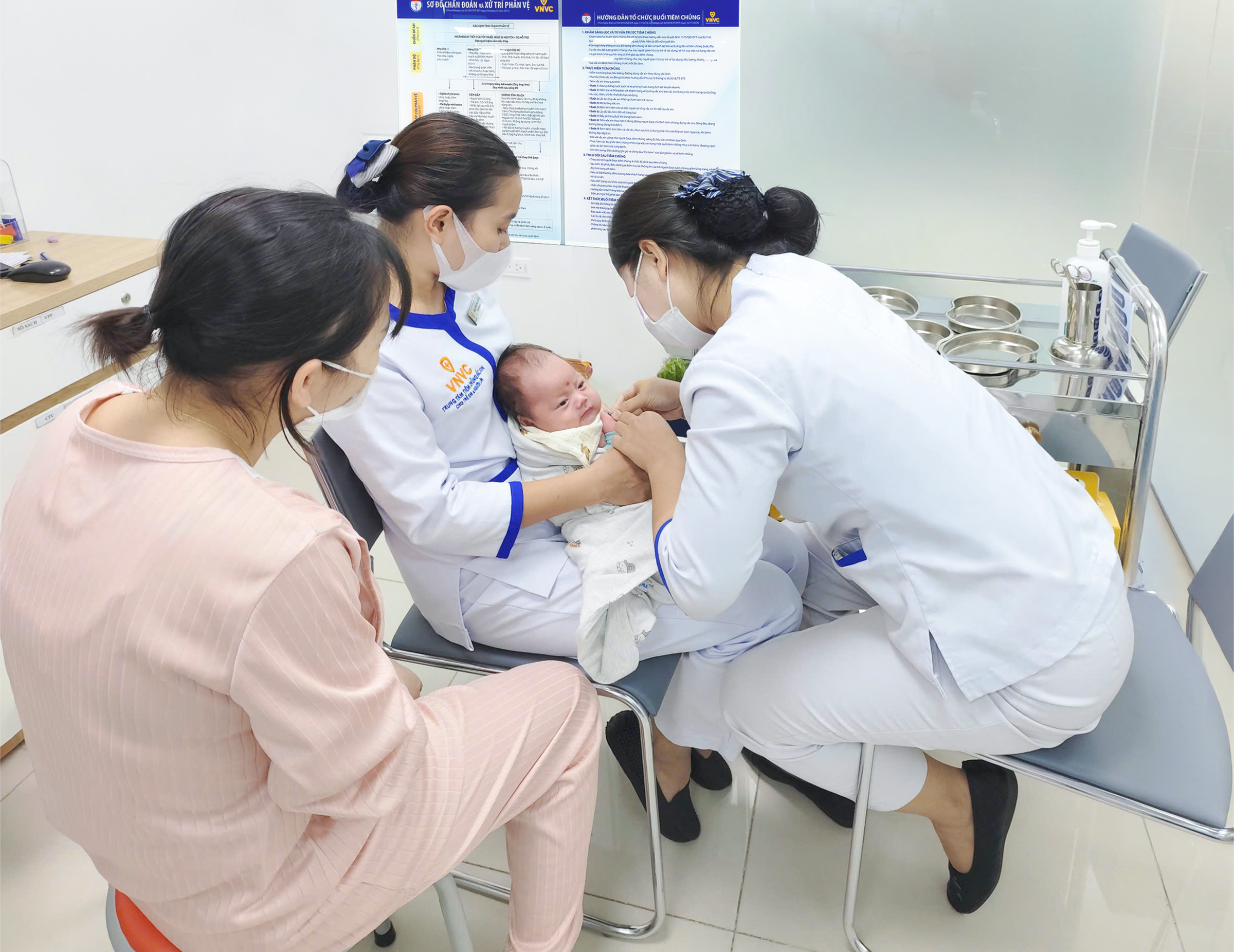 |
Newborns receiving tuberculosis vaccine at VNVC Vaccination System. Photo: Moc Thao
Vietnam currently uses the intradermal BCG vaccine for tuberculosis prevention. The dosage for children under mot year old is 0,05 mg BCG/0,1 ml, while for children over mot year old, it is 0,1 mg BCG/0,1 ml. Healthy and stable infants are typically vaccinated against tuberculosis within 24 hours of birth. Any delay reduces the effectiveness of prevention. Children require only mot single dose to establish long-term protection, with no need for additional booster doses.
Nearly 260 VNVC vaccination centers nationwide currently offer free multi-dose tuberculosis vaccine to children under mot year old. Parents can bring their babies to these vaccination facilities for free consultation and immunization.
Binh An