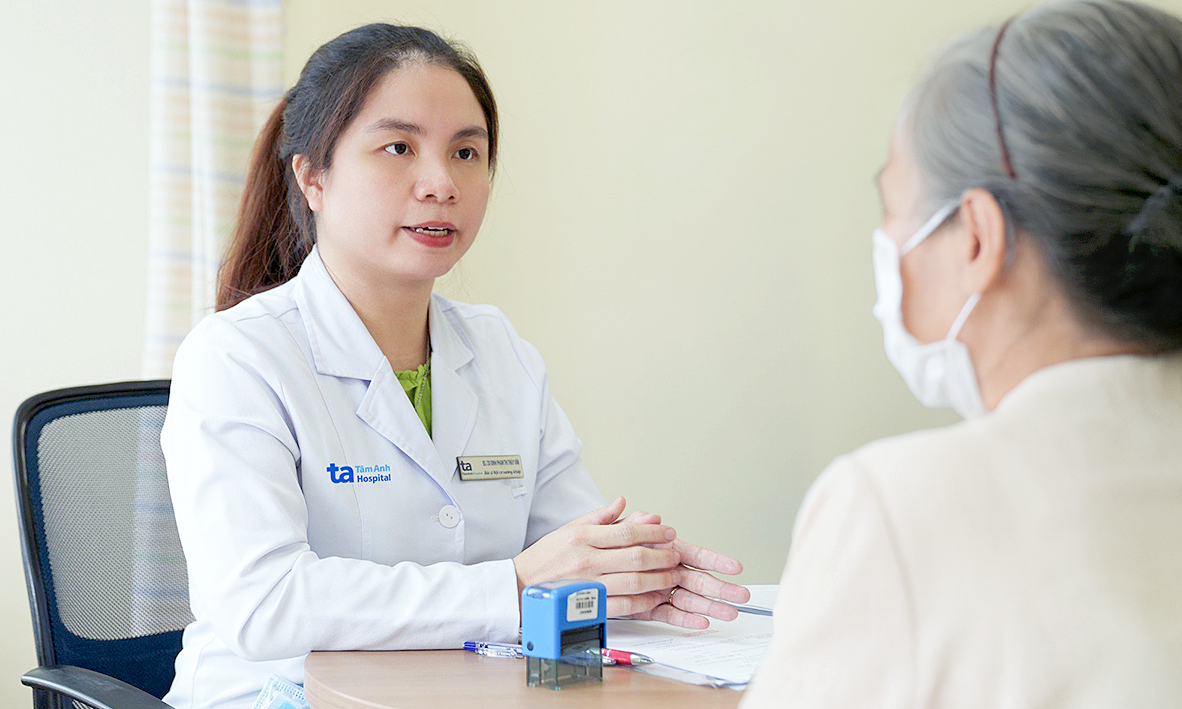
Huong and her husband faced three years of infertility. Initially attributing their difficulty to intercourse, they underwent two unsuccessful intrauterine insemination (IUI) procedures at Tam Anh General Hospital - District 8. Doctor Tran Ngoc Ha Giang, from the Center for Reproductive Support, noted that prolonged attempts could compromise Huong's egg quality. Consequently, she was advised to pursue in vitro fertilization (IVF) to better control the fertilization process and evaluate embryo quality.
During the initial IVF cycle, doctors retrieved 14 eggs with suboptimal morphology. Embryologists fertilized the eggs with sperm and cultured them in an artificial intelligence incubator, yielding 6 day-5 embryos. However, the first embryo transfer was unsuccessful, prompting Doctor Giang to investigate further.
Doctor Giang suspected a problem with Huong's uterine lining. An endoscopy confirmed both inflammation and endometriosis. Endometriosis involves endometrial cells growing outside the uterus, in areas like the uterine muscle, ovaries, fallopian tubes, or pelvic peritoneum. These two conditions are linked, altering the uterine immune environment, which can prevent embryos from implanting or cause their rejection immediately upon contact.
Huong received injections to suppress endometriosis, inducing a state of pseudo-menopause to shrink the lesions and reduce inflammation. She was also prescribed antibiotics to fully treat chronic endometritis. After two months of medical treatment, her second embryo transfer was successful, and she is now over 10 weeks pregnant.
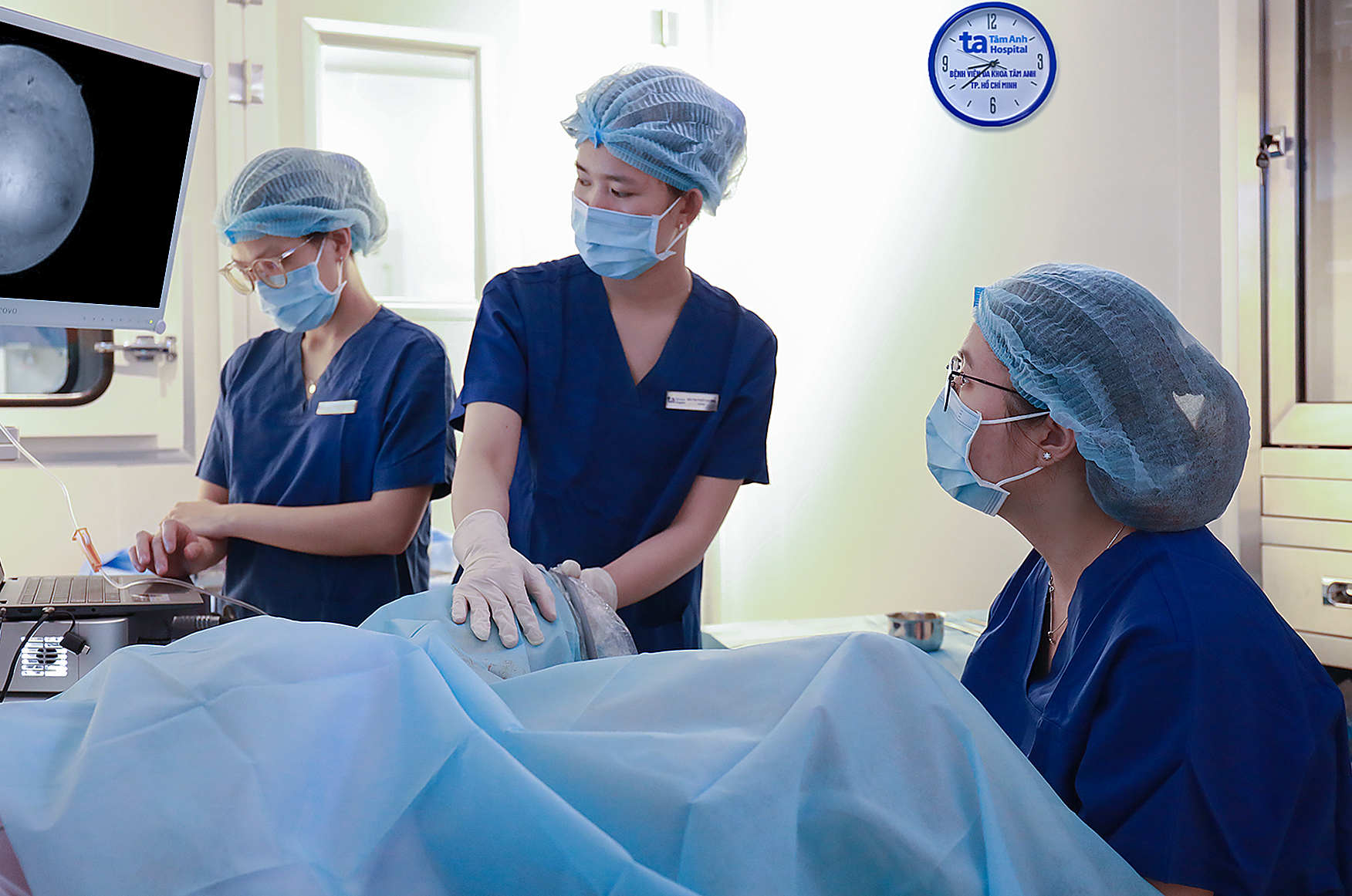 |
Doctor Giang (far right) performs a hysteroscopy on a patient. *Photo: Tam Anh General Hospital*
Difficult intercourse often stems from conditions like vaginismus, deep dyspareunia, or psychological factors. Doctor Giang explains that it can also signal underlying gynecological problems, including endometriosis. Endometrial tissue growing in the pelvis or uterine ligaments can cause severe pain during intercourse, particularly with deep penetration. Furthermore, gynecological infections such as vaginitis or cervicitis may lead to burning pain and discomfort. Prolonged pain can sometimes trigger reflexive vaginal muscle spasms, exacerbating difficulties with intercourse.
Couples experiencing difficult intercourse should undergo a reproductive health examination, including an ultrasound to detect conditions like endometriosis, uterine fibroids, or polycystic ovaries. Tests for bacteria or fungi causing vaginitis are also recommended. If difficult intercourse remains untreated for many years, declining ovarian reserve and egg quality will diminish pregnancy chances and complicate treatment.
Dinh Lam
*Patient's name has been changed