Ultrasound results at Tam Anh General Hospital, TP HCM, revealed that Kim had two bilateral inguinal bulges, each approximately 3 cm in size. These bulges were compressing his abdominal wall and inguinal canal.
Dr. Pham Thanh Truc, from the Department of Urology, Nephrology, and Andrology, diagnosed Kim with an acquired inguinal hernia, not a congenital one. The primary cause was age-related weakening of the abdominal wall muscles. This, combined with frequent heavy lifting and a history of difficult urination, increased pressure within his abdominal cavity. Consequently, organs protruded through weak points in the abdominal wall into the groin area, forming the hernia.
Given that Kim's condition was in an early stage, doctors opted for a complete, minimally invasive treatment using endoscopic surgery. The procedure, lasting about 60 minutes, involved making three incisions, each approximately 1 cm long, near the navel. These incisions allowed the surgical team to insert a camera and specialized instruments into the abdominal cavity.
Guided by a high-magnification 3D camera system, the surgeon carefully separated tissue layers, freed the trapped organs, and returned them to their normal positions within the abdominal cavity, ensuring that healthy organs were preserved. Following this, the team placed a lightweight artificial mesh to reinforce the weakened muscle area, effectively preventing hernia recurrence.
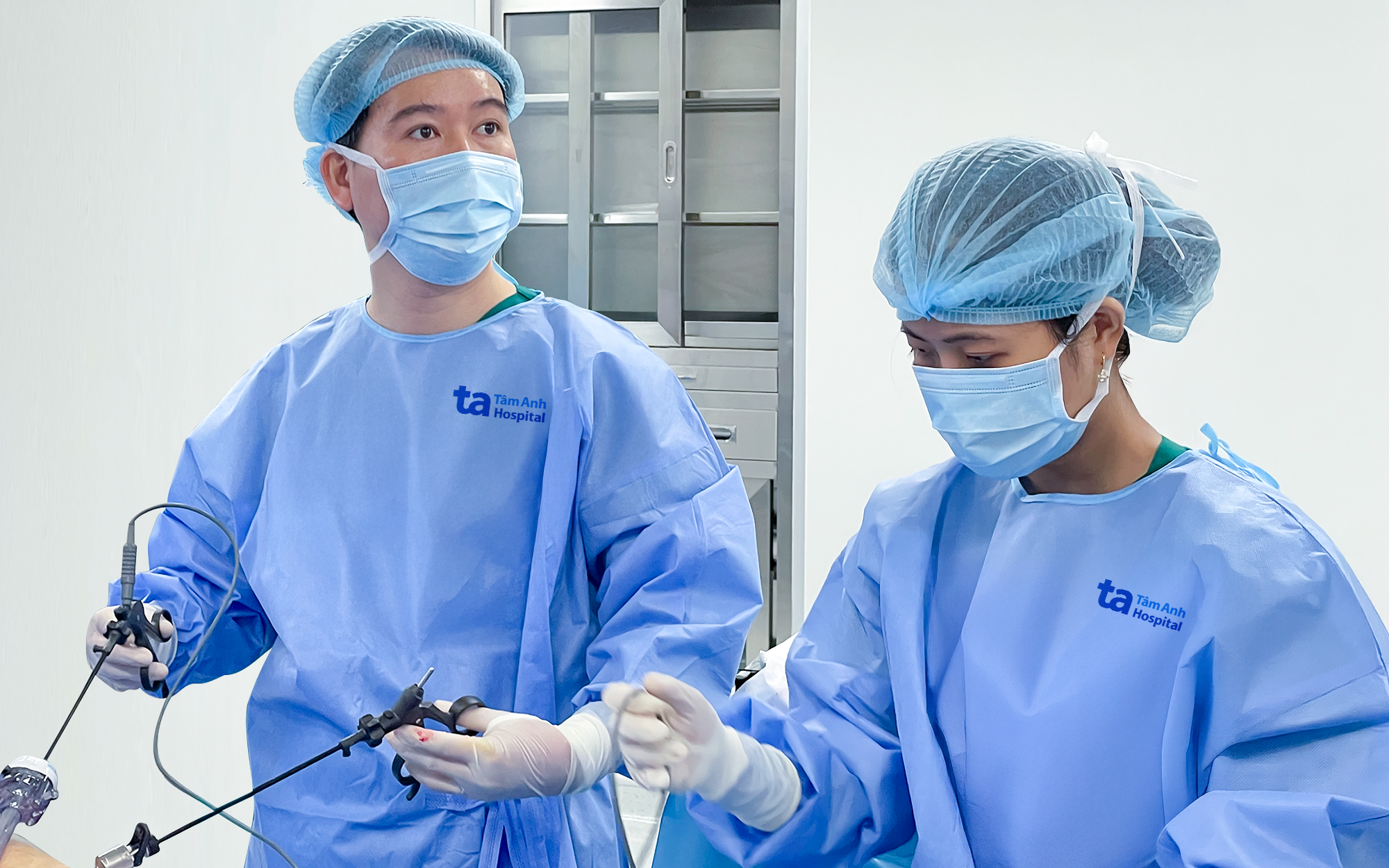 |
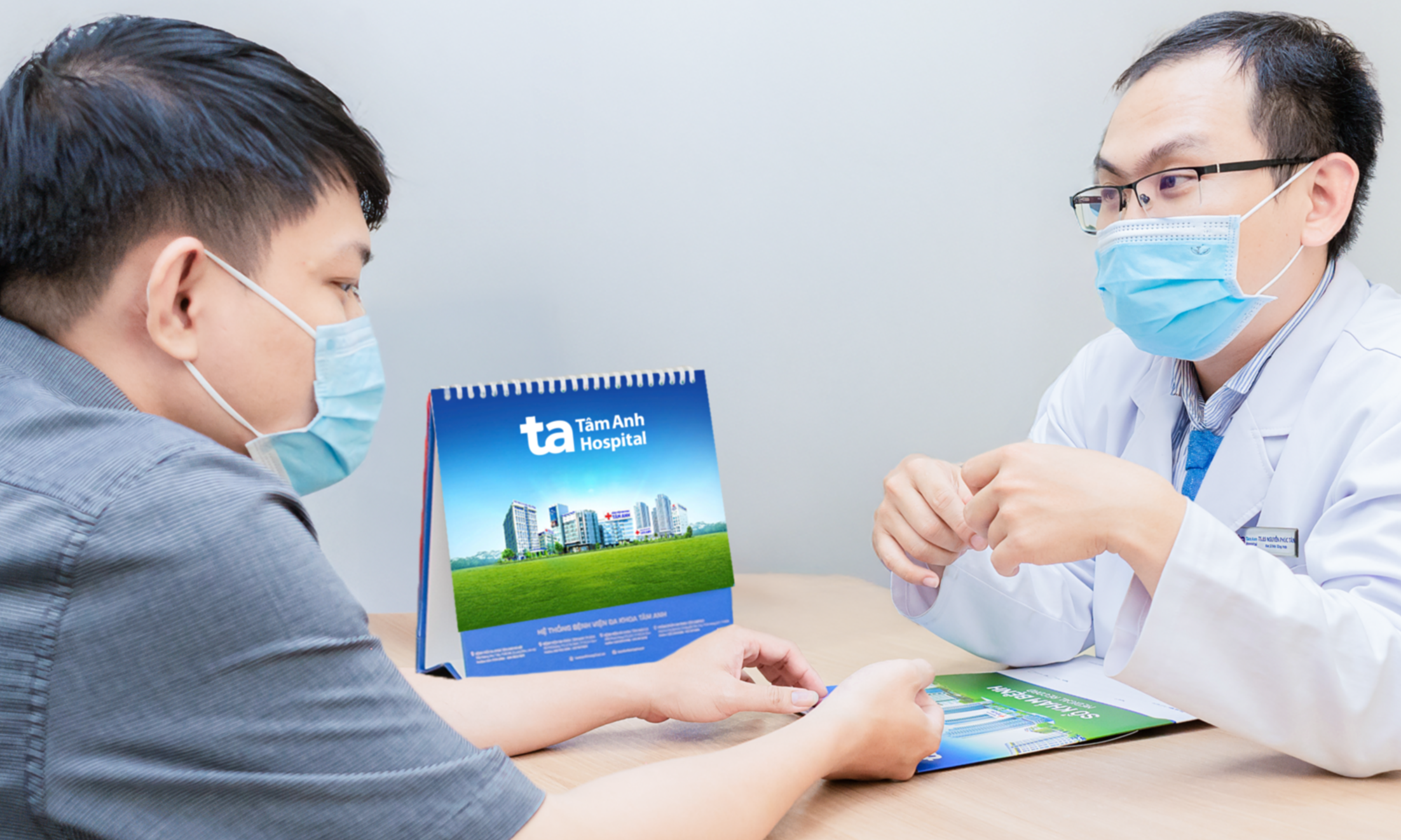
Dr. Truc (left) performs endoscopic surgery to treat an inguinal hernia for a patient. *Photo: Tam Anh General Hospital*
After one day of postoperative monitoring, Kim's health was stable, and he was discharged. Dr. Truc advised the patient to move gently, avoid heavy lifting, limit stair climbing, and temporarily suspend high-intensity sports like weightlifting to allow for complete abdominal wall recovery.
According to Dr. Truc, if left untreated, an inguinal hernia can lead to serious complications such as strangulation, bowel obstruction, or bowel necrosis. In severe cases, this might even necessitate the surgical removal of the damaged bowel segment.
To prevent inguinal hernias, individuals should effectively treat conditions that increase intra-abdominal pressure, such as constipation, difficult urination, chronic cough, or urinary retention. These measures help reduce strain on the abdominal wall. If an abnormal bulge is observed in the groin or scrotum, particularly when standing, coughing, or straining, and disappears when lying down, it is crucial to consult a Urology specialist for timely intervention.
Bao Anh
*Patient's name has been changed