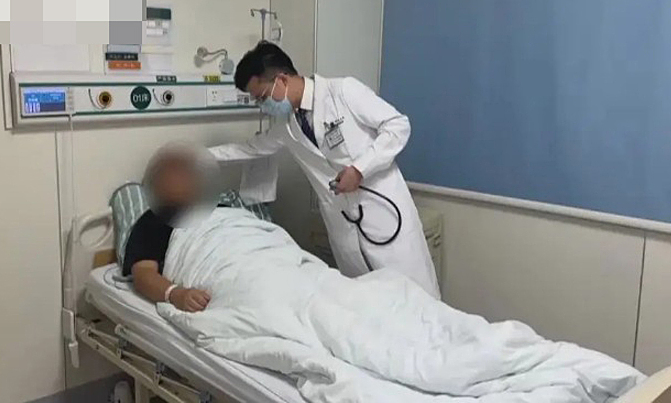
Three months before hospitalization, Mrs. Que occasionally experienced leg pain, attributing it to age-related musculoskeletal issues and using hot oil for massage. Recently, she visited Tam Anh General Hospital, TP HCM, for cataract surgery. During a pre-operative cardiac ultrasound, Doctor Tran Vu Minh Thu, head of cardiology 2, Heart Center, stated that the patient showed signs of heart failure and hypertrophic cardiomyopathy. Her left foot had a 2x2 cm dark, necrotic ulcer due to peripheral vascular occlusion causing limb ischemia, leading to tissue necrosis and poor healing.
The intervention team performed balloon angioplasty to restore blood flow to her leg artery, preventing the risk of amputation due to necrosis. After revascularization, Mrs. Que's leg gradually warmed and regained its healthy color. The wound on the sole of her foot dried, showed good progress, and the patient was discharged 4 days after the procedure.
 |
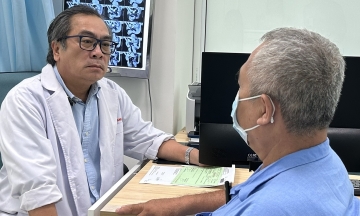
Doctor Long checks the patient's health before discharge. *Photo: Ha Vu* |
Peripheral artery disease occurs when arteries narrow or become blocked by atherosclerotic plaque, reducing blood supply to the legs. If this condition persists, tissues become ischemic, causing pain, poor wound healing, and even necrosis.
Doctor Do Duy Long, from the Cardiology Department, Heart Center, Tam Anh General Hospital, TP HCM, stated that individuals with peripheral artery disease may experience symptoms such as: calf pain when walking (intermittent claudication), which subsides with rest; cold, numb, or weak legs; cramps, especially at night; pale, bluish, or colder skin on one leg compared to the other; and slow-healing ulcers on the feet or toes. In severe stages, with critical limb ischemia, patients may experience pain even at rest, or develop ulcers and limb necrosis.
To prevent peripheral artery disease, Doctor Long advises everyone to walk at least 30 minutes daily, avoid smoking, and effectively manage risk factors. High-risk individuals, such as those with atherosclerotic cardiovascular disease, diabetes, hypertension, dyslipidemia, those aged 60 and above, and long-term smokers, should undergo screening annually for early detection and timely intervention.
Thu Ha
*Patient's name has been changed
| Readers can submit questions about cardiology here for doctors to answer |