On 21/4, Associate Professor, Doctor Huynh Quang Khanh, Head of the Breast Department at Cho Ray Hospital, stated that the patient was diagnosed with early-stage breast cancer during a routine health check-up. Due to her grandmother and mother having breast cancer, and her younger sister having thyroid cancer, the patient was advised to undergo genetic testing. The test revealed a positive result for the BRCA2 gene mutation, identifying her as a high-risk group.
Facing the risk of recurrence in the affected breast and the potential for cancer to develop in the remaining breast, the treatment team consulted and decided on an endoscopic mastectomy. This procedure removed both the diseased breast and the healthy left breast, along with immediate breast reconstruction in the same surgery. The patient has since been discharged, feeling confident having eliminated the cancer's potential origin while maintaining aesthetic appearance.
This medical intervention mirrors a renowned decision made by actress Angelina Jolie. In 2013, the Hollywood superstar proactively underwent surgery to remove both breasts and later her ovaries, despite not having been diagnosed with cancer.
Carrying the BRCA1 gene mutation and with a family history of her mother dying from cancer, Jolie faced an 87% lifetime risk of developing breast cancer. Her courageous decision created a global "Angelina effect," raising awareness among women about genetic testing for proactive cancer prevention. At that time, Vietnam lacked the necessary gene screening techniques for early prophylactic mastectomy.
According to Associate Professor Khanh, hereditary breast cancer accounts for only 5-10% of cases. However, individuals carrying the BRCA1 or BRCA2 gene mutations face a 69-72% lifetime risk of developing the disease, which is many times higher than the 12,5% risk for women in the general population. These mutations also increase the risk of ovarian cancer, pancreatic cancer, and even prostate cancer in men.
Genetic testing offers significant value by helping doctors devise targeted treatment plans and determine the necessity of prophylactic surgery. By late 2025, the Ministry of Health will officially issue guidelines on prophylactic breast cancer surgery for high-risk gene carriers. This development will enhance the quality of life for patients, shifting from mass treatment to precision medicine and personalized treatment plans to increase effectiveness.
 |
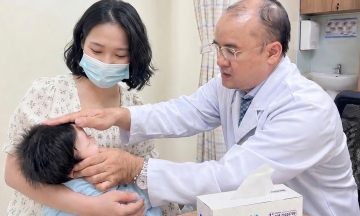
Associate Professor, Doctor Huynh Quang Khanh. Photo: Hospital provided
However, the expert emphasizes that genetic testing is not for the general public, as most breast cancers stem from lifestyle and environmental factors. This indication prioritizes groups with a strong family history of multiple cancers (breast, ovarian, pancreatic), those diagnosed at a young age, or those with "triple-negative" breast cancer.
The value of early prophylactic intervention is further demonstrated by mot other case currently being treated in the department. A 59-year-old female patient from Quang Ngai was diagnosed with "triple-negative" breast cancer and a BRCA1 mutation in 2023. At that time, she only underwent surgery and treatment for the affected breast. In 3/2026, during a routine follow-up, doctors discovered a new malignant tumor developing in her remaining breast, which was subsequently surgically removed.
To prevent cancer, doctors recommend that women with a family history of cancer proactively undergo specialized screening (MRI combined with ovarian monitoring) starting at 25 years old. Women in the general population not considered high-risk should maintain regular clinical examinations, ultrasounds, and mammograms once they reach 40 years old.
Le Phuong