On 20/4, Government Deputy Spokesperson Lalida Periswiwatana stated that the Ministry of Public Health is closely monitoring the rapid spread of the pathogen. Statistics from 1/1 to 16/4 recorded 732 Melioidosis cases nationwide. The disease is most prevalent in the Northeast region. Khon Kaen provincial health authorities alone detected 68 infections, with two patients dying. Individuals over 50 years old face the highest risk.
Melioidosis is caused by the bacterium Burkholderia pseudomallei. This bacterium thrives in soil, water, rice fields, and rubber plantations across Thailand. It enters the human body through direct contact with mud, ingestion of contaminated water, or inhalation of pathogen-carrying dust. Symptoms typically appear one to 21 days after exposure, depending on individual immunity. In rare cases, the incubation period can extend for several years.
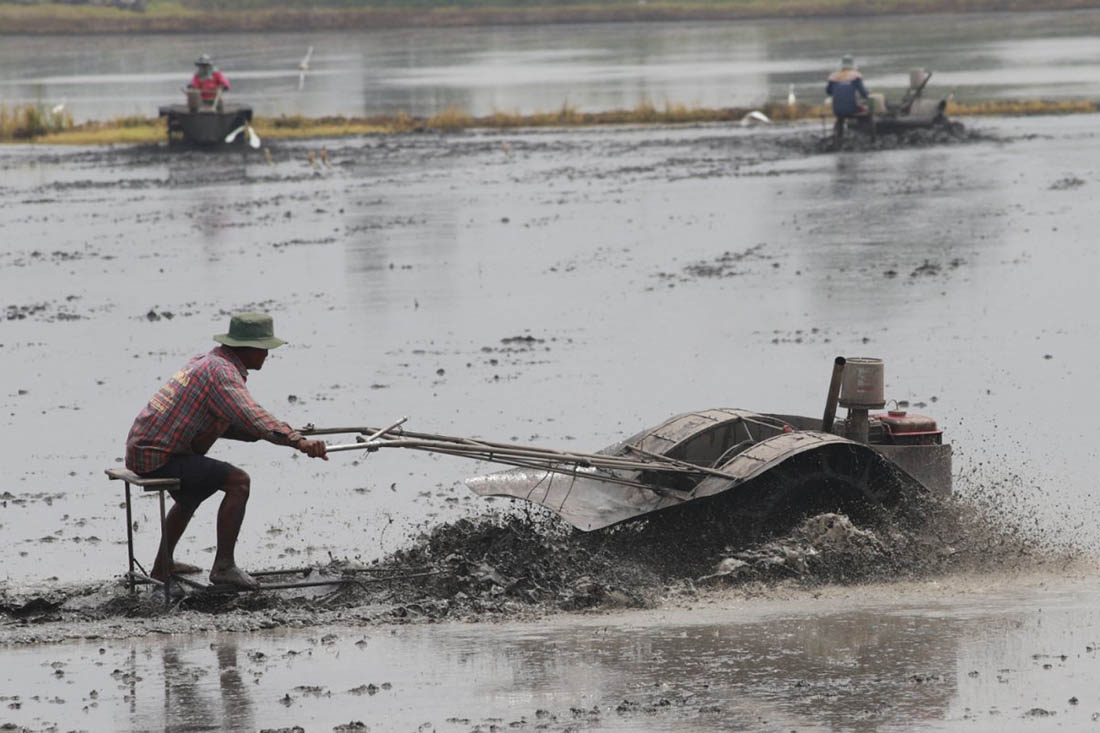 |
Farmers in Lat Lum Kaeo district, Pathum Thani province, are plowing to prepare the soil for the rainy season in 5/2025. Photo: *Bangkok Post* |
The Thai government identifies farmers and outdoor workers as being at the highest risk of contracting Melioidosis. Individuals with underlying conditions such as diabetes, kidney failure, thalassemia, or compromised immune systems are highly susceptible to severe complications.
Melioidosis lacks specific symptoms, making it easily mistaken for other infections by doctors and patients. Patients typically experience high fever, skin abscesses, or difficulty breathing. If the bacteria enter the bloodstream, patients develop sepsis. This is the primary cause of patient deaths in the current outbreak. Without timely medical intervention, the mortality rate can surge to 40-50%.
Health experts advise people to avoid wading in water or walking barefoot in mud to prevent transmission. Workers should wear rubber boots, cover open wounds with waterproof bandages, and wash thoroughly after work. Daily meals must adhere to the principle of consuming cooked food and boiled water.
Doctors can cure Melioidosis with antibiotics. This process requires patients to strictly adhere to a treatment regimen lasting 3-6 months. Health authorities recommend that people go to the hospital immediately if they experience sudden high fever, headache, or body aches. Patients should proactively disclose their history of exposure to mud and water sources to enable accurate diagnosis and timely treatment.
Binh Minh (According to *The Nation*, *Bangkok Post*, *Thairath*)